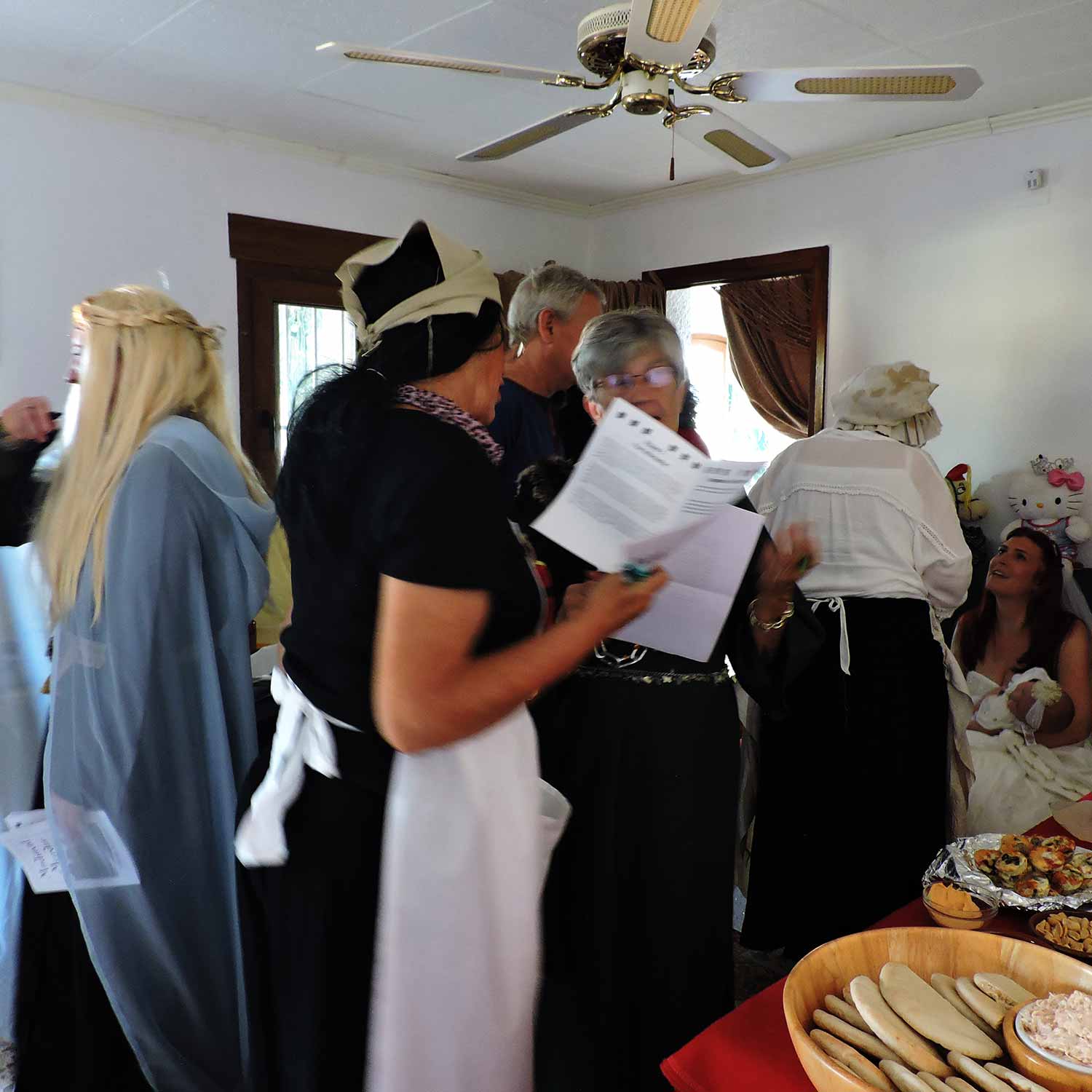
Long before anyone handed out fun-size chocolate bars, a child who knocked on a door at Halloween was expected to earn the reward with a performance. Guising, the Scottish and Irish custom that goes back to the 16th century, sent young people from house to house in costume to sing a song or tell a joke in return for whatever the household could spare. The word "trick" only wandered off course in North America, where by the 1920s it had come to mean pranks, and the party pieces were quietly dropped.
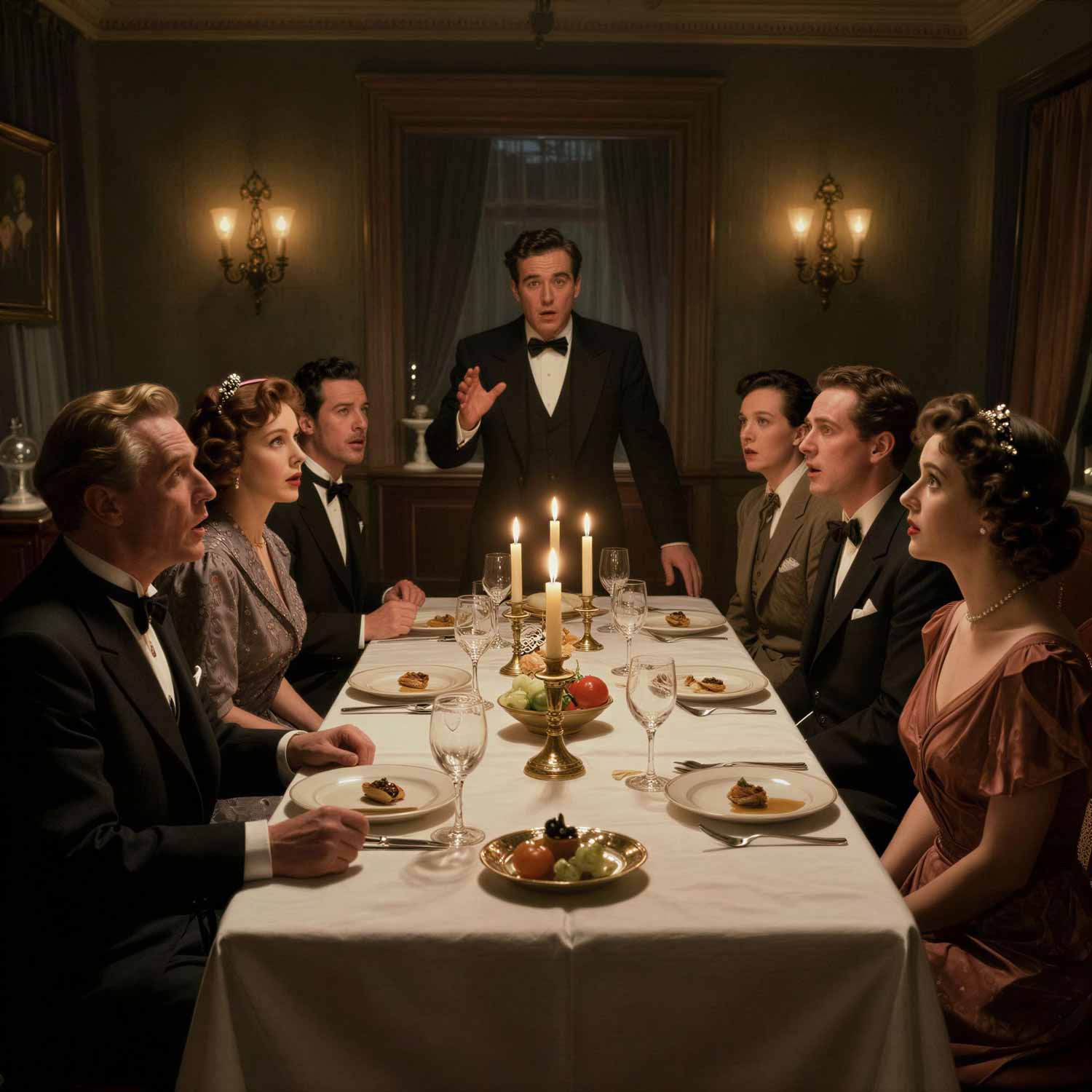
A murder mystery night restores the original bargain. Guests arrive in costume and perform in character for the evening, and every clue they uncover works as the treat. Halloween falls on a Saturday this year, and every game in our catalogue is a download that can be printed at home, so a host reading this on Wednesday still has time to arrange the whole thing. Our guide to turning your mystery night into a spooky season event covers lighting, menus and doorstep theatre, which leaves this article free to borrow from the older traditions behind the night.
Start with the soul cake
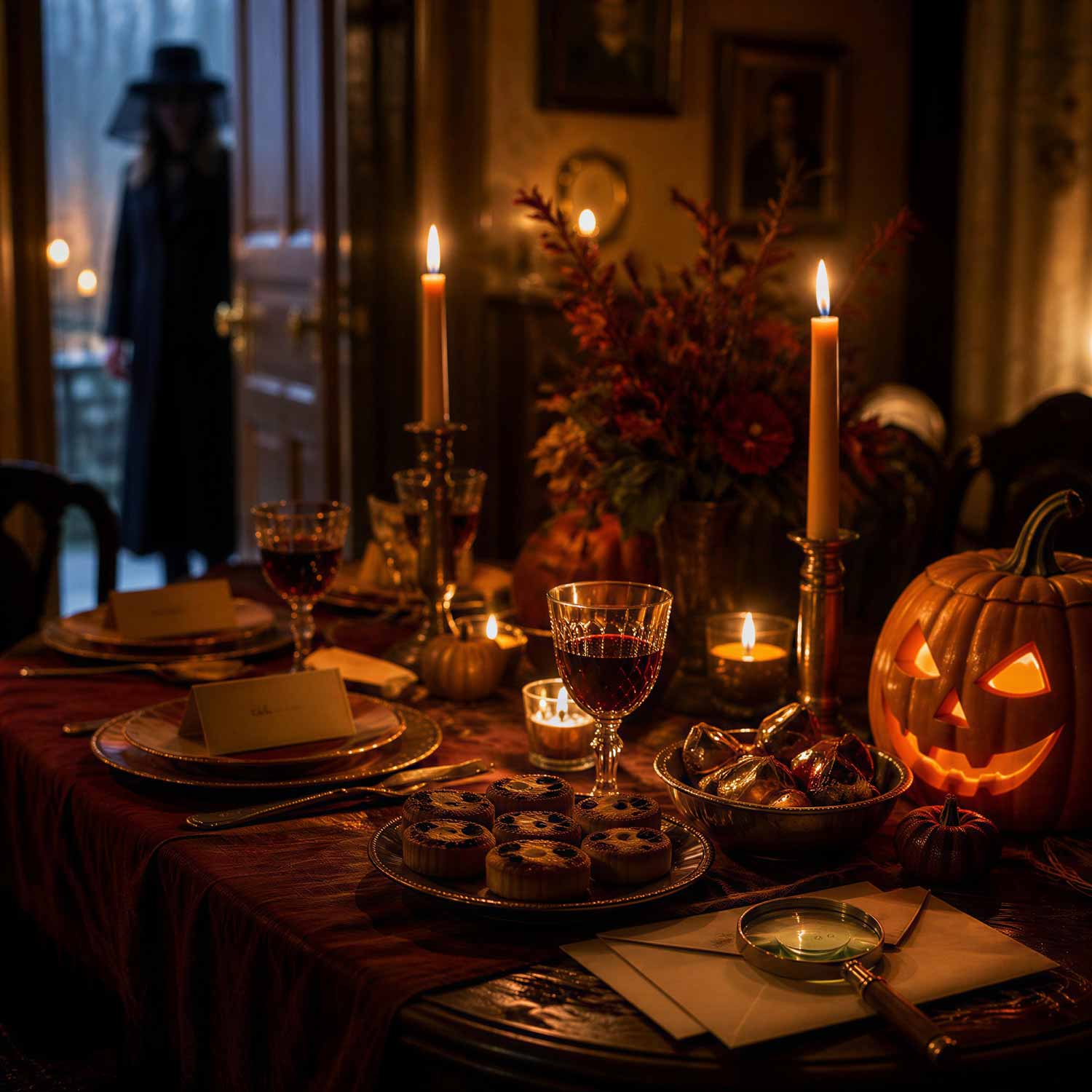
Guising had an older relative called souling, in which people went from door to door around All Souls' Day and were given small round cakes in exchange for prayers for the dead. A murder mystery is a party built around a dead person, so a plate of soul cakes on the table is the most historically appropriate snack a host can serve. Any lightly spiced bun will pass for one. The guests will spend the evening discussing the victim at considerable length, which is about as close to a prayer as a dinner party gets.
Let every guest guise on arrival
Guising demanded a performance before the treat was handed over, and the idea works nicely at the front door. Ask each guest to prepare a single line in character to deliver on arrival, such as a boast or a complaint about the victim, and hand them a drink once they have delivered it. The line gives quieter guests a script to hold onto and gives everyone else a first impression of the people they will be questioning later. It also warms up the character voices before the soup arrives, which is far easier than coaxing them out over the main course.
Pay the treats for performance
Keep a bowl of small wrapped sweets near the host's seat and hand them out at the end of each round, or whenever someone earns one. In our games the host plays a character and does not know who the murderer is, so a treat for a correct deduction is off the table. Award them for the most convincing lie or the sharpest question instead. Because the prizes follow the performances, the host stays as much in the dark as everyone else, and nobody can claim that a sweet was a hint.
Give every guest one trick
The trick half of the bargain belongs to the guests, and in a mystery it takes the form of the bluff. Everyone at the table has something to hide, and a guest who has permission to lie with confidence will enjoy the evening far more than one who feels obliged to confess at the first question. Announce before the first round that bluffing is encouraged and that nobody will be marked down for it. Our piece on the psychology of lying explains why people are so poor at spotting a bluff, which is excellent news for the guilty party.
Keep the fright level friendly
Halloween parties often assume that every guest wants to be startled, when some of them would happily spend the evening somewhere less jumpy. A mystery supplies atmosphere without anything leaping out of a cupboard, because the tension comes from suspicion and the villain is sitting at the table with a glass in hand. If younger guests are on the list, our guide to running a mystery party for mixed ages has plenty of advice on keeping everyone engaged.
Choose the game while there is still time
For nine or ten guests, The Haunting of Myddlemoor Abbey has the season written into its title. Other numbers are easily catered for, because the catalogue can be filtered by the number of players, and any game there takes well to soul cakes and a licence to bluff. A game bought on Wednesday can be printed on Thursday, which leaves Friday and most of Saturday for baking and borrowing hats. If you have not hosted before, the guides to playing a Dinner Party Game and a Mix & Mingle Mystery take only a few minutes to read.
The first guisers sang for their treats, and your guests will bluff for theirs. If anyone objects to the standard of the performances, the soul cakes should help.