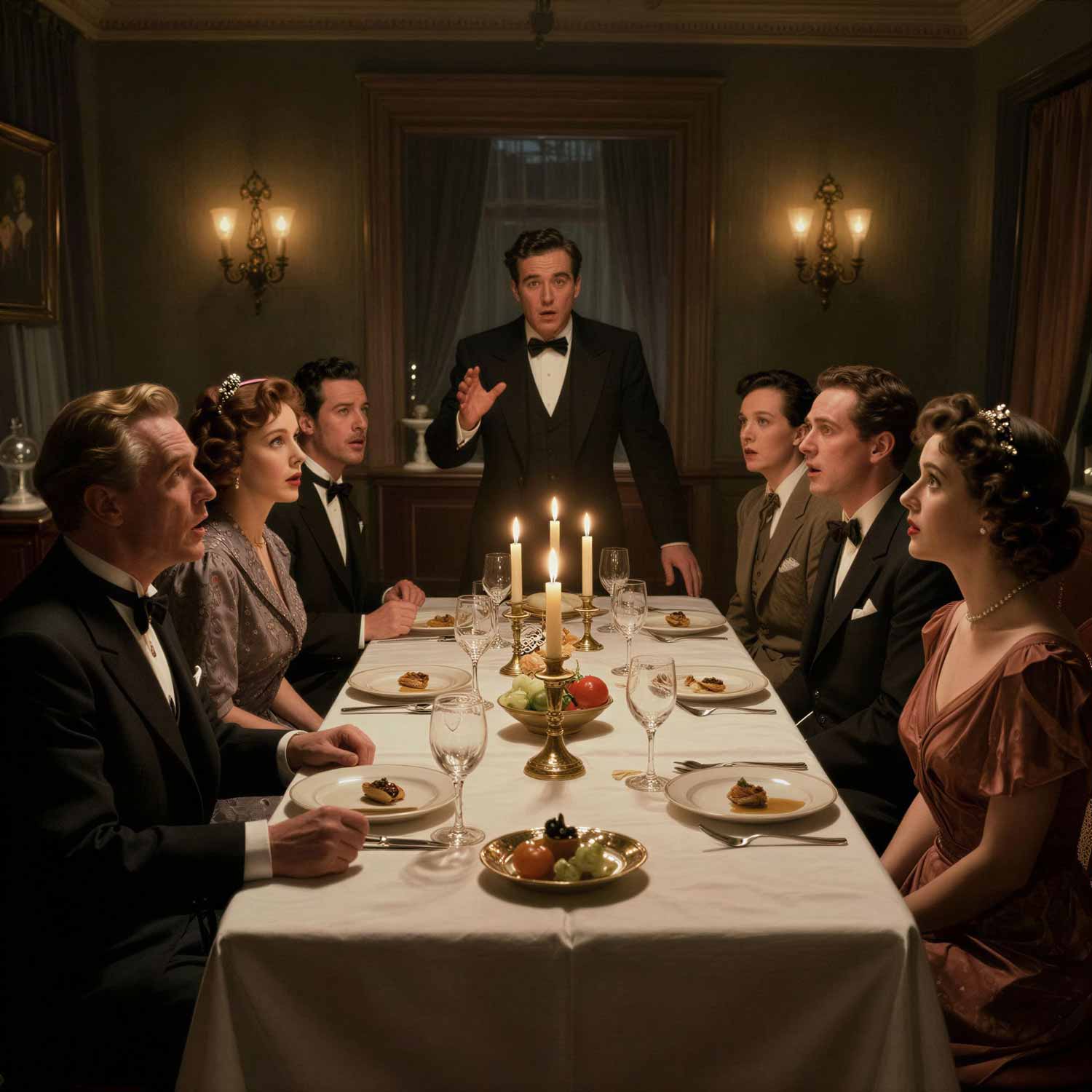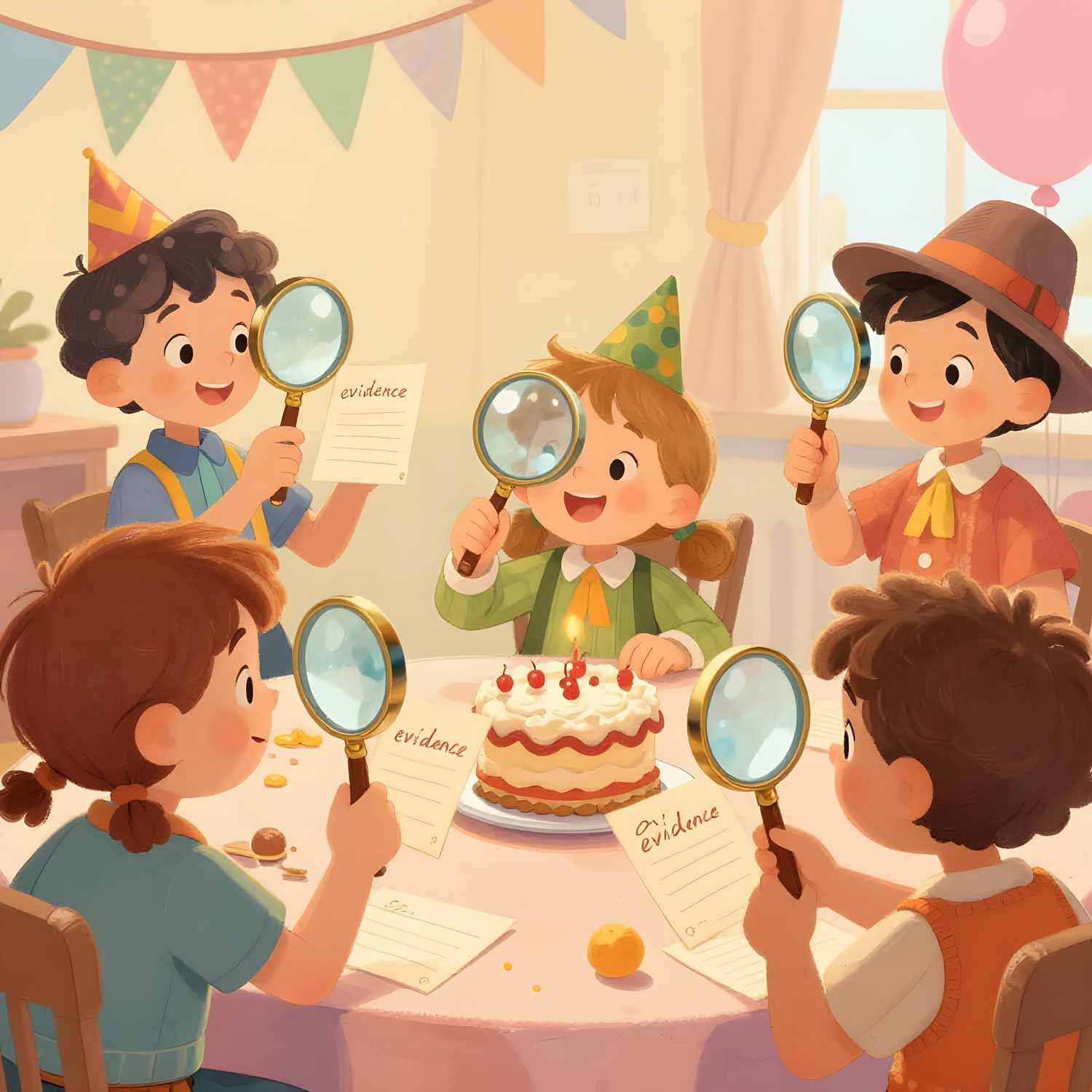
There's a type of party invitation that causes hosts to pause mid-sentence. It's the one where the guest list includes an eight-year-old, a moody fourteen-year-old, a grandmother who still can't work the remote control, and three adults who are already plotting how many glasses of wine this evening is going to require. Someone suggests a murder mystery. Someone else asks, cautiously, whether that's actually going to work with everyone in the room at once.
It can. It works surprisingly well, in fact, once you stop thinking of "mixed ages" as a problem to be managed and start thinking of it as a different kind of party altogether, one with its own rules.
1. Pick a plot that doesn't require a criminology degree
The biggest mistake with a multi-generational mystery is choosing a game written for sharp-eyed adults and hoping the younger guests will keep up through sheer enthusiasm. They won't. Not because they're not clever, but because half the fun of deduction is understanding what you're deducing, and a plot stuffed with red herrings, financial motives and decades-old grudges will lose a nine-year-old in the first ten minutes.
Look for something with a clear, visual crime and motives that make sense to a child as well as an adult. Jealousy, rivalry and stolen treasure travel across age groups far better than embezzlement or blackmail.
2. Cast for temperament, not age
The instinct is to hand the youngest guests the simplest characters and the adults the meaty ones, but temperament matters more than birth certificate here. A quiet, thoughtful twelve-year-old might relish a character with a genuine secret to guard, while a bombastic uncle might be perfectly happy playing a role that's mostly about wearing a silly hat and shouting accusations across the table.
Read the room you already know. You've been to enough family gatherings to have a fair idea who likes performing and who likes watching.
3. Pair up the youngest players with a willing adult
Rather than handing a solo character sheet to a child who can't yet read fluently, or a teen who'll disengage the moment things get slow, consider pairing them with a parent, aunt or older sibling who's happy to play the role together. This does double duty. It keeps younger guests supported without singling them out, and it gives the paired adult a lovely excuse to be a bit silly on someone else's behalf.
4. Adjust the reveal for the youngest ears in the room
It’s worth reading through the final reveal in advance if there are young children present, since some plots lean into darker motives than others. A quick edit to soften a line or two costs nothing and saves you from an awkward pause at the dinner table.
5. Build in breaks that don't feel like breaks
Adults can sit through two hours of clue-swapping without blinking. Children and teenagers cannot, and pretending otherwise leads to fidgeting, sulking or someone quietly disappearing to find a screen. Structure natural pauses into the evening, a course changeover, a round of drinks, a "clue delivery" that doubles as an excuse to stretch legs, and the whole party breathes more easily as a result.
6. Let teenagers be teenagers
Teens occupy an odd middle ground at these events. Too old for the novelty that delights younger children, sometimes too self-conscious to throw themselves into a costume the way an adult happily will. The trick is giving them something with a bit of edge to it, a character with genuine cunning or a decent one-liner, rather than a watered-down version of the adult roles. Treated as capable players rather than guests to be humoured, most teenagers rise to the occasion with real enthusiasm.
7. Keep the props simple and shareable
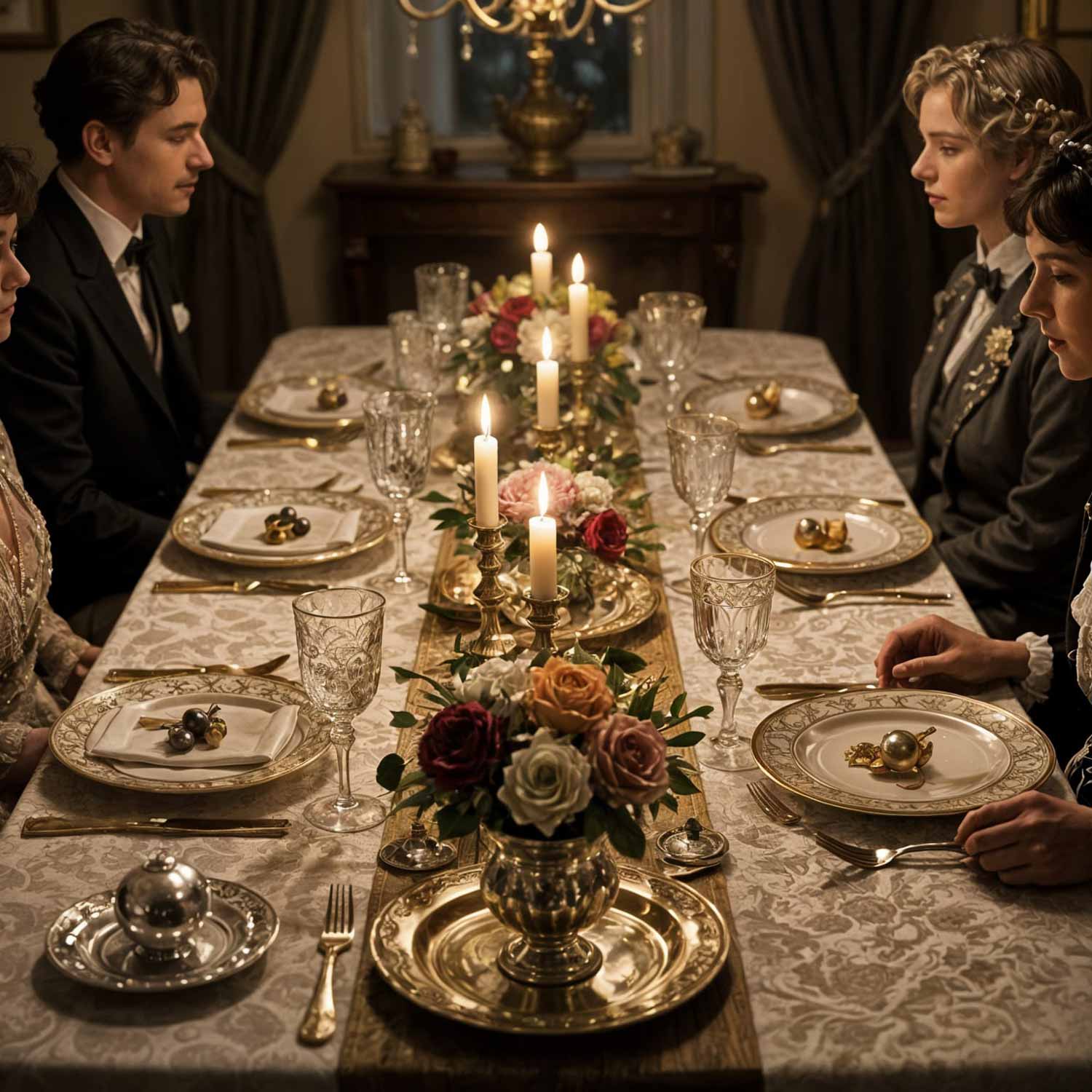
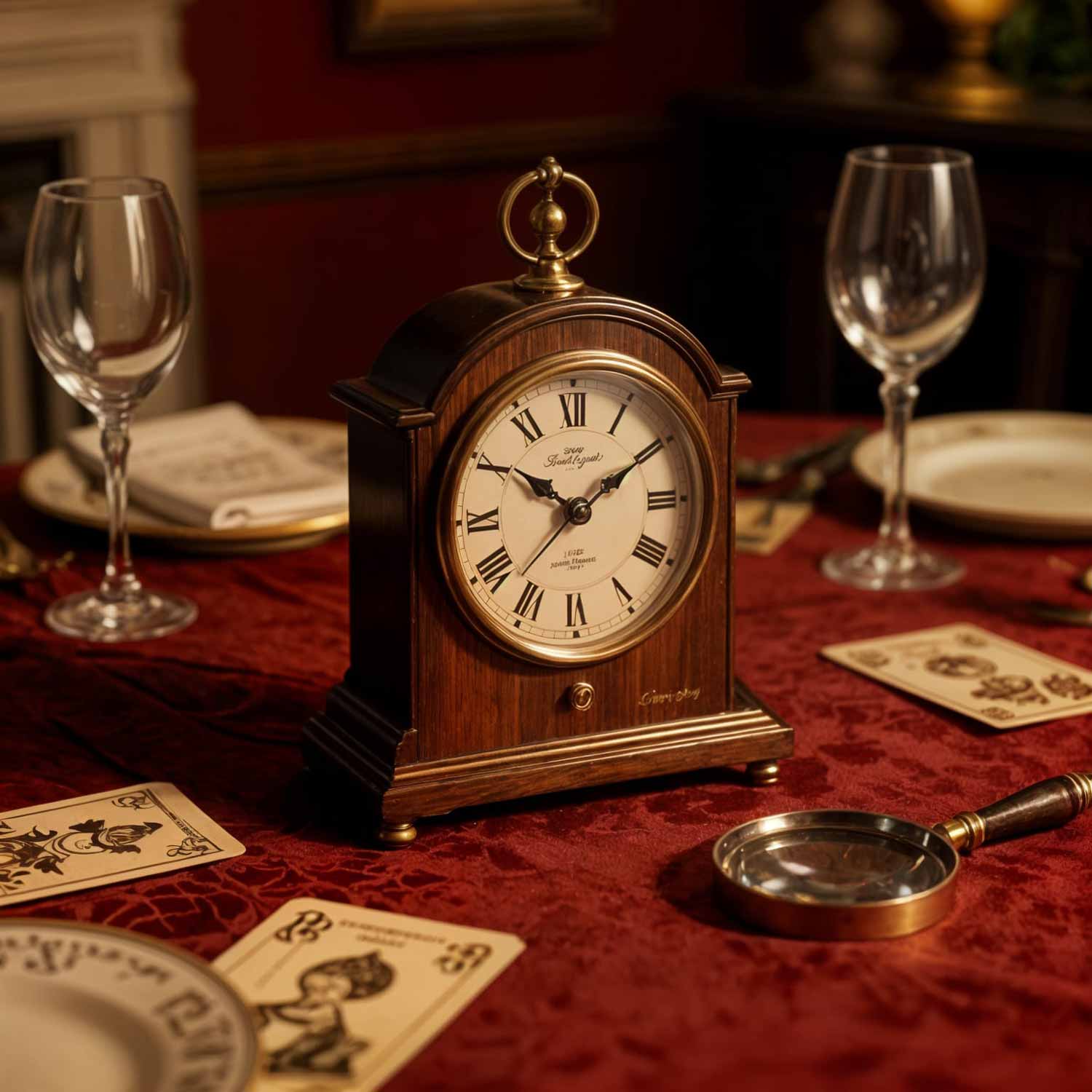
A table crowded with intricate evidence cards and multi-part clue puzzles works beautifully for a room of confident adult sleuths. For a mixed-age crowd, simpler physical clues that everyone can pick up, turn over and argue about tend to land better than anything requiring close reading or fiddly assembly. Think objects over documents wherever the game allows it.
8. Remember that the host sets the temperature
If you're hosting and playing a character who doesn't know the murderer's identity, as our games are designed, use that uncertainty to your advantage. Ask open questions. Look faintly suspicious of everyone in turn. Children in particular take their cue from the adult running the show, and a host who's clearly having fun gives the whole table permission to relax into it too.
A mystery party that spans three generations round one table isn't a compromise. Handled well, it's one of the better arguments for the whole format, because for one evening, nobody's too old or too young to be a suspect.