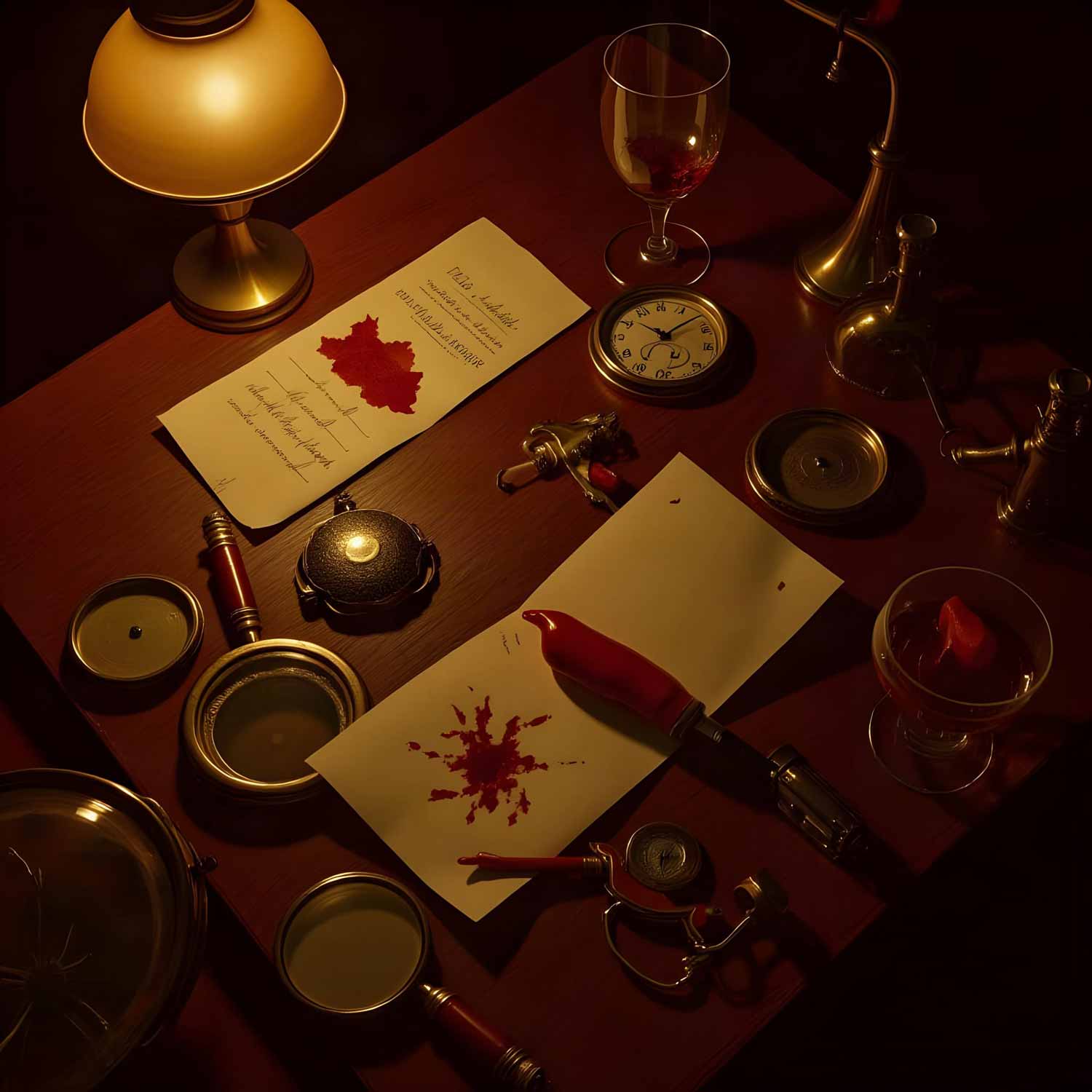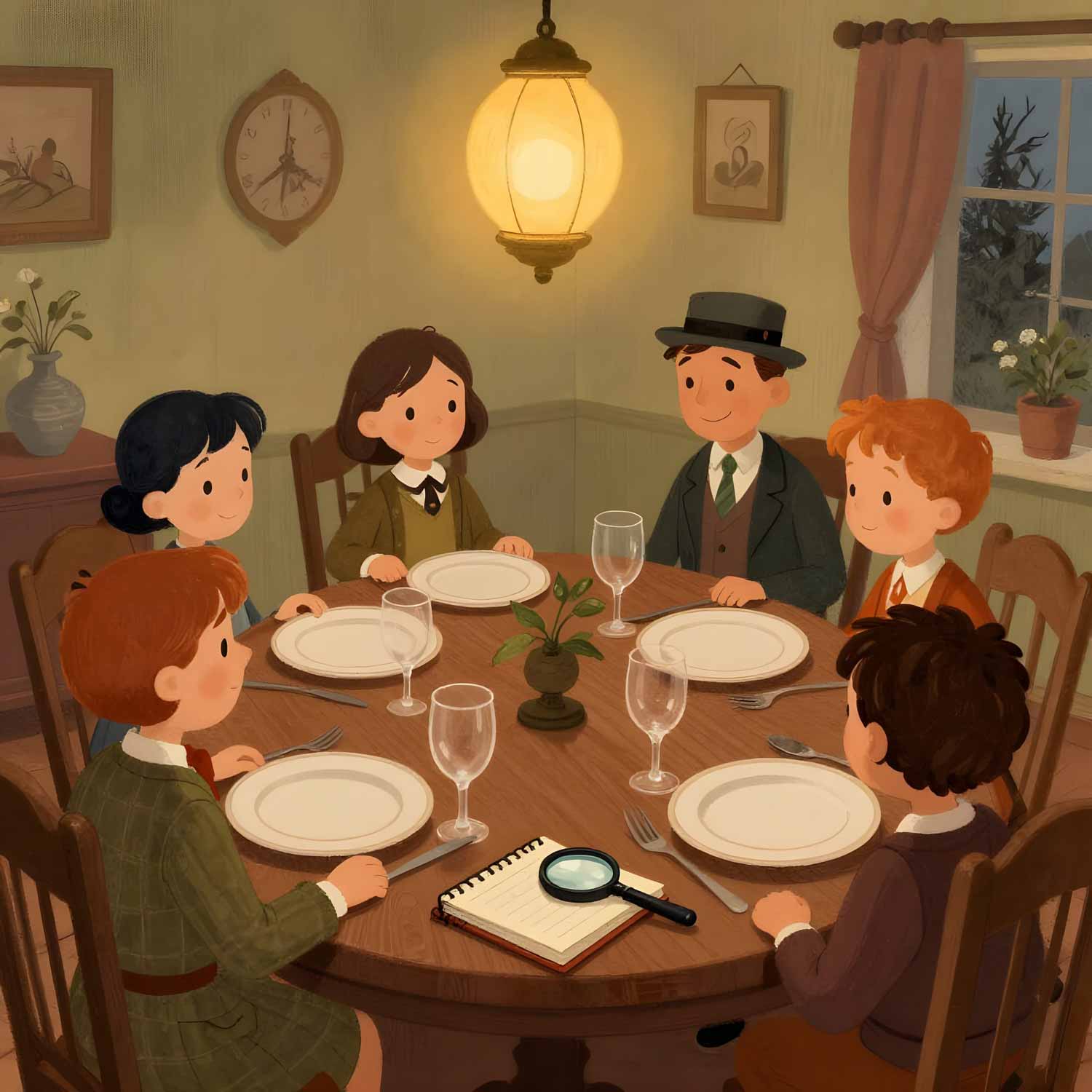
At a quarter to ten on the night of the murder, Lady Hartwell was in the conservatory watering a fern. She has never watered anything in her life, and the fern has been dead since March. Your guests will pounce on that alibi within about four minutes, and the evening will be poorer for it. A good alibi survives questioning for long enough to make the whole table doubt itself, and writing one takes more craft than most hosts expect.
Alibis sit at the centre of every mystery night, because the entire evening is one long conversation about who was where. Whether you are adapting a ready-made game or building a scenario from scratch, these six habits will help you write alibis that hold up under a proper grilling.
Build the truth before you build the lie
Before anyone gets an excuse, write down what really happened. Put the murderer's movements on a timeline, minute by minute, from the first creak on the stairs to the moment the body is found. Every alibi you write afterwards is an edited version of that timeline, and you can only edit it cleanly if you know exactly what is being covered up. Hosts who skip this step end up with a killer who was apparently in two rooms at once, and guests are remarkably good at noticing that.
Keep the murderer's alibi mostly true
The most convincing lie is the true story with one detail moved. Your killer really did visit the library and really did have a sherry with the housekeeper. The only fiction is the clock. A mostly true alibi gives suspicious guests very little to grab hold of, and it gives the person playing the killer far less to remember. Nerves will cause enough trouble on the night without an elaborate invention to keep track of.
Give every innocent character something to hide
If only the murderer has a wobbly story, the game ends somewhere around the soup course. Give every innocent suspect a reason to fib, provided the fib has nothing to do with the murder. The vicar says he was at the church fete, when he was really at the bookmaker's. The maid says she was in the garden, when she was really meeting someone she shouldn't. Each of these little scandals falls apart under questioning, and each one hands the table another suspect to chase. The real culprit ends up hiding in a crowd of people who all look guilty.
Tie the alibis together
Alibis become far more interesting when they depend on one another. If the colonel's alibi rests on the housekeeper's word, and hers rests on the colonel's, one cracked story pulls the other down with it. Guests love this, because breaking one alibi gives them a lever to use on the next. It also lets the solution emerge gradually, with every confession shaking something else loose.
Plant a crack that can be found
Fair play matters here. Somewhere in the evening, a guest holding the right clue should be able to see that the killer's story cannot be true. The gramophone that supposedly played all night might turn out to have a record that never left its sleeve, or the late train the killer claims to have caught might not run on a Sunday. Put the contradiction in a clue or in another character's testimony, so that somebody can actually find it. A flaw that exists only in your head turns the game into a riddle with no answer, and guests can tell when they have been set one.
Prepare for the follow-up questions
Guests rarely stop at "where were you at ten o'clock?" They ask who saw you and what you did afterwards, and they ask it with the relentless cheerfulness of people who have had two glasses of wine. Give whoever is playing the killer short answers to the obvious follow-ups, perhaps on a crib sheet tucked into the character card. Allow a few vague moments as well, because an alibi recited with perfect precision sounds rehearsed. Nobody trusts a man who remembers the exact minute he last looked at a teaspoon.
Keep the main story short enough to say in two sentences. Everyone at the table is holding a drink or a fork, and the finer detail can emerge when they press for it.
One last check before the guests arrive
Read your alibis aloud to a friend who has not seen the solution, then ask who they would arrest. If they name the killer before the main course, add a wobble elsewhere to spread the suspicion around. If they never get there at all, make the crack a little easier to spot.
If you would rather have the suspects' stories prepared for you, our downloadable murder mystery games come with character scripts ready to go, which leaves you free to enjoy being devious at the table.