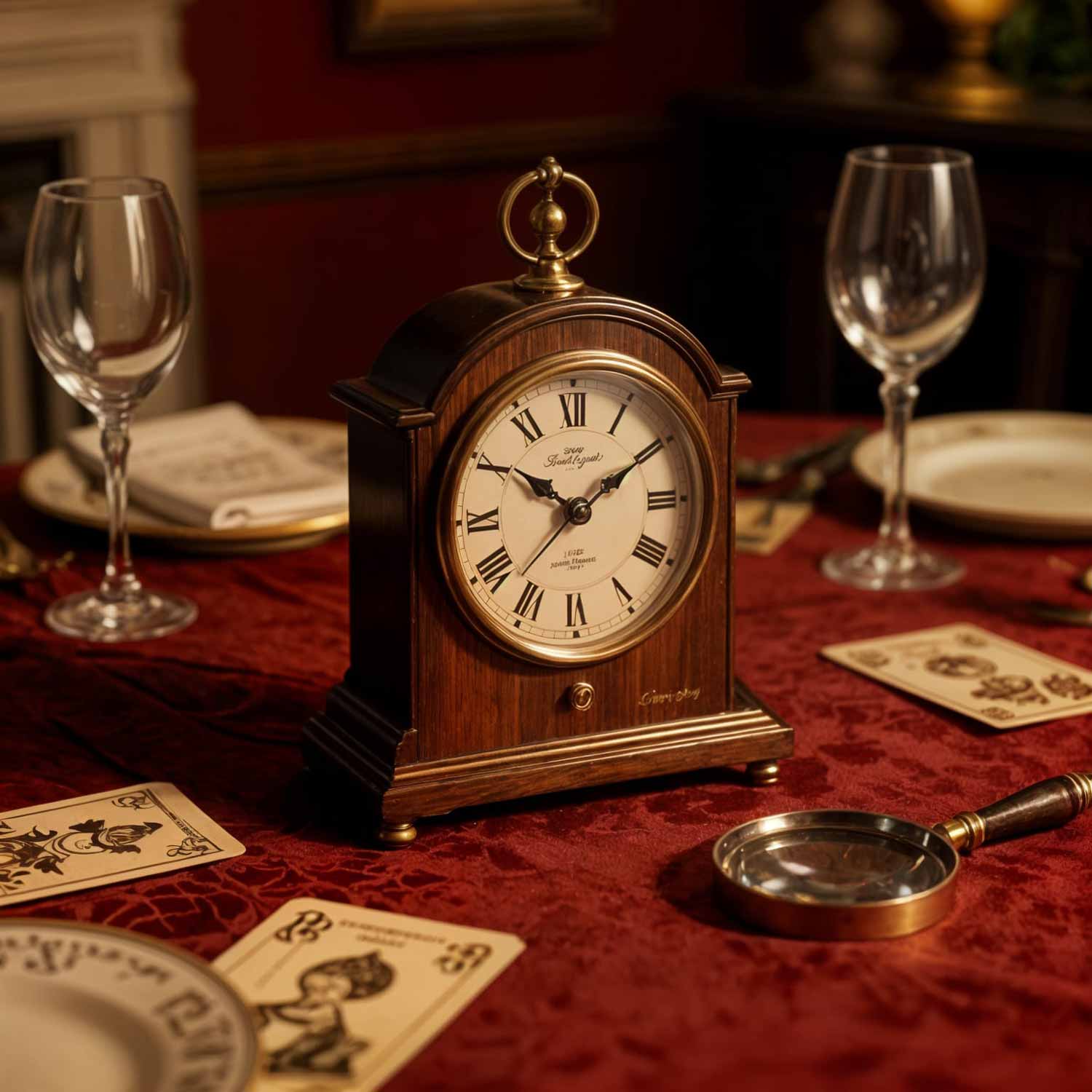
Your first murder mystery party teaches you things no instruction booklet ever could, usually while the pasta is going cold and someone's asking why their character has a secret but no obvious reason to keep it. Hosting one for the first time is a bit like directing a play where none of the actors has read the script and half of them are holding wine glasses. It nearly always works out. It just rarely works out the way you pictured it at the planning stage. Here are the ten things new hosts forget most often, along with the fixes that stop them from becoming a problem on the night.
1. Reading the whole game before the party
It sounds obvious until you're three days out, still working full time, and the box of materials has been sitting on the kitchen table looking smug. Hosts often skim the setup instructions and assume the rest will make sense in the moment. It mostly does, but "mostly" is doing a lot of work in that sentence.
The fix: Read everything at least once before invitations go out, ideally with a cup of tea and no distractions. You don't need to memorise it. You just need to know where the big twists live so nothing catches you off guard in front of your guests.
Please note: this only applies to our mix-and-mingle parties; our dinner parties can be played with the host in the dark too.
2. Printing enough copies
Character sheets, clue cards, name badges. It always looks like plenty until someone's dog eats page four of their backstory ten minutes before people arrive.
The fix: Print everything with a spare set on hand, and keep a digital copy accessible on your phone. A missing clue can be improvised. A missing character sheet tends to unravel someone's entire evening.
3. Briefing guests on how the game actually works
Most people have never played a mystery party before, and the format asks something unusual of them: to lie convincingly, in character, to their friends. Drop them into that without warning, and you'll spend the first twenty minutes explaining rules instead of watching the game unfold.
The fix: Send a short "what to expect" note with the invitations. Nothing that spoils the plot, just enough so guests arrive understanding they're meant to act, question, and occasionally fib.
4. Planning where the game will actually be played
A living room that comfortably seats six for dinner starts to feel very different once everyone's standing up, moving between rooms, and trying to have private conversations near the good sofa.
The fix: Walk through the space in advance and imagine your guests actually in it, gesturing, whispering, hiding clues behind the fruit bowl. Clear a path for movement and decide early where any private one-to-one scenes will happen.
5. Timing the courses around the clues
Food and mystery compete for attention, and if dinner and the plot both land at once, nobody gets the full benefit of either. Hosts often plan the menu and the game as two separate projects, then discover on the night that the big reveal was meant to happen during the main course.
The fix: Map your evening on paper first. Decide roughly when each course goes out and when each round of clues is revealed, then build the menu around the game's rhythm rather than the other way round. Our dinner party games already have instructions for this built in.
6. Deciding what happens if someone can't come
Somebody always drops out. A last-minute cold, a delayed train, a toddler who has picked the worst possible evening to refuse to sleep. Most games are built around a fixed cast, and one absent character can leave a gap in the plot.
The fix: Know your game's suggested options for a missing player before the week of the party, not during it. Many mystery games include guidance for folding a character's clues into another guest's role, or having the host cover the part themselves.
7. Keeping a straight face
New hosts underestimate how much the tone of the evening depends on them. If you're giggling every time you deliver a clue, your guests will assume nothing in the game is meant to be taken seriously, and the tension you were hoping for evaporates before dessert.
The fix: Practise your key lines out loud beforehand, even if it feels a little silly talking to the kitchen. A host who commits, even slightly, permits everyone else to commit too.
8. Setting an actual end time
Mystery games can run long, especially with a chatty group who enjoys the interrogation more than the food. Without a rough finish time in mind, the evening either fizzles out before the reveal or drags on well past the point where anyone still cares who did it.
The fix: Check your game's suggested running time and build in a buffer. Let guests know roughly when the big reveal is coming. It gives the evening a shape and stops the energy leaking away in the final hour.
9. Having a plan for the accusation round
This is the moment the whole evening has been building towards, and it's exactly the moment new hosts tend to wing it. Do guests write down their guess? Say it aloud? Vote? Without a clear process, the finale can turn into a slightly awkward group discussion rather than a proper dramatic climax.
The fix: Decide your accusation format in advance and explain it early in the evening so guests know what's coming. A little structure here makes the reveal land far better.
10. Enjoying it
It sounds strange to include on a list of practical mistakes, but hosts spend so much energy managing logistics that they forget to actually play their own character. Guests notice when the host is having fun, and it lifts the whole room.
The fix: Once the prep is done, let it go. The clues are printed, the food is timed, the accusation round has a plan. From that point, your job is simply to enjoy being a suspect in your own party.
Every one of these mistakes is survivable, and most first-time hosts make at least three of them without the evening suffering for it. Mystery parties are forgiving that way. A missing clue, a dropped line, a slightly rushed reveal- none of it tends to matter much once everyone's laughing about who the culprit turned out to be. The tips above just tilt the odds a little further in your favour, so the evening feels less like you're managing a small crisis and more like you're hosting the party you actually planned.