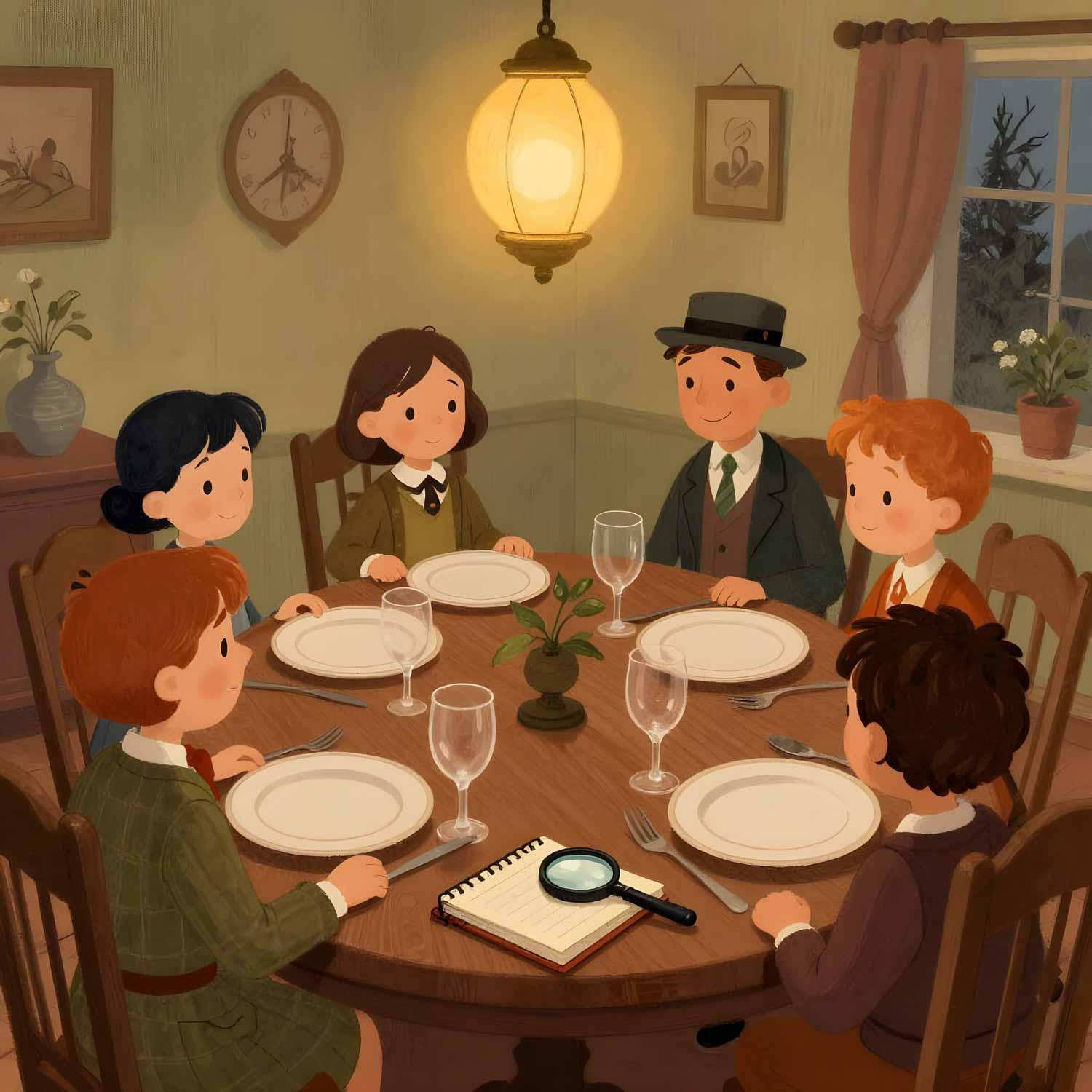
There's a particular kind of bravado that takes hold of a parent roughly a week before a birthday party, somewhere between ordering the bouncy castle and casually deciding that this year, instead of pass-the-parcel, the eight-year-olds are going to solve a murder.
It's a good instinct. Kids adore mysteries, the secrets, the clue-finding, the chance to accuse Auntie Karen of something even when Auntie Karen isn't there. But a children's mystery party isn't an adult one with smaller chairs. Get the format wrong, and you'll end up with ten over-excited detectives, three tears, and a "victim" who refuses to stay dead for the photos. Get it right, and it's the party people are still talking about at the school gates in September.
Here's what actually works, and where the wheels tend to come off.
1. Match the mystery to the age, not the other way around
A seven-year-old and a twelve-year-old do not want the same party, even if they both technically count as "kids." Younger children do best with a simple, visual case, one suspect each, one big clue each, a clear job to do. Older children (roughly nine and up) can handle real deduction: alibis to compare, motives to weigh up, a genuine "wait, it was him?" moment at the end.
The mistake we see most often is borrowing the structure of an adult party of six interlocking secrets, a web of blackmail, three red herrings, and just swapping "affair" for "stolen biscuits." The plot complexity needs to scale down, not just the subject matter.
2. Swap "murder" for "mischief"
You don't need an actual murder to have a murder mystery. A stolen tiara, a kidnapped hamster, a vanished birthday cake, the structure (a crime, some suspects, a pile of clues, a satisfying reveal) works the same way, minus the bit where you have to explain to a six-year-old what a body is doing in the library.
Plenty of hosts run brilliant kids' parties with no actual victim in sight, and nobody at the table misses it. The fun was always in being a detective, not in the corpse.
3. Trim the rulebook to the size of an attention span
Adults will sit through a slow-build introduction because they trust it'll pay off. Children will not. Aim for a quick, punchy setup, who's missing, what's gone, who's a suspect, and get them into the actual investigating within ten minutes.
As a rough rule of thumb: keep the whole thing to 60–90 minutes for younger groups, and don't be afraid to compress or skip a round if energy's flagging. A mystery that ends slightly early on a high is infinitely better than one that's still going when someone's little brother starts crying about the cake.
4. Cast for confidence, not character development
Adult mystery guests will happily play a scheming widow with a gambling habit. A shy nine-year-old will not. When you're handing out roles, think less "interesting backstory" and more "can this child say their one big line without wanting the floor to swallow them."
Give your quieter guests roles with clear, simple jobs — "find this clue," "ask this one question" — rather than ones that depend on bluffing or performing. Save the show-off villain role for the child who's already rehearsing their reveal speech in the car on the way over.
5. Keep the props theatrical, not realistic
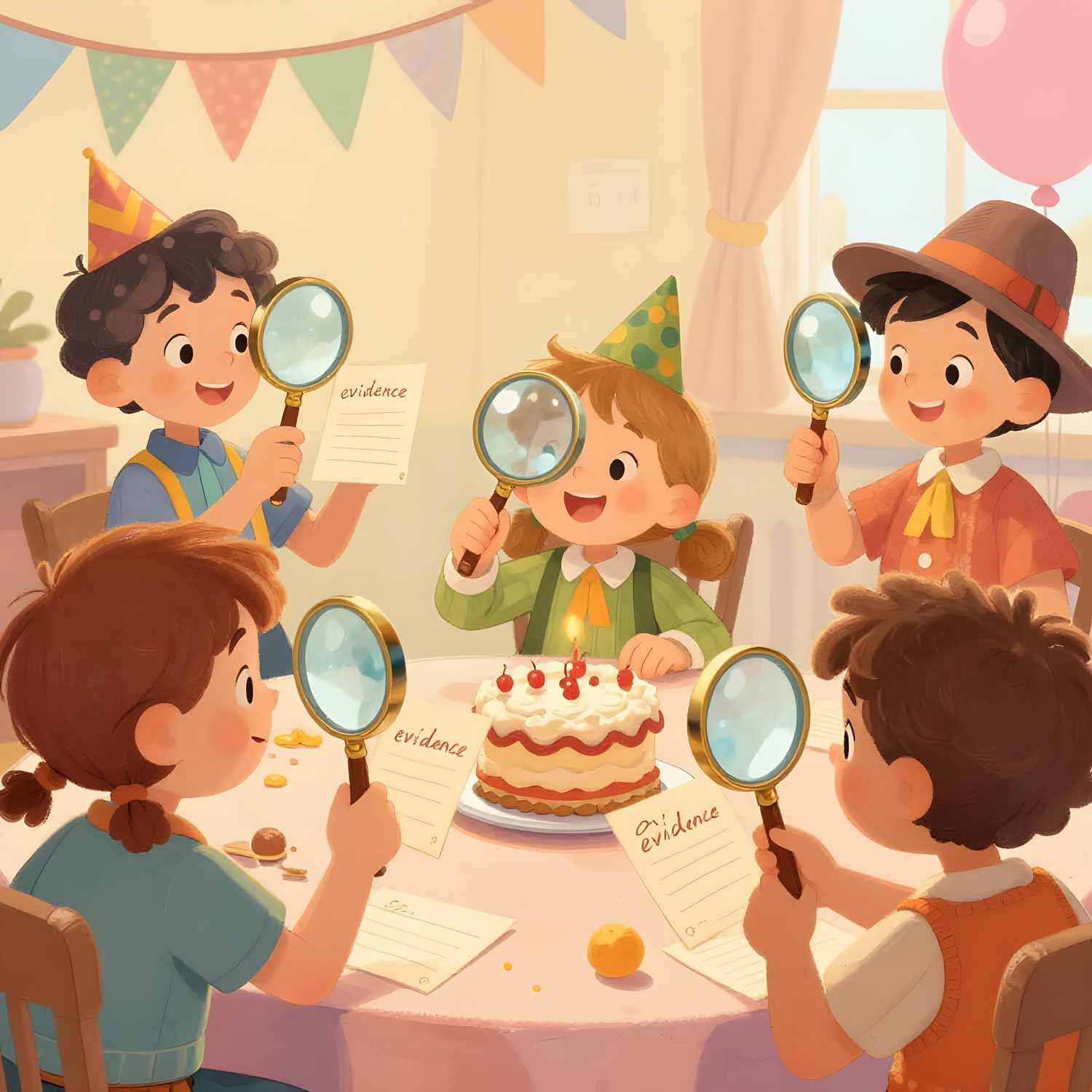
Fake blood, convincing weapons, and anything that looks like it came from an actual crime scene belong in the adult catalogue, not the kids' one. Children's parties work best with props that are obviously, cheerfully pretend, a cardboard "knife," a comedy-oversized magnifying glass, an evidence bag with glitter in it. The game stays fun precisely because nobody's brain registers it as real for even a second.
6. Let an adult referee, not perform
In a grown-up party, the host can disappear into their own character and let chaos reign a little. With kids, someone needs to stay slightly outside the story, keeping time, nudging shy players, quietly making sure the "murderer" reveal lands the way it's supposed to. It doesn't have to be a stern presence, just a steady one. Think benevolent quiz show host, not fellow suspect.
7. Resist the urge to make it scary
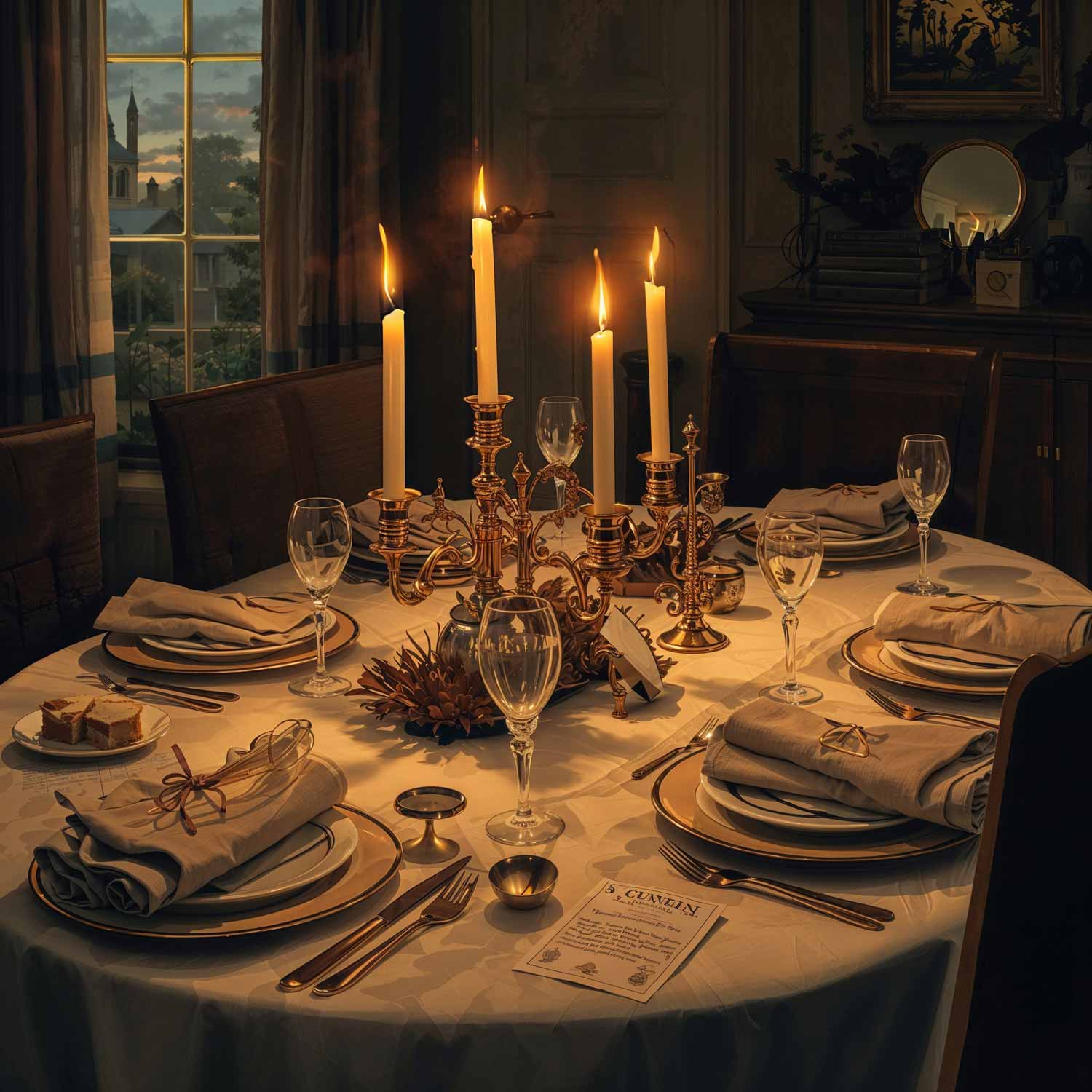
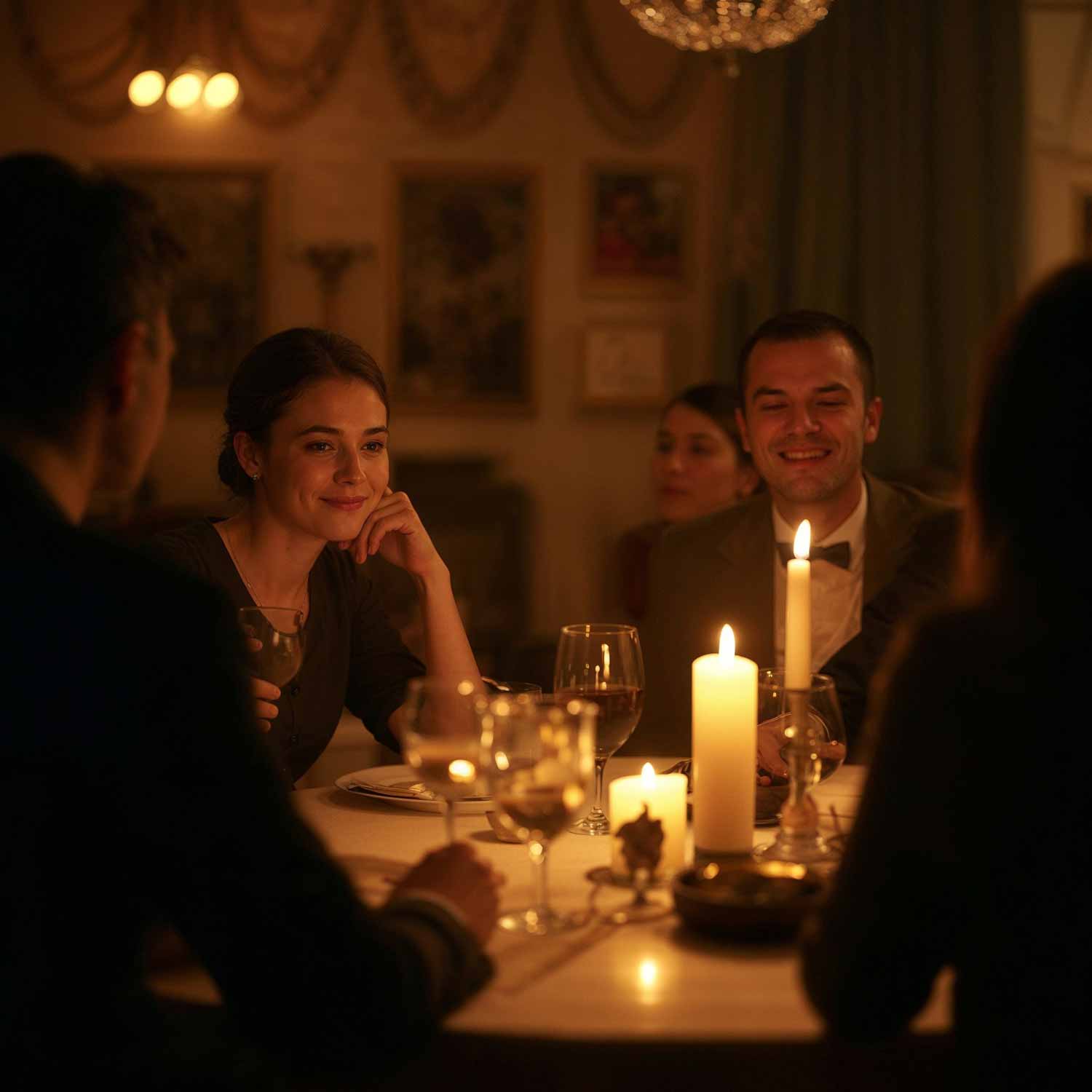
It's tempting to add atmosphere, dim lights, a thunderclap sound effect, and a "surprise" jump scare reveal. For adults, that's seasoning. For kids, it can tip a fun party into one where somebody needs to sit on the stairs for a bit. Suspense for children works far better through curiosity ("Who did take the trophy?") than through fright. Save the dramatic lighting for when the guests are old enough to ask for it themselves.
Get those seven things right, and a kids' murder mystery does what it's always meant to do: turn a room full of children into a room full of detectives, all convinced they've cracked the case roughly four times before they actually have. That's not a low bar. It's just a different one from the adult version — smaller stakes, bigger giggles, and absolutely no need for fake blood.