So you've hosted your first murder mystery party. You bought the feather boa, the fake moustache, the period-appropriate hat that took three trips to different charity shops to find. Your guests had a wonderful time. The murderer was unmasked. Dessert was served. And now the feather boa is sitting on the back of a dining chair, wondering what its future holds.
Good news: it has one.
If you've invested time, effort, or money into costumes and props for one game, there's no reason those items should only earn their keep once. With a little forethought and a willingness to think laterally about what things represent rather than what they are, you can build up a reusable wardrobe and prop collection that serves you across game after game. Here's how.
Think in Archetypes, Not Characters
This is the single most useful shift you can make. When you're dressing for a murder mystery, you're rarely playing a character so specific that only one costume will do. You're playing an archetype. And archetypes recur.
The rich widow. The shady businessman. The glamorous performer. The nervous servant. The authority figure who may or may not be corrupt.
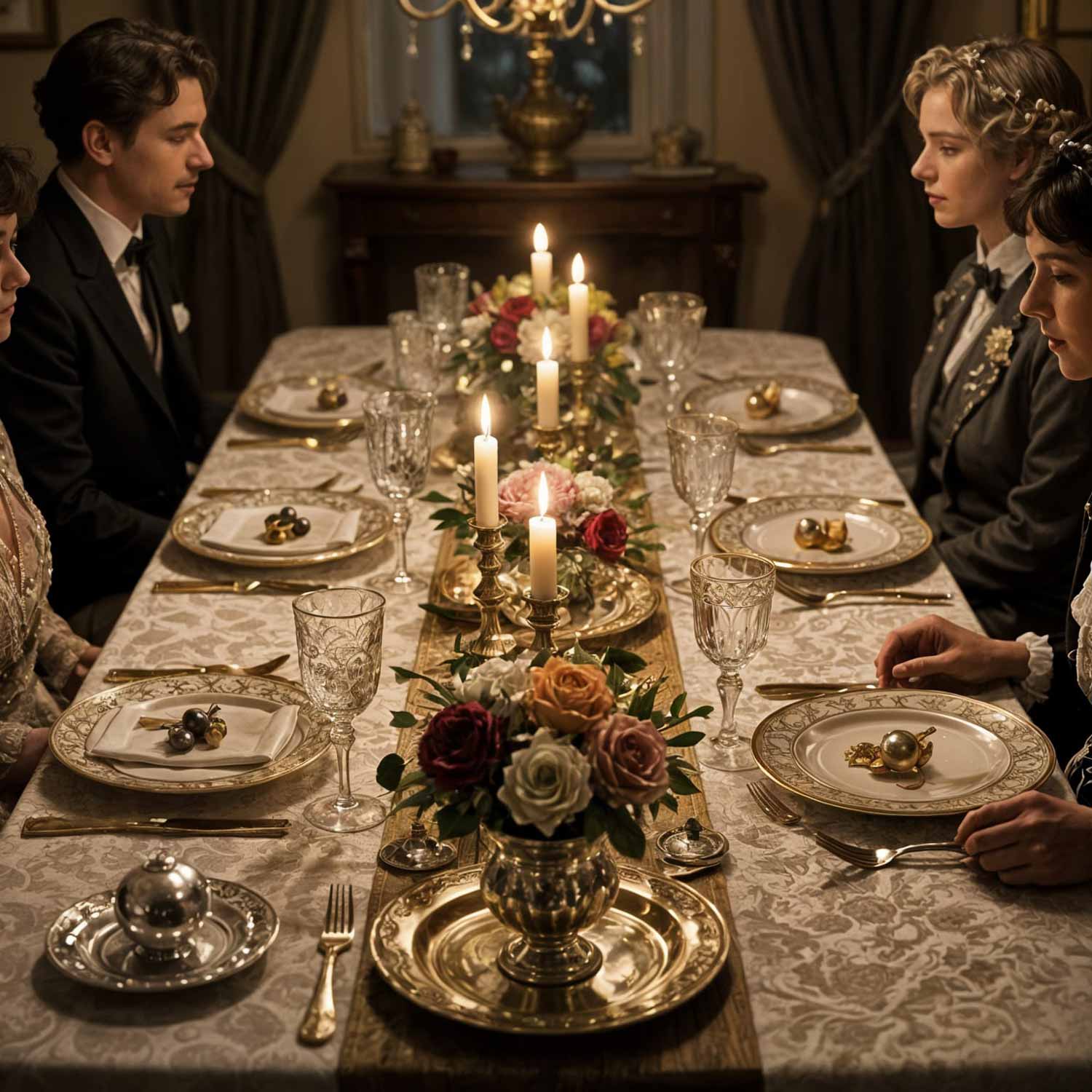
These characters appear in mysteries set in the 1920s, in country houses, in hotels, in medieval castles, in Hollywood studios. If you dress for the archetype rather than for the specific game, your costumes suddenly become transferable.
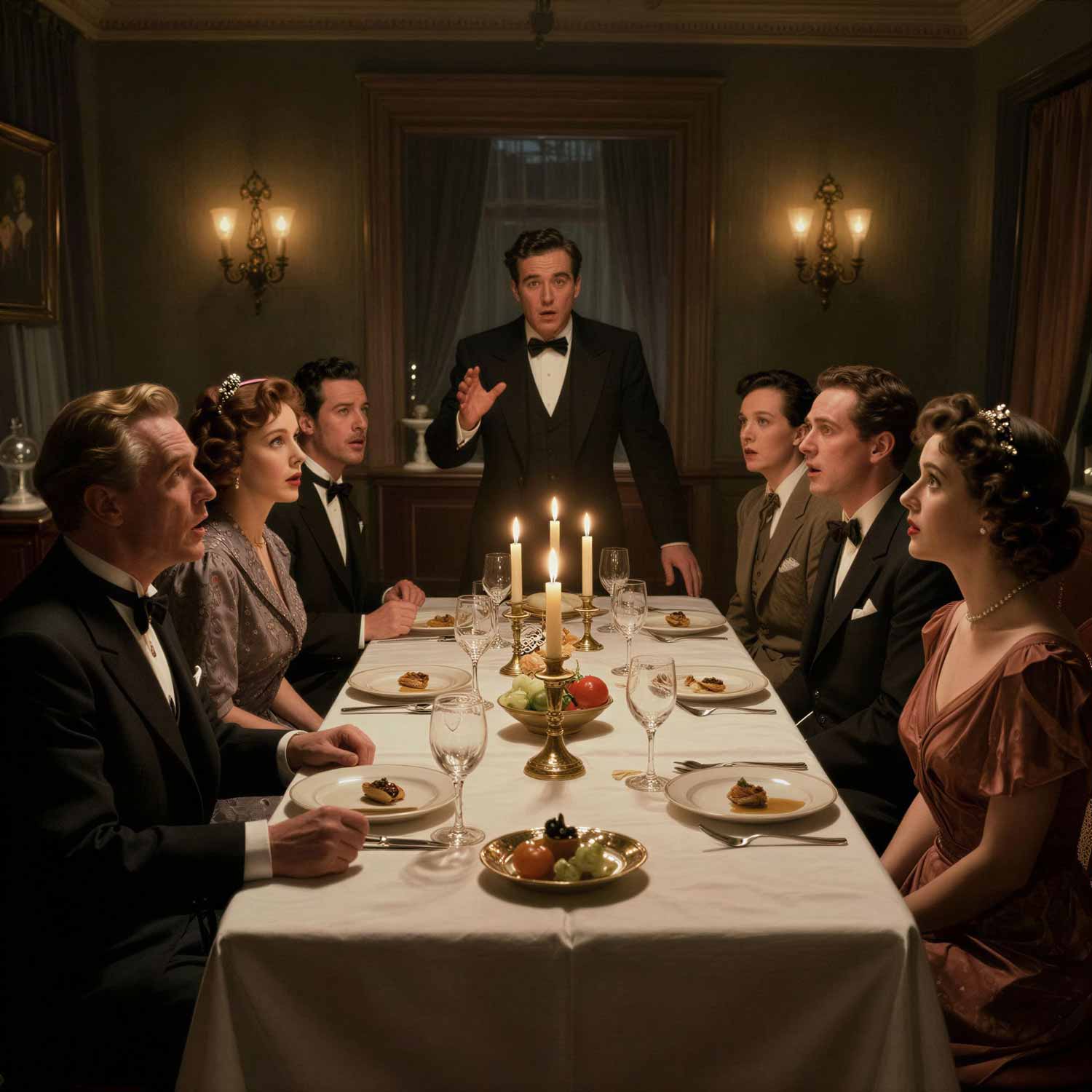
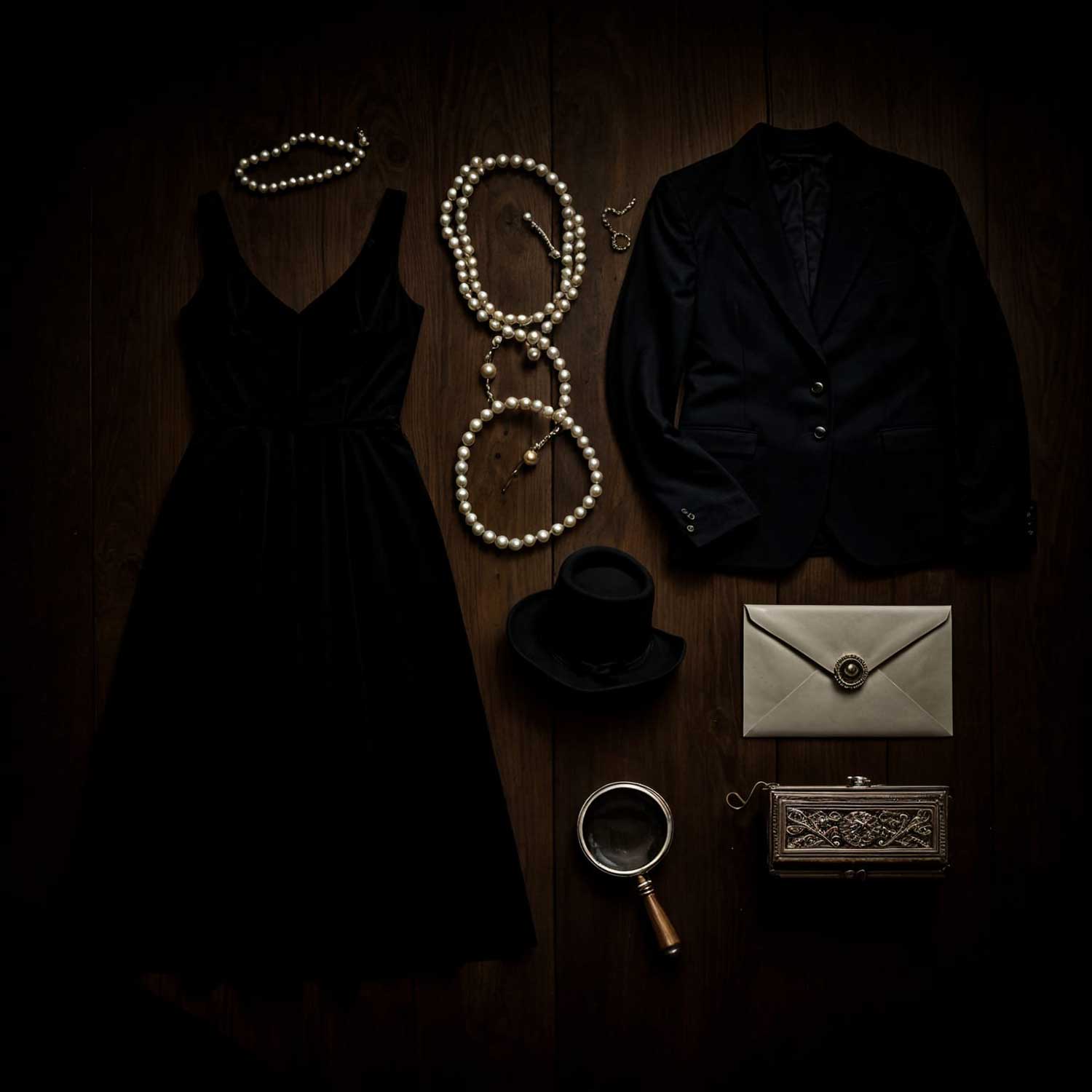
A long black dress, for example, works beautifully for the glamorous performer's entourage in Checked Out At The Imperial. It works equally well for the wealthy matriarch in The Ski Lodge Murder. Add a veil and some cobwebby jewellery, and it could suit the gothic atmosphere of The Haunting of Myddlemoor Abbey. Same dress. Three evenings. No guilt whatsoever.
The Capsule Wardrobe for Murder Mystery Hosts
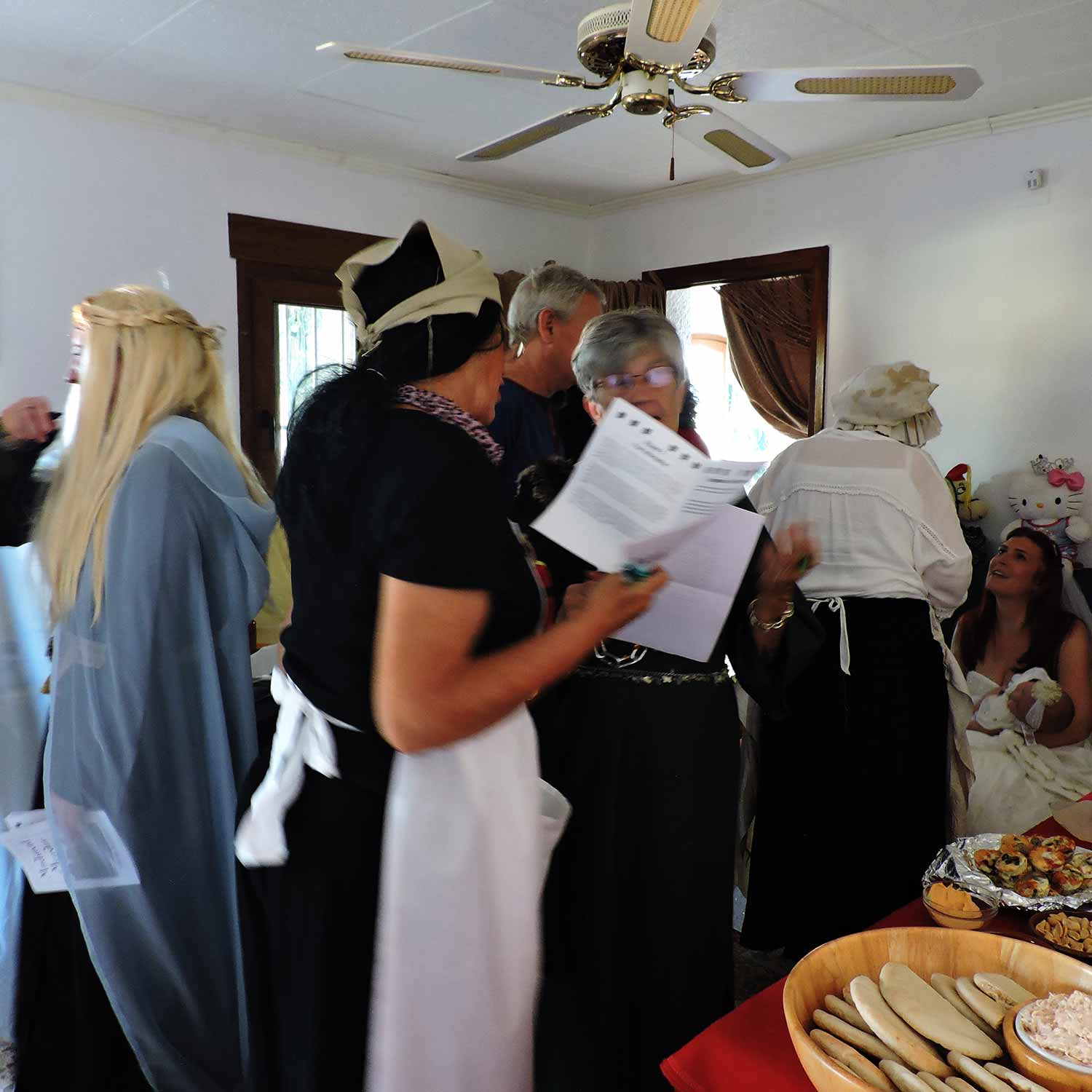
If you're planning to run multiple games, or if you have a group of friends who enjoy a good whodunnit a few times a year, it's worth building what the fashion world would call a "capsule wardrobe" and what we'll call a "suspicion starter kit."
A few pieces that punch well above their weight:
For period settings (the Myddlemoor games):
- A waistcoat (vest). Works for gentlemen, villains, and everyone in between. Dress it up with a pocket watch chain; dress it down with rolled sleeves.
- A long string of pearls or beads. Pearl-clutching optional but encouraged.
- A felt trilby or cloche hat. Instantly places the wearer in a bygone era without requiring a full outfit change.
- Evening gloves. A single prop that says I have secrets louder than almost anything else in the dressing-up box.
For contemporary settings:
- A plain dark suit jacket. The universal signifier of either respectability or something rather worse.
- A clerical collar insert. Surprisingly versatile.
- A lab coat or chef's whites. White and authoritative. Suggests a professional in any setting.
- A vintage brooch or pocket square. Small, but transformative.
For atmospheric pieces that cross eras:
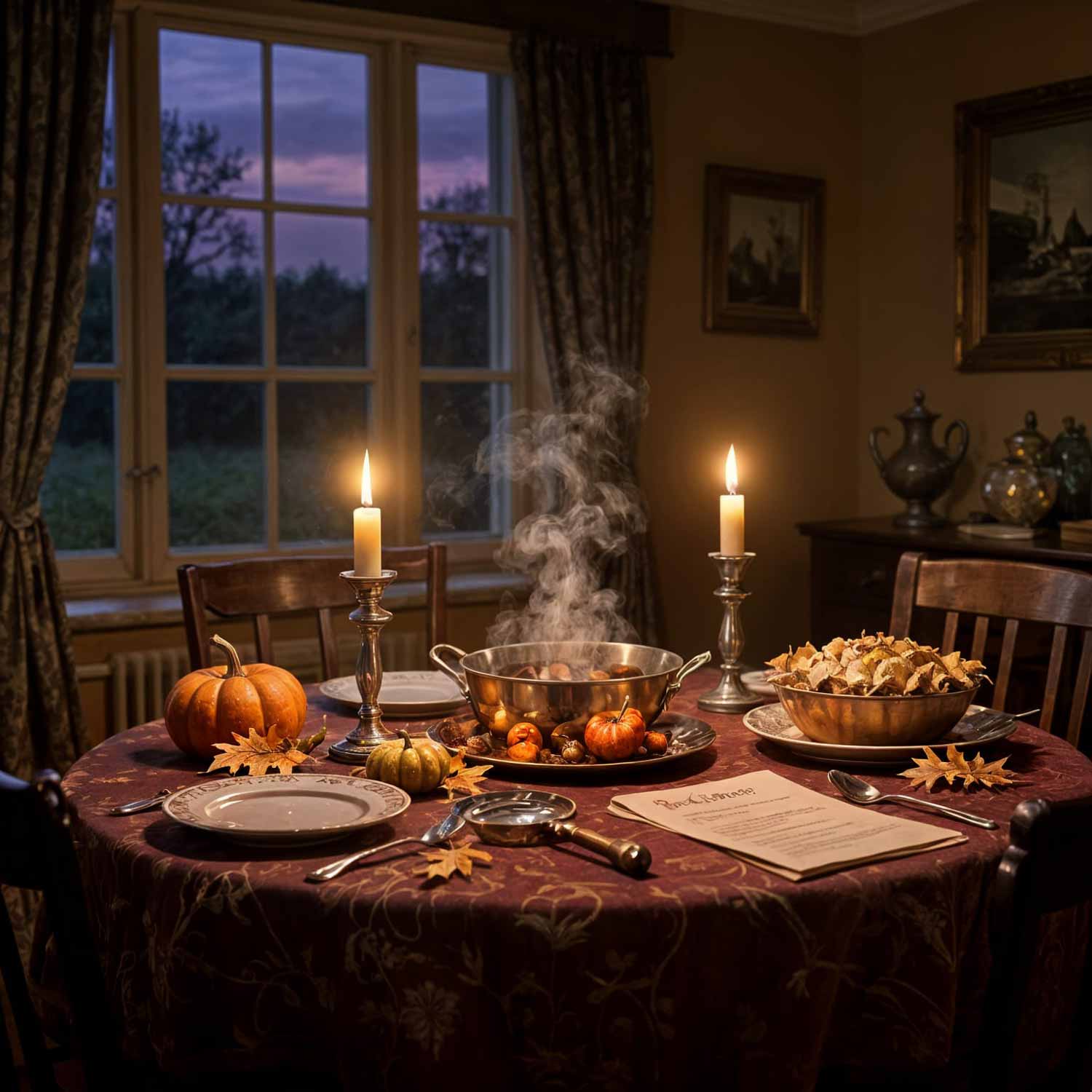
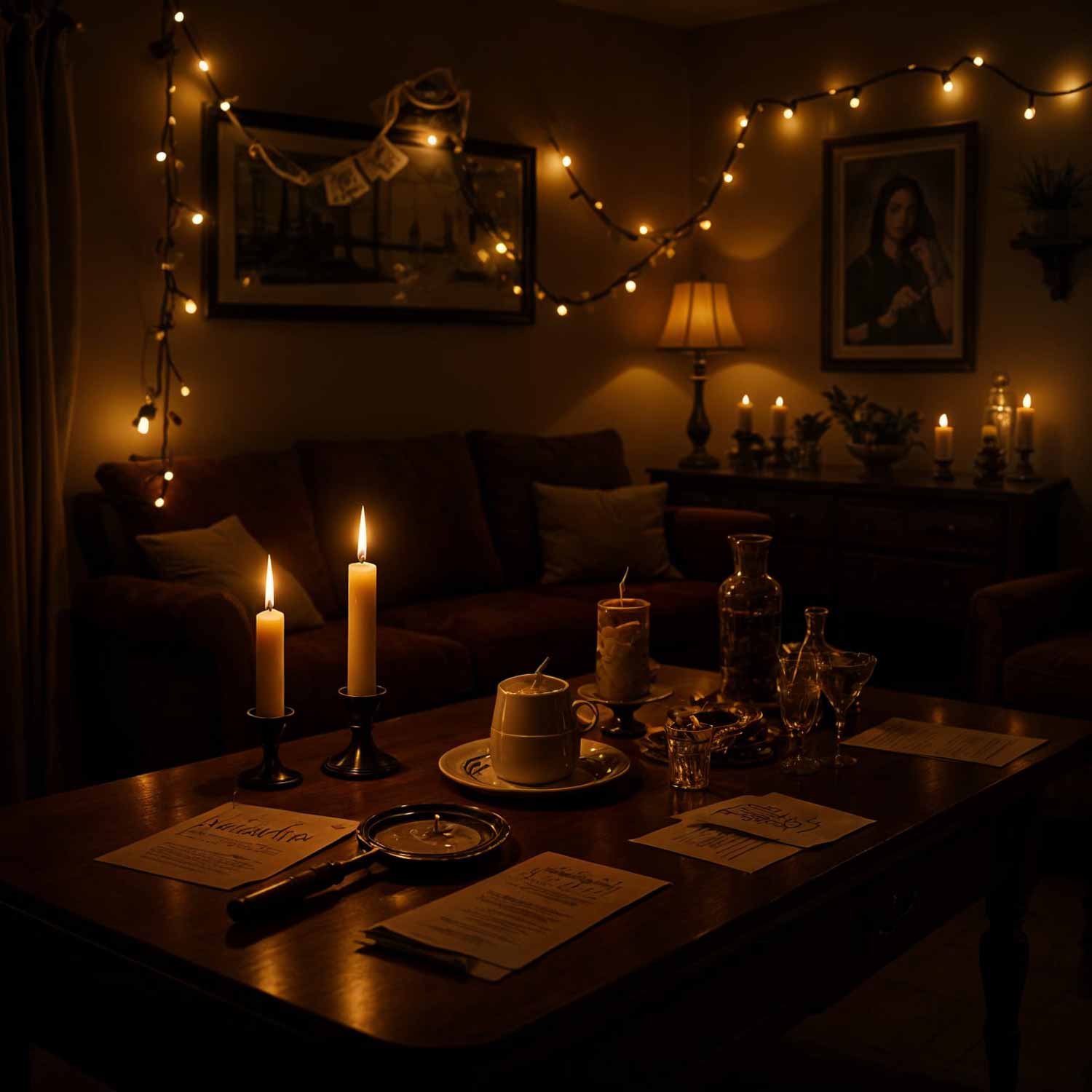
- Candlesticks (or battery-powered equivalents — fire safety, always)
- A decanter and glasses, even if they contain nothing more incriminating than lemonade
- A single leather-bound book or ledger
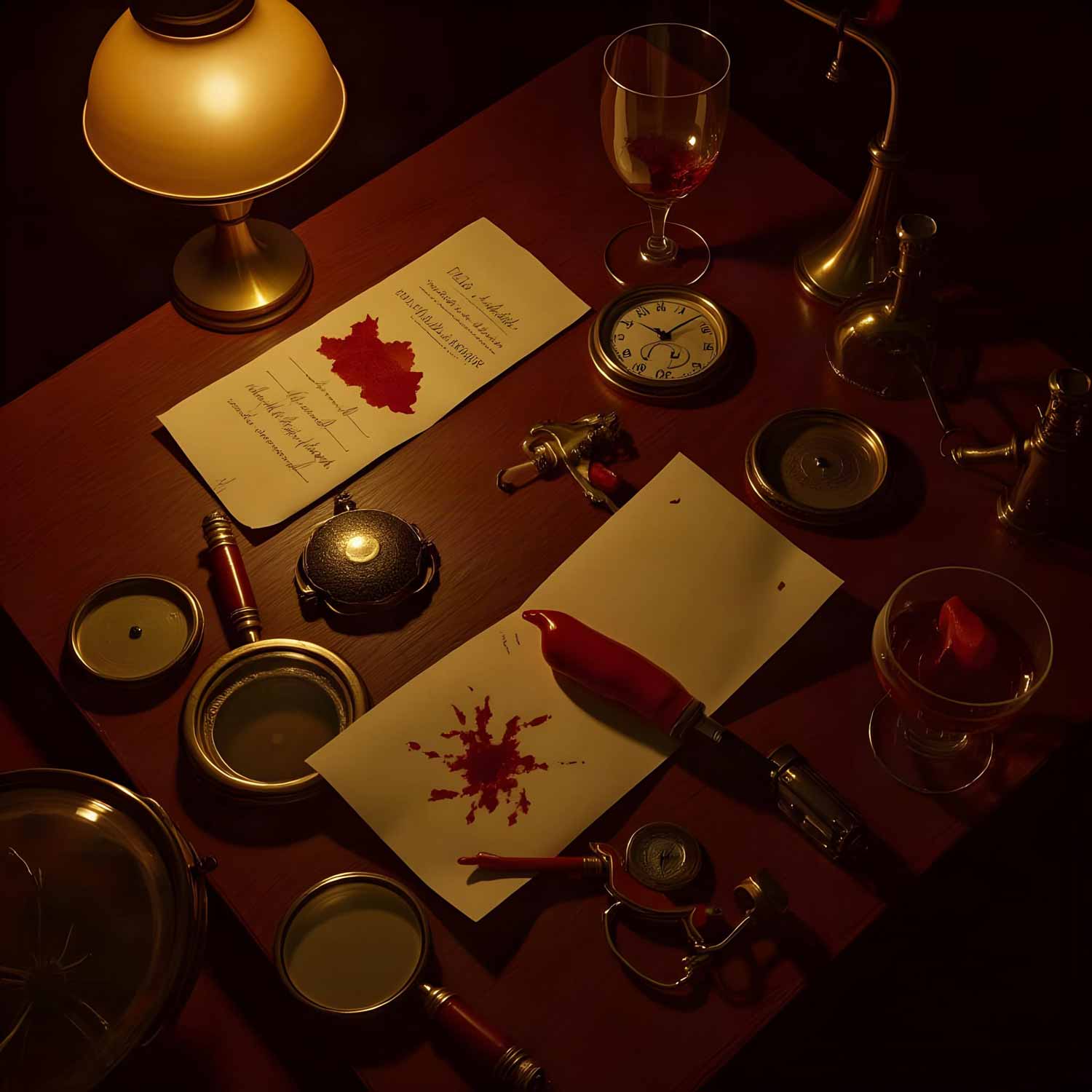
- A letter sealed with wax
Specific Games, Shared Wardrobes
Let's look at a few examples from the Murder In The House catalogue and where costume overlap naturally occurs.
The Glamorous Contemporary Settings: Checked Out At The Imperial and The Ski Lodge Murder
On the surface, Checked Out At The Imperial, a hotel murder involving rival hoteliers, a dead singer, and a morning meeting that takes a very dark turn, and The Ski Lodge Murder, where a wealthy family's mountain getaway goes badly wrong, might seem like different worlds. One is all cabaret glamour and industry intrigue; the other is après-ski money and family dysfunction.
But look at the character types and the wardrobe overlap becomes obvious. Both games feature the kind of people who dress to impress even in a crisis: the glamorous woman who always looks like she just stepped out of a magazine (Wanda Limelight in one; Lotta Drachma in the other); the efficient professional with a clipboard (the Banqueting Manager; the Personal Assistant); the person in service clothing who knows far more than they're letting on. A sequinned jacket. A smart blazer. Chef's whites. These pieces move between games without complaint.
The Village Hall and the Film Set: A Shocking Review and Lights, Camera, Murder
This one seems like an odd pairing at first glance. A Shocking Review is set in a village hall, its suspects drawn from the membership of an amateur dramatic society: a vicar, a publican, a gardener in dungarees, a retired actor who still insists on the cravat. Lights, Camera, Murder takes place on a professional film set in the woods, where a producer has been found dead in his trailer, and everyone has a motive.
And yet: both are fundamentally about people in the entertainment world, one amateur, one professional, with egos, rivalries, and secrets. The theatrical archetypes translate remarkably well. The flamboyant performer (Vic McFly's open shirt; the film's lead actress and boa). The behind-the-scenes technical type (the village hall's stage crew; Terry Gaffer, and the production equipment). The person with the clipboard who keeps everything running (the PEAPODS committee secretary; the screenwriter with the Dictaphone). Different budgets for the costumes; same basic wardrobe.
The Power-Dressed End of the Spectrum: Capital Punishment and The Ski Lodge Murder
Capital Punishment drops six people into the corridors of power in Washington DC, all of them sharing a dangerous secret and hunting a murderer before their own exposure. The Ski Lodge Murder places a wealthy, powerful family and their staff in an isolated mountain lodge when the patriarch goes missing.
Different locations, similar energy: both games call for the kind of sharp, slightly formal contemporary dressing that signals important people with important secrets. The well-cut dark jacket. The power blouse. The crisp shirt and tie worn just a touch too carefully. A Washington DC insider and the Vice-President of a wealthy family business would, frankly, not look out of place at the same conference table. Which is rather the point.
Props: The Underrated Workhorses
Costumes get most of the attention, but props often do more atmospheric work for less money. And they're even more transferable than clothes, because they carry meaning independently of who's wearing them or what era they're from.
Some props earn their keep across virtually every murder mystery ever written:
The Incriminating Letter. Print off a suitably aged-looking document (cream paper, slightly distressed at the edges, ideally with a wax seal), and it works in any setting from medieval to modern. Change the font and the contents; keep the paper and the seal. No one is examining the serif choices when a murder is afoot.
The Photograph. A framed photo, particularly a slightly old-fashioned one, or one with a face obscured or torn, adds instant intrigue to any scene. Keep a few frames and swap out the contents.
The Jewellery Box or Casket. The idea of hidden contents is universally compelling. A small, ornate box on the table will draw attention and suggest secrets, whether you're in a 1920s hotel or a medieval great hall.
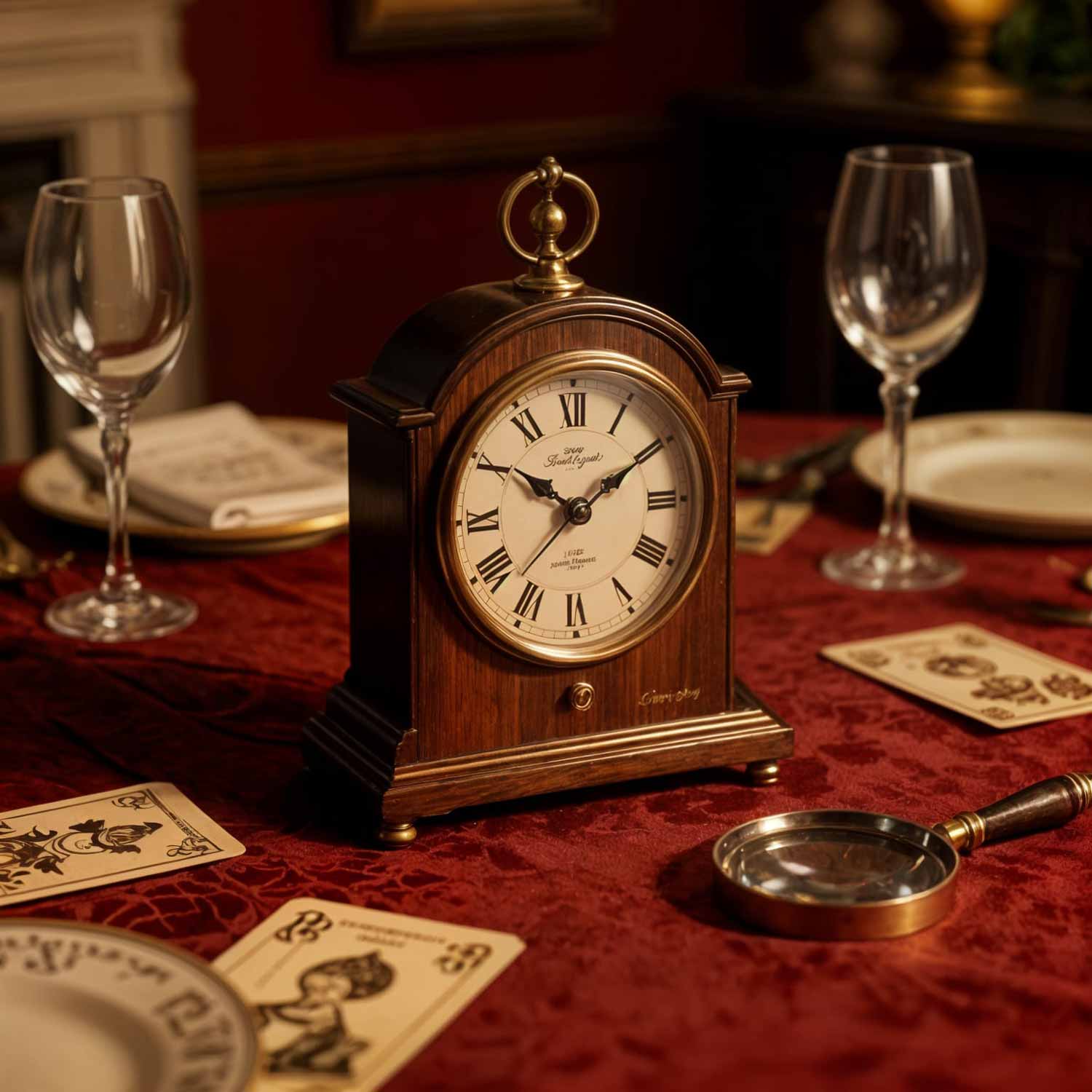
The Magnifying Glass. This is practically a murder mystery mascot. It signals "detective work is happening here" without a word being spoken. And it looks good in every setting.
The Newspaper. A prop newspaper, ideally one you've made to look period-appropriate, can serve as a clue carrier, a set dressing item, or something for suspects to pretend to be very interested in when they'd rather not answer questions.
Practical Storage: Because the Feather Boa Deserves Better
If you're building a reusable collection, a little organisation goes a long way.
A single large plastic storage box with a lid, labelled something appropriately dramatic like "Evidence", keeps everything in one place between games. Sort items loosely by type: accessories in one section, smaller props in another, and anything fragile wrapped in tissue paper or placed in a smaller box inside.
More usefully: keep a brief note of which items you own and which games you've used them for. Something as simple as a list on the inside of the box lid. This saves the pre-party panic of trying to remember whether the candelabra is still in the garage or was returned to someone's house in 2023 and never retrieved.
The Secret Benefit Nobody Mentions
There's one more advantage to reusing costumes and props that often goes unacknowledged: familiarity breeds confidence.
Guests who've worn a character costume before, even a different character in the same style of clothing, tend to inhabit their roles more comfortably the second time around. The waistcoat that felt slightly theatrical at first becomes simply the way you dress when there's a mystery to solve. The props become tools rather than novelties.
This is particularly worth noting for hosts who have a regular group of friends who return for game after game. Over time, you're not just building a wardrobe, you're building a shared ritual. And shared rituals, as anyone who's ever attended a good murder mystery party knows, are exactly the sort of thing that makes an evening genuinely memorable.
Even if the candelabra is the same one from last time.