Every year, somewhere in an office meeting room, a well-meaning HR manager opens a spreadsheet and types the words "team-building ideas." And every year, the list that follows looks more or less the same. Bowling. A quiz night. Possibly, if everyone is especially unlucky, a trust fall.
These are fine. They are perfectly decent ways to spend an afternoon. But they don't tend to produce the kind of stories people are still telling six months later.
A murder mystery does.
It turns out that accusing your line manager of poisoning the company accountant is an excellent way to get to know someone. And there's rather more to it than that.
Everyone Gets a Role — And Has to Use It
One of the most stubborn problems with team-building is that it tends to favour the same people who already dominate every meeting. The confident ones. The loud ones. The ones who have never, not once, been reluctant to share their opinion.
A murder mystery reshuffles things considerably.
Everyone arrives with a character. Everyone has a secret. Everyone has something to protect and a reason to deflect suspicion. The game doesn't care who has the most impressive job title — it rewards people who listen carefully, notice details, and know when to stay quiet.
Which means:
- The quiet analyst who spots the inconsistency no one else caught suddenly becomes indispensable
- The extrovert who usually leads every conversation has to actually listen to make progress
- The new joiner who barely knows anyone has a character to hide behind while they find their feet
Everyone contributes. Everyone is necessary. That's surprisingly rare in a team activity, and it matters more than it might seem.
It Teaches People How Each Other Actually Thinks
There's a version of getting to know your colleagues that involves asking where they grew up and whether they prefer tea or coffee. That version is harmless but tells you almost nothing useful.
A murder mystery tells you rather more.
Watch how your colleagues approach a problem under pressure and you'll learn things a hundred coffee chats wouldn't reveal. Some people go straight for the evidence — they want facts, timelines, something they can point to. Some people read the room, picking up on behaviour and inconsistency. Some people form a theory early and stick to it with magnificent, occasionally misplaced, conviction.
None of these approaches is wrong. But knowing which one your colleague tends towards? That's genuinely useful when you're back at work the following Monday and trying to get something done together.
It Creates a Shared Story (Which Is the Point of Teams)
What bonds groups of people, more than almost anything else, is shared experience. Not shared experience of a mildly pleasant afternoon — shared experience of something actually happening. Drama. Surprise. The moment when someone announces, with complete confidence, that they've solved it, and then turns out to be spectacularly wrong.
Those moments linger. They become the stories that get told at lunch, referenced in meetings, brought up whenever someone new joins the team and needs to understand the group dynamic.
"You weren't there for the time Marcus accused the CEO of being the murderer based on absolutely no evidence?"
That story does more for team cohesion than most formal exercises manage. And no one had to do a trust fall.
It Puts Everyone in the Same Position: Slightly Lost
Here's something that doesn't get said enough about team-building: one of its most powerful functions is equalising.
In an office, hierarchy is everywhere — in job titles, in who speaks first, in whose ideas get taken seriously. A murder mystery temporarily dissolves all of that. Everyone walks in not knowing the answer. Everyone has to ask questions. Everyone has to admit, at some point, that they're not entirely sure what's happening.
That shared vulnerability — the collective "I have absolutely no idea who did this" — creates a kind of levelling that's hard to manufacture any other way. And in that space, people often connect in ways they wouldn't if someone was clearly in charge and everyone else was following their lead.
It's Actually Fun (Which Turns Out to Matter)
This should perhaps go without saying, but it's worth saying anyway: fun is not a luxury in team-building. It's rather the whole mechanism.
People learn more when they're engaged. They remember more when they're enjoying themselves. They lower their defences and let their actual personalities show when they're genuinely having a good time rather than politely enduring something.
Murder mystery games consistently produce the kind of evening where people forget to check their phones. Where conversations that start as part of the game drift naturally into real ones. Where the evening ends and someone says, without any prompting, that they should do this again.
That's not a small thing to achieve.
A Final Word on the Accusations
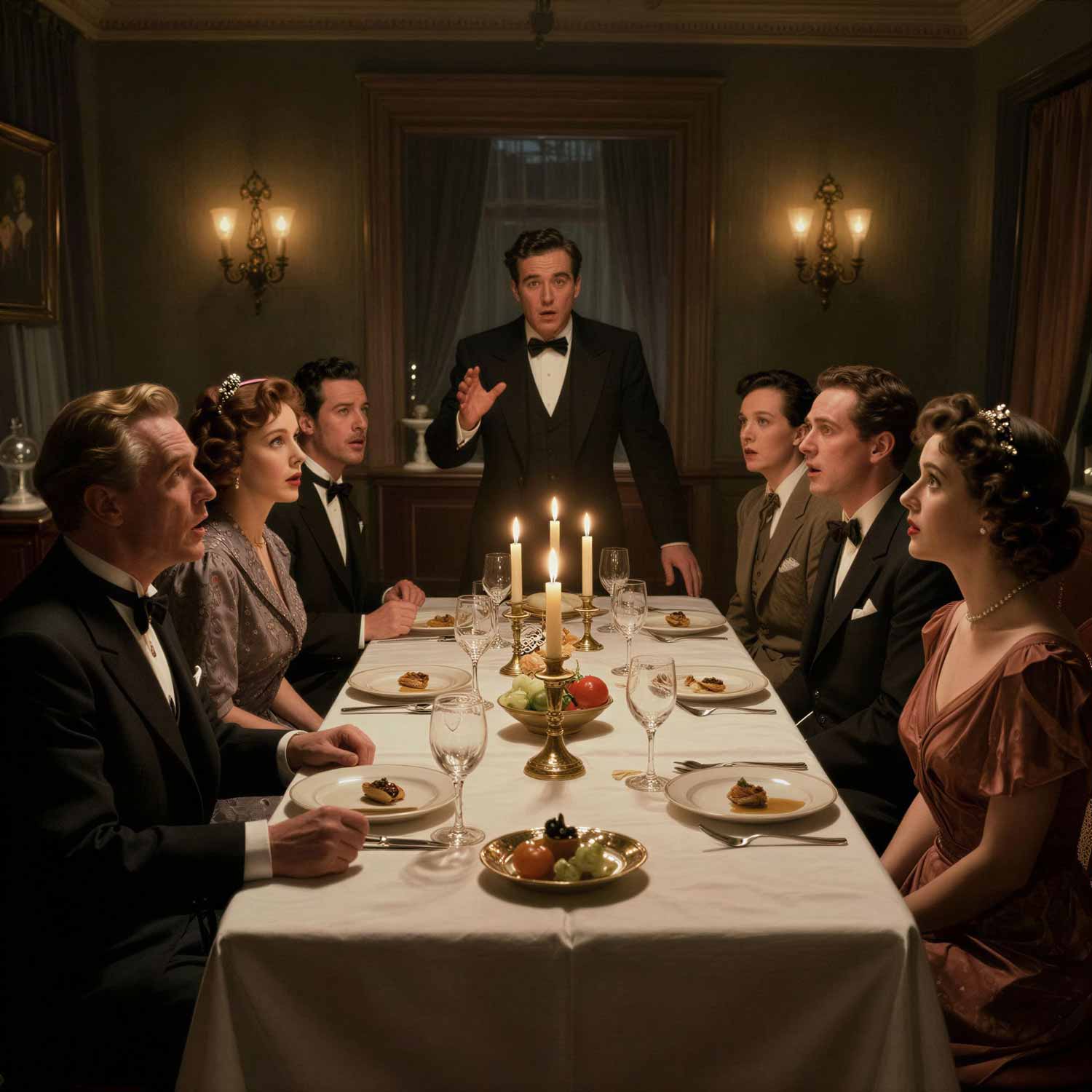
Yes, people will accuse each other of fictional murder. Yes, someone will point at a colleague with great theatrical confidence and list their motives in considerable detail. Yes, this is slightly unusual behaviour for a Tuesday evening.
But there is something oddly freeing about a game that gives everyone permission to be a little dramatic, a little suspicious, and a little bit more themselves than they'd usually allow at a work event.
And when it's done, the murderer is revealed, the mystery is solved, and everyone goes home having laughed more than they expected and knowing their colleagues slightly better than they did before.
Which is, when you think about it, exactly what team-building is supposed to do.
Has your team tried a murder mystery? Did anyone accuse the right person — or did everyone confidently point at entirely the wrong suspect until the very end? Either way, we'd love to hear how it went.