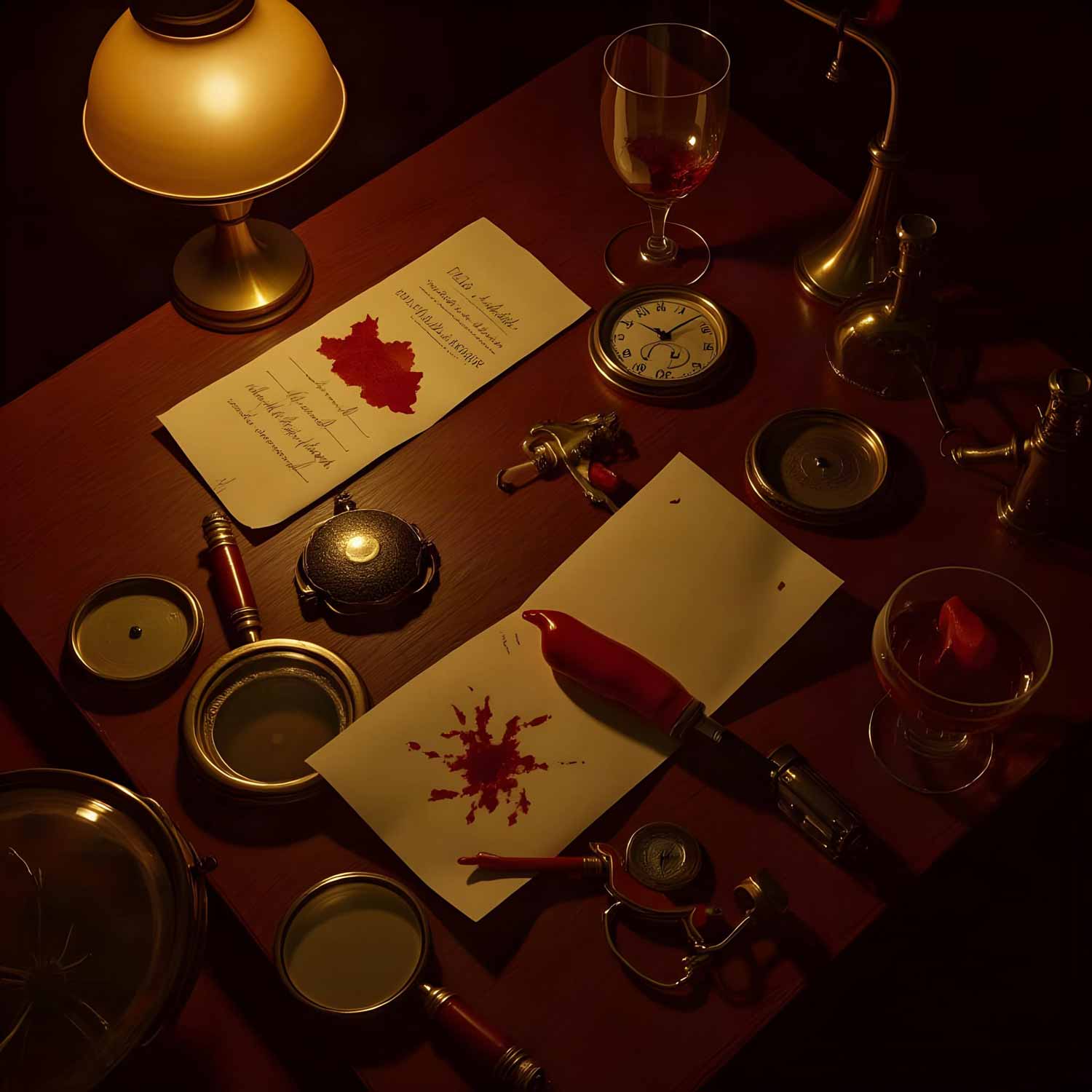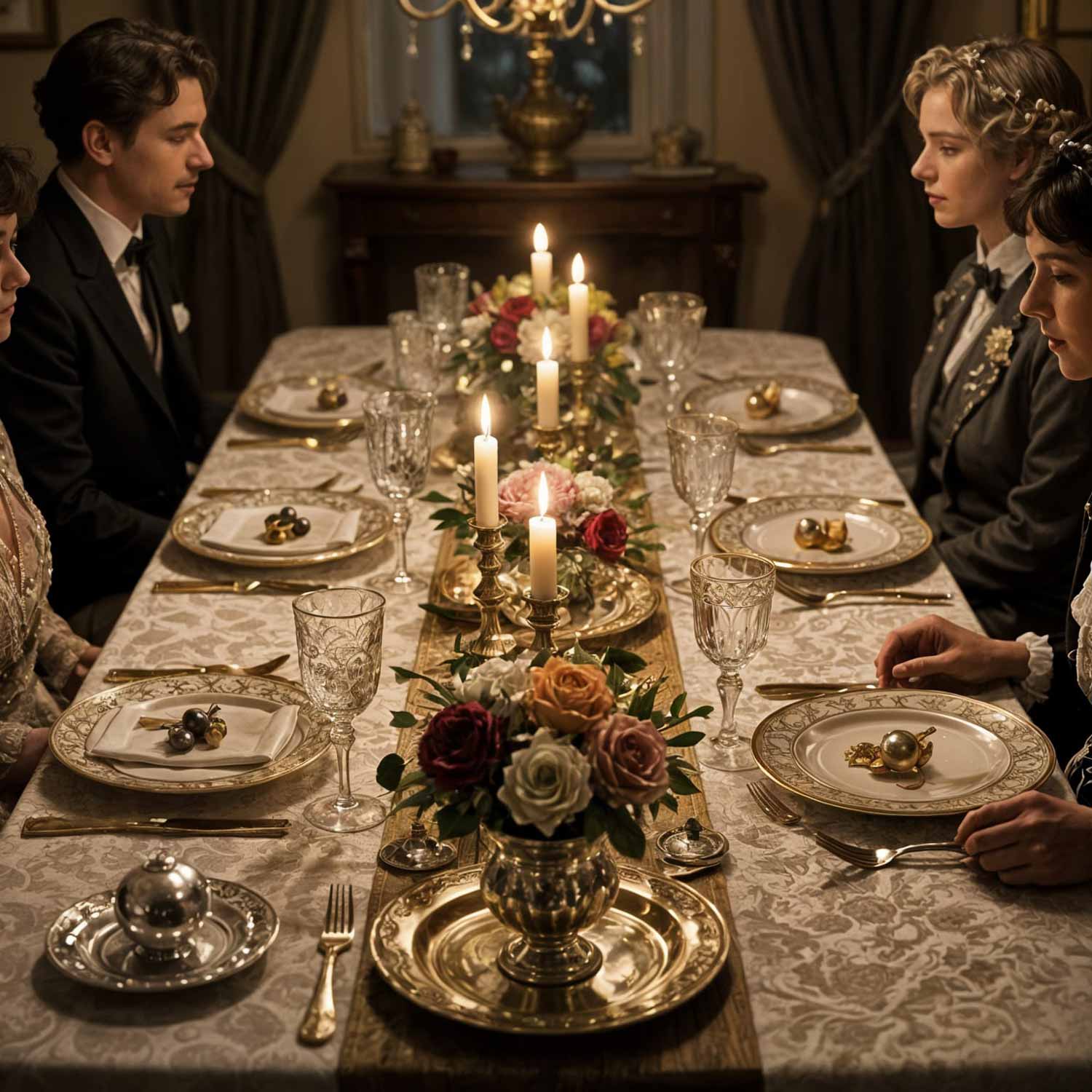
At some point during every murder mystery evening, usually somewhere between the second round of clues and the arrival of dessert, someone will crack.
They'll lean across the table, point a finger at the quietly smirking person opposite them, and announce, with absolute conviction, that they've solved it. They know who did it. They have evidence. They have a motive. They may even have a dramatic speech prepared.
And then everyone looks at you, the host, waiting to see what happens next.
This is the moment. The fork in the road. Do you let them make their accusation now? Or do you smile serenely and tell them to hold that thought until the end of the evening?
It's a question that comes up surprisingly often. And the answer, as with most things in life, depends on what kind of evening you actually want to have.
Why Someone Always Wants to Accuse Early
First, let's acknowledge something: the urge to accuse early is not a sign that your guests are being impatient or playing it wrong. It's a sign that your mystery is working.
When someone becomes convinced they've cracked the case before the final reveal, that's engagement. That's exactly the kind of gleeful "I've got you" energy that makes these evenings memorable. The worst thing that can happen at a murder mystery party is for everyone to sit there politely, mildly puzzled, and not really care whodunit.
So if your guests are desperate to start pointing fingers, congratulate yourself quietly and then read on.
The Case For Waiting Until The End
Here at Murder In The House, our games are designed with a specific structure in mind: the accusation happens at the end of the evening, after all the clues have been revealed, all three rounds have been played, and everyone has had a proper chance to gather evidence and interrogate their fellow suspects.
There are very good reasons for this.
The full picture is the point. A murder mystery is a puzzle, and puzzles are meant to be completed before you announce the answer. In the early rounds, your guests only have a fraction of the information. The clue that seems absolutely damning in Round One may look entirely different once Round Three reveals something crucial about the timeline, or the alibi, or the secret that nobody was supposed to know. Accuse too early and you're essentially guessing — confidently, dramatically, entertainingly, perhaps — but guessing nonetheless.
It keeps everyone in the game. If accusations are flying throughout the evening, the person who gets accused feels put on the spot, the person doing the accusing may feel awkward if they turn out to be completely wrong, and everyone else starts to feel like the evening is spiralling into a free-for-all rather than a structured mystery. The final revelation, when everyone submits their verdict at the same moment, is a great leveller. The confident and the uncertain all make their choice at once, and the drama is properly shared.
The reveal lands harder. There's something genuinely satisfying about that moment at the end of the evening when everyone puts their accusations on the table at the same time and the solution is finally announced. Some people will be right. Some people will be spectacularly wrong. Someone will have suspected the murderer from the very beginning and will be insufferably smug about it, and someone else will have built an entire theory around completely the wrong person and will be utterly delighted by how wrong they were. All of that happens best when it happens together, at the end, with the full story in place.
The Case For Letting Accusations Fly Early
That said, and this is important, murder mystery parties are, above all else, social occasions. They exist to entertain your guests, not to enforce a rigid set of procedural rules on an evening that's meant to be fun.
If the energy in the room is buzzing, if everyone's leaning in, if someone is practically vibrating with the need to accuse their best friend of fictional manslaughter, then sometimes the right call is to let them have their moment.
Some groups thrive on the chaos of mid-game accusations. They want the theatre of it. They want to watch someone commit to a theory, defend it passionately, and then be completely undermined by a clue that arrives in the very next round. That kind of dramatic irony is genuinely hilarious, and if your group loves it, there's no reason to deny them.
The trick, in this case, is to make it clear that the early accusation is a theory, not a verdict. The game is still in progress. More information is coming. Everyone will still submit their final answer at the end — but in the meantime, by all means, let the speculation be loud and enthusiastic.
Think of it less as "accusing" and more as "forming a working hypothesis with great conviction and possibly a pointed finger."
What You Should Probably Avoid
There are a couple of things that tend to go wrong when accusations start happening at the wrong moment, and it's worth knowing about them in advance.
Don't let an early accusation derail the game structure. If someone announces they've solved it in Round One and everyone immediately stops engaging with the clues as a result, you've lost the evening. The whole point of the three-round structure is that each round builds on the last. If your guests mentally check out when someone declares a winner early, the rest of the clues become background noise. Keep the structure. Keep the rounds. Keep everyone engaged until the end.
Don't let one voice dominate. In every group, there will be at least one person who forms an opinion early and pursues it with the energy of a Victorian detective who has just dramatically removed their magnifying glass. This is a gift, usually. But if that person's certainty starts to silence everyone else, if the quieter guests stop investigating because the loud one has declared it settled, gently redirect. A mystery is best solved by many minds working together, even if those minds disagree violently about the answer.
And whatever you do, don't confirm or deny the early accusation. As the host, you are the keeper of the solution. If someone accuses early and looks at you for a reaction, your face must remain entirely, serenely neutral. A raised eyebrow. A slight smile. "Interesting theory. Shall we see what Round Two brings?" Say nothing that gives it away — either way.
So: What's The Verdict?
In Murder In The House games, the formal accusation is a finale moment. It's the culmination of an evening's worth of suspicion, evidence, and increasingly creative theories about who had the means, the motive, and the opportunity to commit the fictional crime on your dining room table.
Saving it for the end is the right call, structurally, dramatically, and socially.
But if the energy in your room is calling for something looser and more theatrical along the way? Let the speculation run. Let the theories be aired. Let someone dramatically accuse the person sitting next to them of being a cold-blooded fictional murderer over the cheese course.
Just make sure that when the final moment comes, everyone still gets to make their proper, considered, official verdict.
That's when the real fun happens.
That's when someone who has been certain all evening turns out to have been magnificently, gloriously wrong.
And that, more than any early accusation, is the moment everyone will be talking about on the way home.