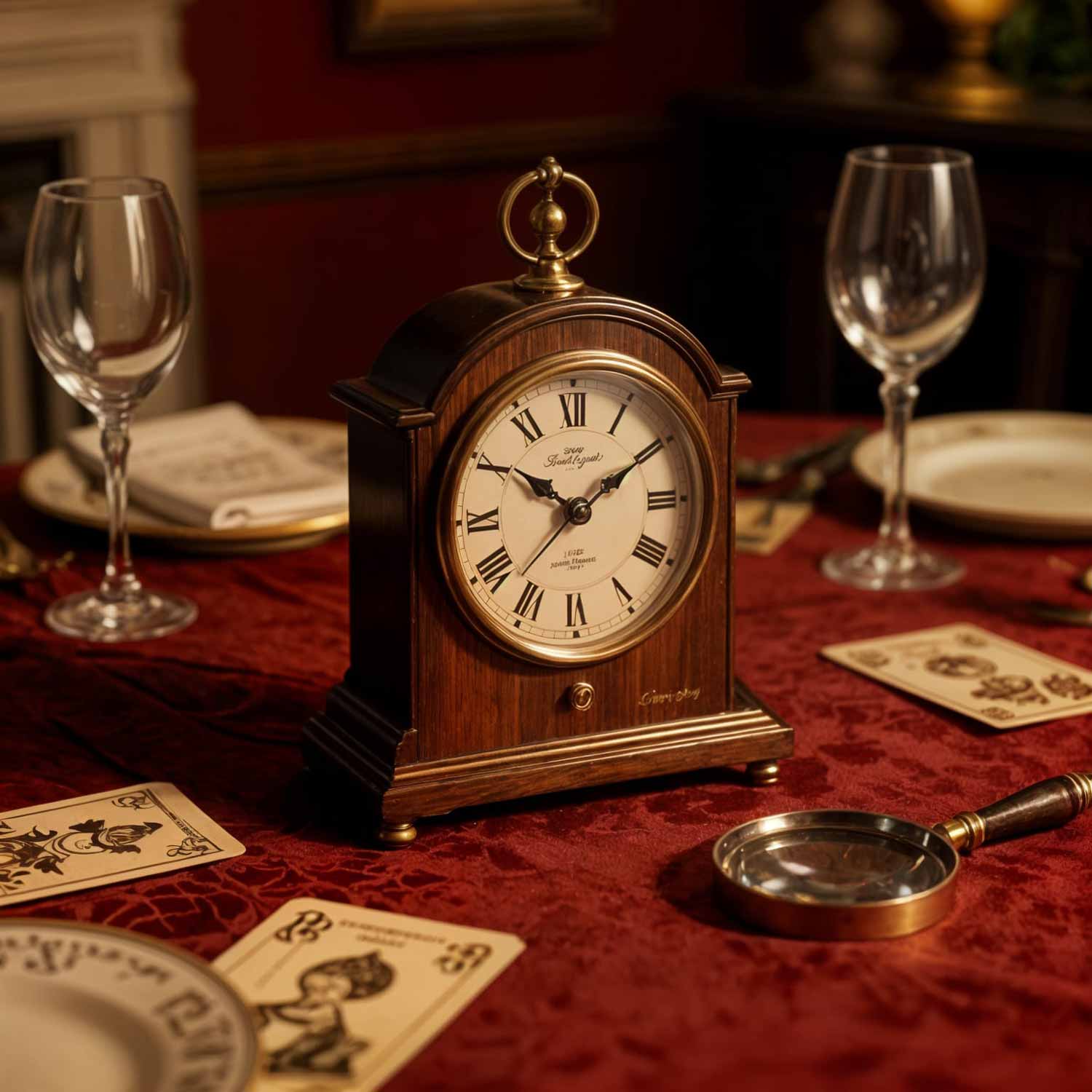
There's a very specific kind of murder mystery where the victim is found in a country house library, the suspects are all hiding at least one scandalous secret, and somehow everyone still finds time to have a lovely cup of tea.
Nobody is particularly traumatised. The detective is pleasantly eccentric. The killer, when finally unmasked, lets out a dramatic gasp and concedes that, yes, fair enough, it's a fair cop.
Welcome to the cosy mystery — arguably the most enjoyable sub-genre in all of crime fiction, and (as it turns out) the natural spiritual home of the murder mystery party.
So What Actually Makes A Mystery "Cosy"?
The term gets thrown around a lot, so let's nail it down. A cosy mystery typically has:
A contained setting. A village. A country house. A hotel. A ski lodge cut off by a snowstorm. (That one sounds familiar, doesn't it?) The world of the story is small and intimate, which means everyone knows everyone else — and everyone has a reason to be suspicious of everyone else.
An amateur detective. Not a hardboiled cop. Not a tortured loner with a dark past. Usually an ordinary person — a bookshop owner, a vicar's wife, a hotel manager — who finds themselves unexpectedly thrust into the role of sleuth. They solve the mystery through observation, conversation, and sheer nosiness.
A cast of characters with secrets. The beauty of the cosy is that everyone is hiding something. Not necessarily murder — it might be blackmail, a secret affair, a stolen inheritance — but the web of secrets is what makes the whodunit work. You're never quite sure which secret is the one that matters.
Humour alongside the horror. There's definitely a dead body. But nobody dwells on it too graphically. The tone stays light, the banter keeps flowing, and the whole thing feels more like an elaborate puzzle than anything genuinely grim. This is, after all, supposed to be fun.
Justice at the end. The murderer is always caught. The mystery is always solved. Loose ends are tied up. Order is restored. Cosies are deeply satisfying in a way that a lot of fiction simply isn't — because you know it's going to be okay.
And Why Does This Fit A Murder Mystery Party So Perfectly?
Here's the thing: if you strip back what makes a cosy mystery work, you'll notice something. It reads like a description of every murder mystery party ever hosted.
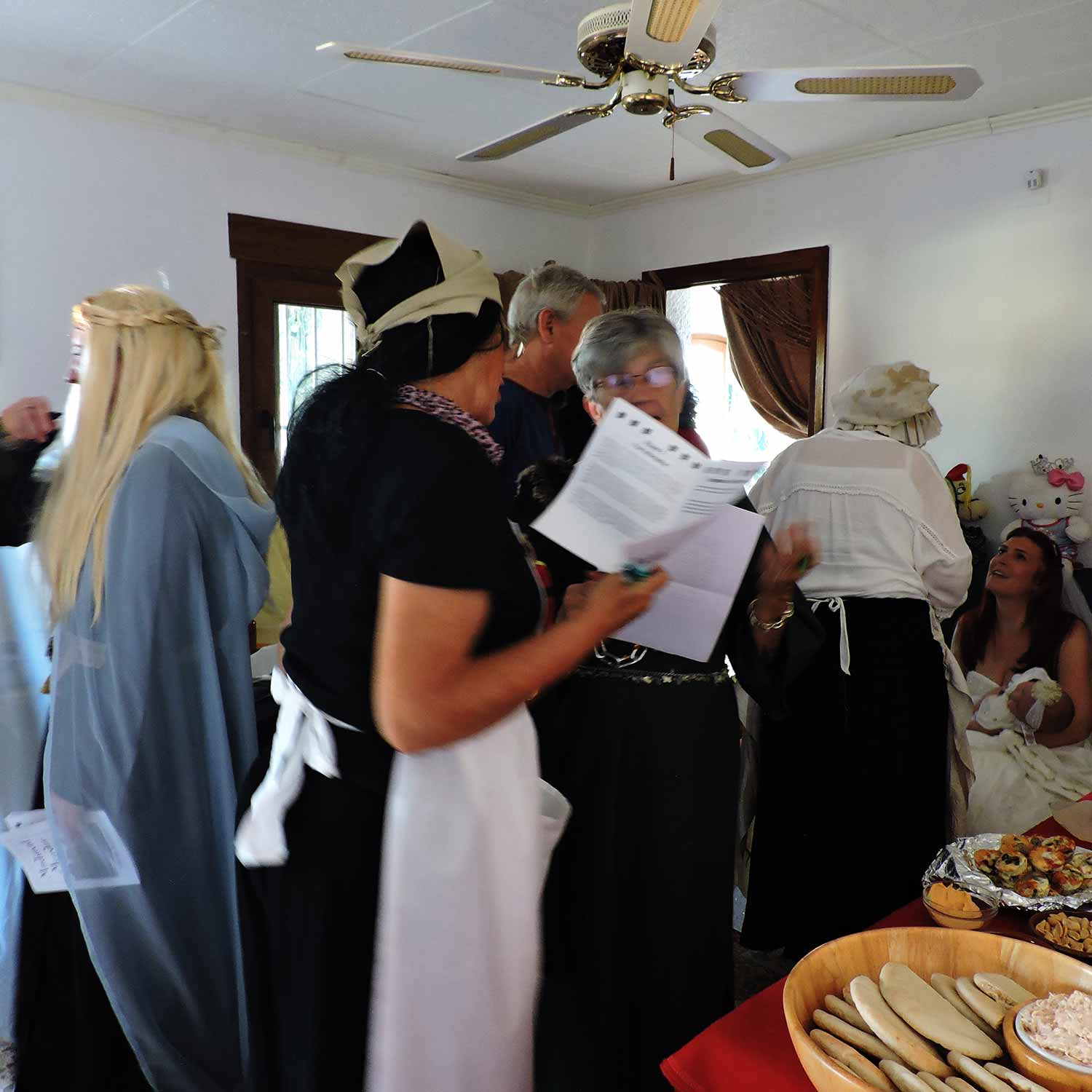
Think about it. You've got a contained setting — your dining room, your living room, maybe a hired venue, but either way a defined space where all the suspects are gathered together. You've got characters with secrets, handed out on character sheets before anyone's even sat down to eat. You've got amateur detectives — because your guests are the detectives, and unless you've accidentally invited an actual Inspector to your dinner party, they're all amateurs. And you've definitely got humour alongside the murder — because the moment someone in a medieval costume dramatically accuses the person dressed as a court jester, the whole table dissolves into laughter.
The cosy mystery was practically invented for this format.
Which is probably why, when the writers behind Murder In The House started turning some of their games into actual novels, they reached naturally for the cosy mystery genre. Games like Checked Out At The Imperial and A Shocking Review both have companion novels in the Paula Langford Cosy Mystery series — and the fit is seamless, because the bones of the story were already cosy all along.
The Agatha Christie Effect
It would be impossible to talk about cosy mysteries without mentioning the godmother of the entire genre. Agatha Christie essentially codified what a cosy mystery looks like — the country house, the closed circle of suspects, the red herrings, the brilliant (if slightly theatrical) detective reveal.
And murder mystery party games have been channelling that same energy ever since. There's a reason "a bit like an Agatha Christie" is one of the highest compliments you can give a murder mystery game. It means the plot is clever, the characters are vivid, the suspects are plentiful, and nobody is going to end up genuinely disturbed by the experience.
That's cosy, through and through.
Why "Cosy" Doesn't Mean "Easy"
One small misconception worth tackling: cosy doesn't mean the mystery is simple. Some of the cleverest, most deviously constructed whodunits in history are cosies. The coziness refers to the tone and setting, not the complexity of the puzzle.
In a good murder mystery party game, just like a good cosy novel, you'll have red herrings designed to send you confidently in entirely the wrong direction. You'll have characters who are clearly guilty of something, just not necessarily the murder. You'll reach the final round convinced you've cracked it — and then the solution will reveal you were wrong, and somehow it's even more satisfying than if you'd been right.
The cosy mystery plays fair. All the clues are there. You just have to be cleverer than the person sitting across the table from you.
Good luck with that.
The Perfect Evening, Explained
So next time someone asks you why a murder mystery dinner party is such a good idea, you can explain it like this:
It's a cosy mystery. It has everything — the dramatic setting, the suspicious characters, the hidden secrets, the satisfying resolution. Except instead of reading it on the sofa with a cup of tea, you're in it. You're one of the characters. The secrets are yours to guard and reveal. The clues are for you to find.
And the tea — well, that depends on your menu. But we do have recipe suggestions.
Ready to step inside your very own cosy mystery? Browse our range of murder mystery party games at murderinthehouse.com and find your perfect evening of intrigue.
And if you want to extend the fun beyond the dinner table, check out the novels inspired by our games — cosy mysteries that bring the same characters and stories to life on the page.