There's a moment in every great murder mystery — book, film, or party — where someone leans back, eyes wide, and says: "Oh. OH. It was right there the whole time."
That moment? That beautiful, infuriating, deeply satisfying moment?
That's foreshadowing doing its job.
And if you want your murder mystery dinner party or mix-and-mingle evening to go from "fun night out" to "legendary evening everyone talks about for years," foreshadowing is the secret ingredient you didn't know you were missing.
Don't worry. We're going to fix that right now.
What Even IS Foreshadowing (In a Party Context)?
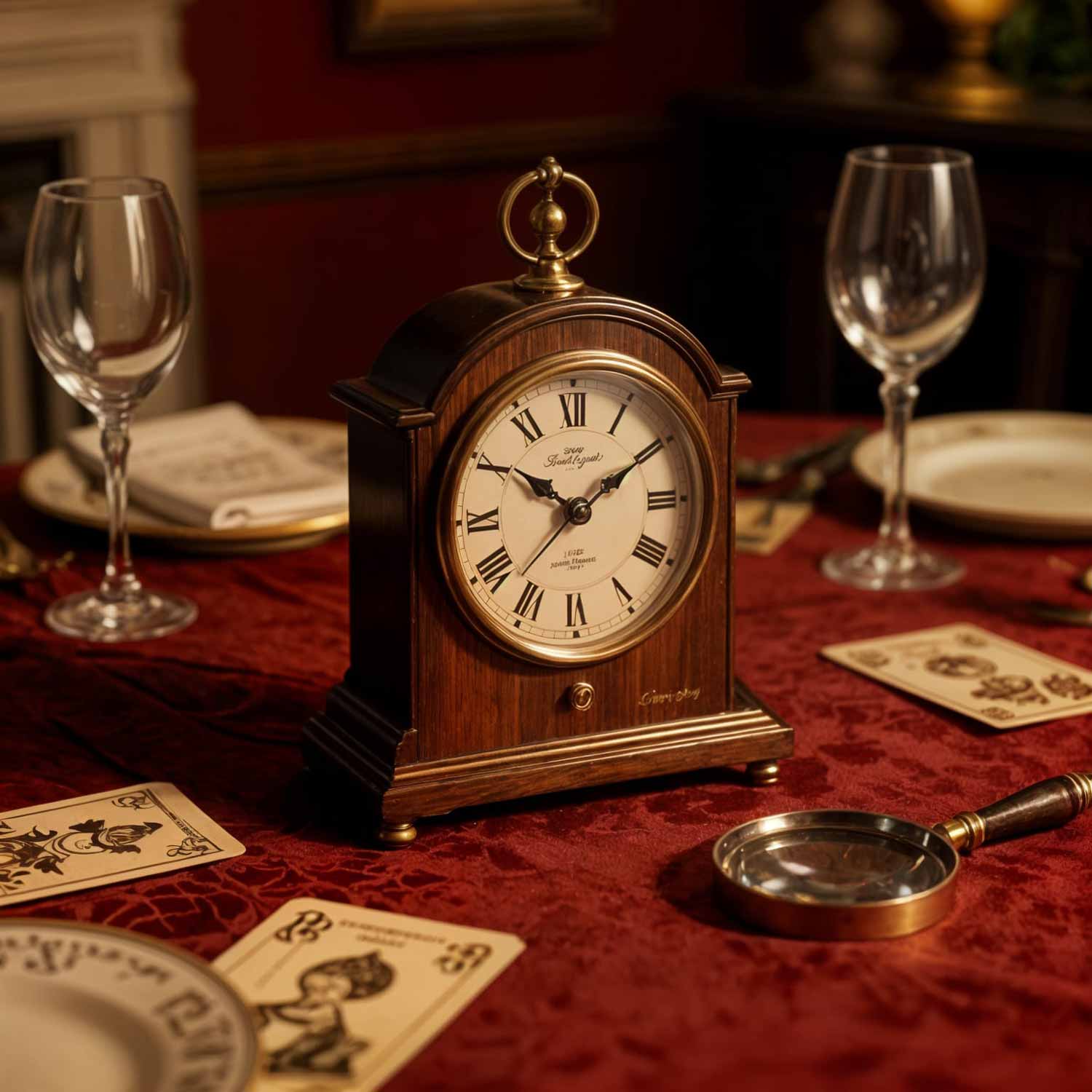
In books and films, foreshadowing is when the author plants a clue so subtle that you miss it entirely the first time — and then kick yourself about it later. The butler mentioning he used to work as a toxicologist. The suspicious scar on the heiress's wrist. The fact that the vicar keeps nervously glancing at the grandfather clock.
At a murder mystery party, foreshadowing works exactly the same way — except you're the author.
You're not just setting the scene. You're quietly, sneakily, delightfully pre-loading your guests' brains with details that will only make sense once the body has been found, the suspects have been interrogated, and someone accuses the wrong person with absolute confidence (there's always one).
The key word here is subtlety. Foreshadowing is not the same as giving away the answer on a sandwich board. It's the difference between:
"By the way, Gerald has always been VERY good with poisons..."
...and...
"Gerald mentioned he used to be a pharmacist. Terribly interesting career, apparently."
One of those is a spoiler. The other is a seed. Plant seeds.
Where to Put Your Foreshadowing (Without Being Obvious About It)
1. In the Invitations
This is your first — and most underused — opportunity.
The invitation sets the scene before anyone even arrives at your door. Most hosts use it to communicate the date, time, dress code, and a brief summary of the premise. Which is all very practical. But a few well-placed details can do so much more.
Try slipping in something that seems like flavour text but will later become relevant. A mention that the victim was "recently returned from a long trip abroad." That the venue has "a complicated history with the Hargrove family." That guests should note, for no particular reason, that Colonel Featherstonehaugh has a glass eye on the left side.
Will your guests pick up on it? Almost certainly not. Will they remember it later and gasp? Absolutely yes.
2. In the Character Descriptions
When you hand out character information before the game begins, you have another golden opportunity. Character backstories shouldn't just be exposition — they should be tiny, ticking time bombs of implication.
"You have always been fond of Millicent, though you sometimes wonder how she can afford such an expensive lifestyle on a secretary's salary."
Nobody will think twice about that sentence — until they do.
3. In the Room Itself
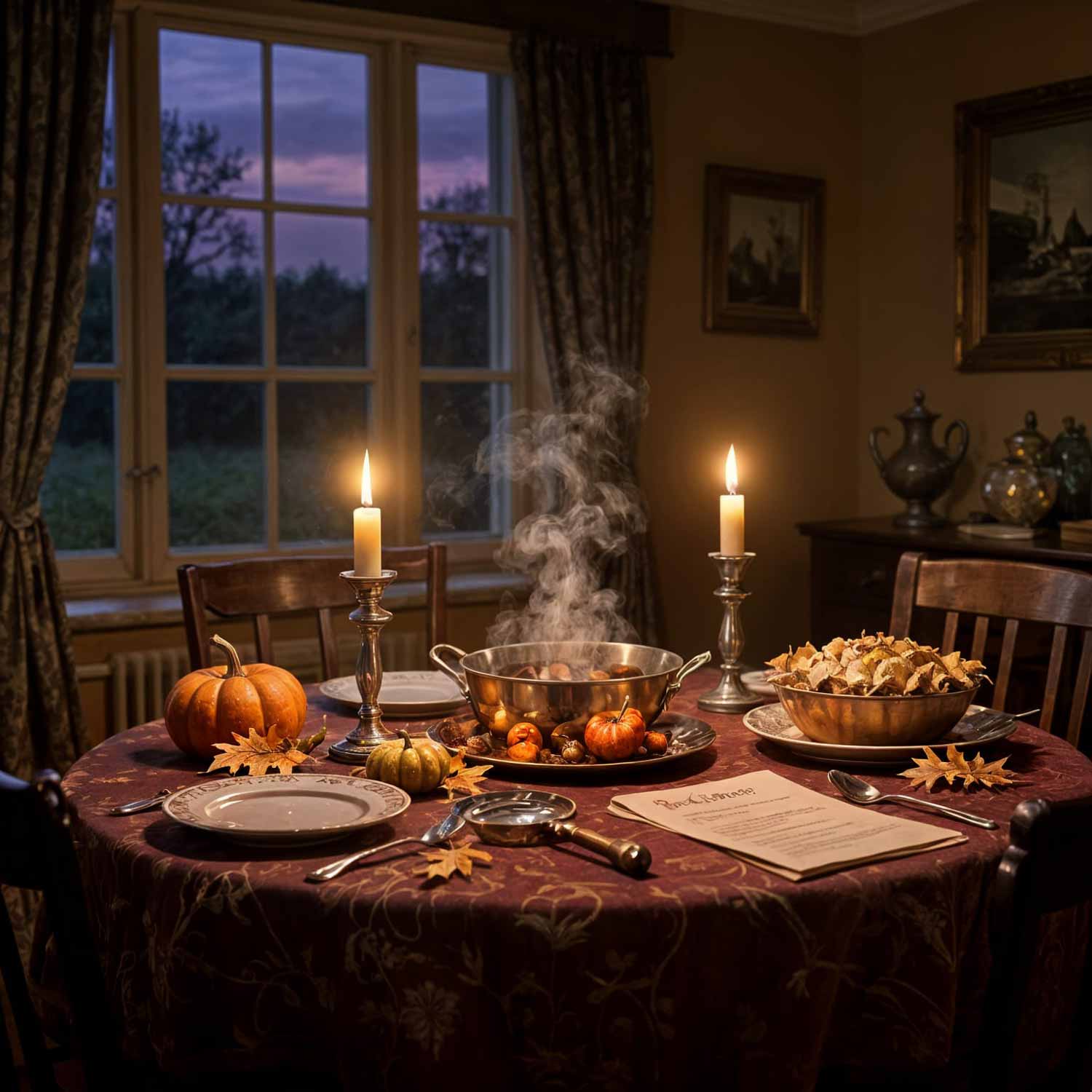
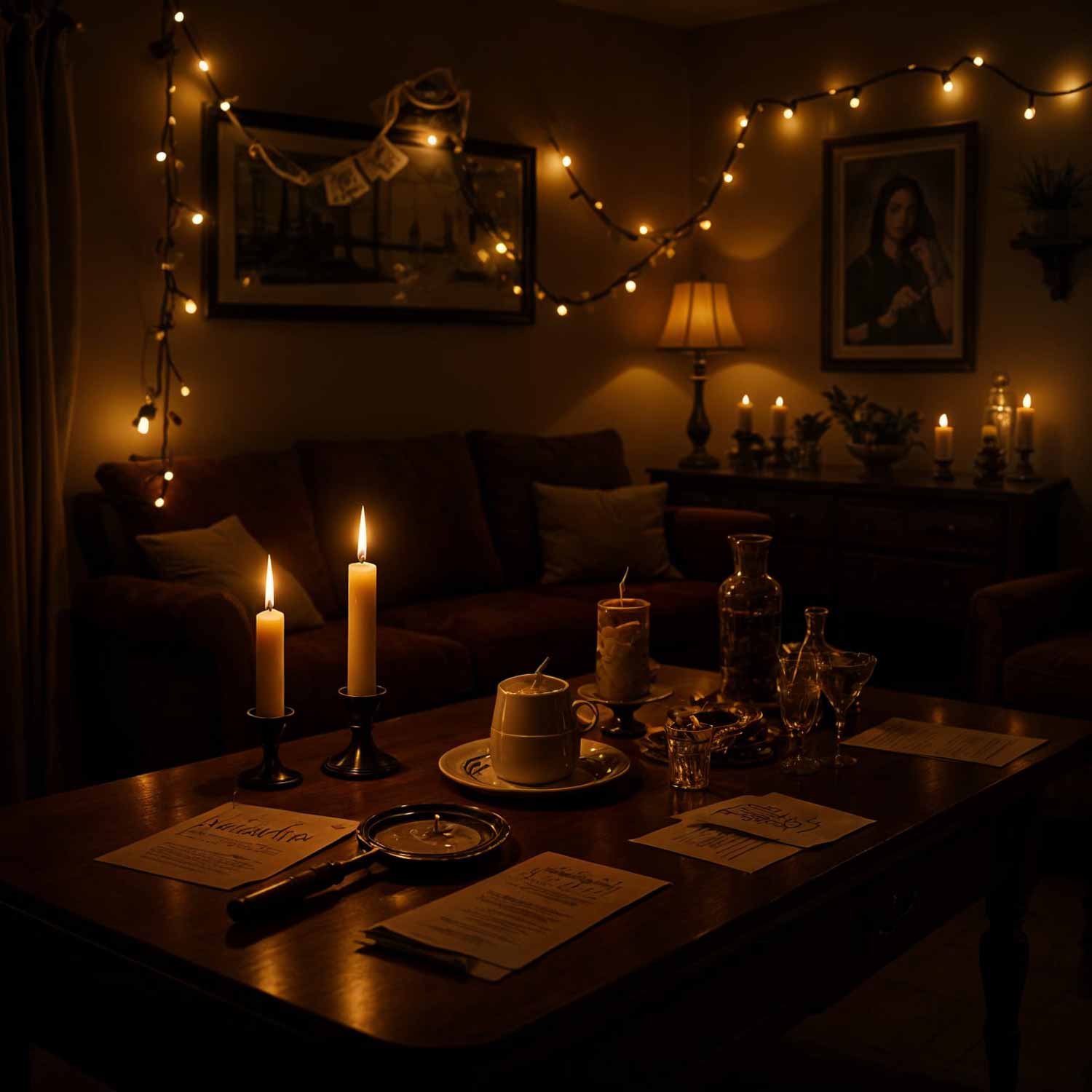
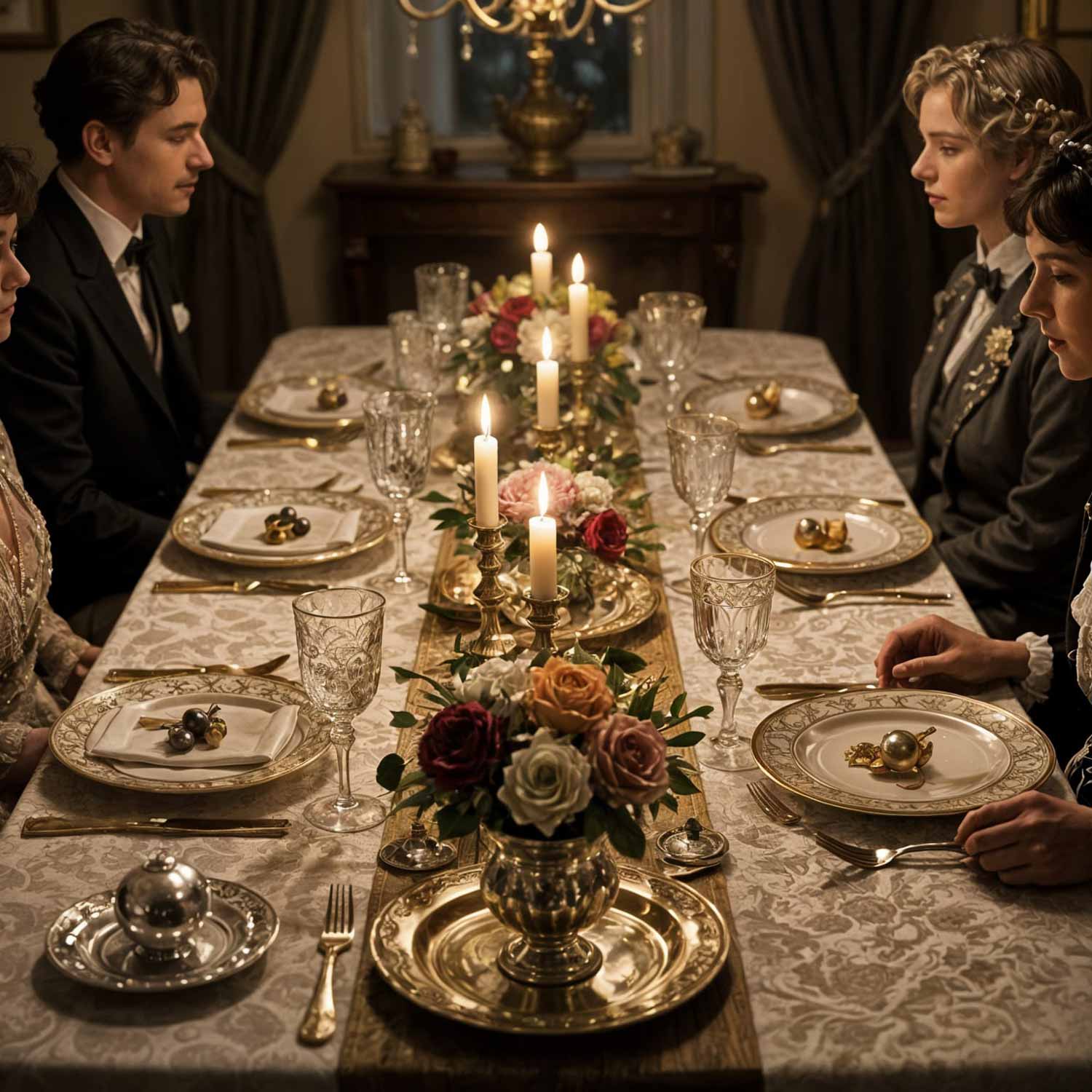
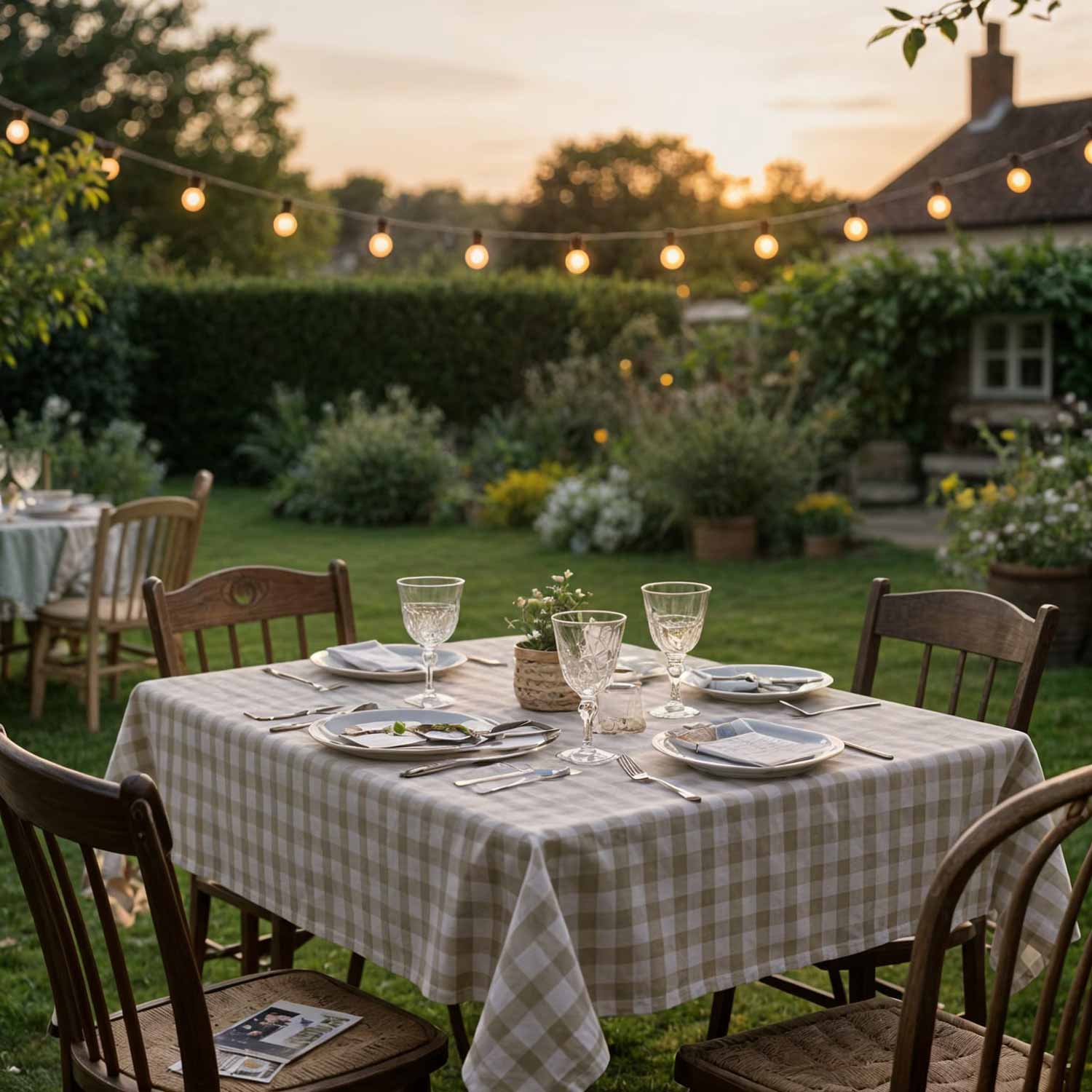
If you're decorating for the event (and you absolutely should be, even if it's just a tablecloth and a suspicious candelabra), you can embed foreshadowing directly into the environment.
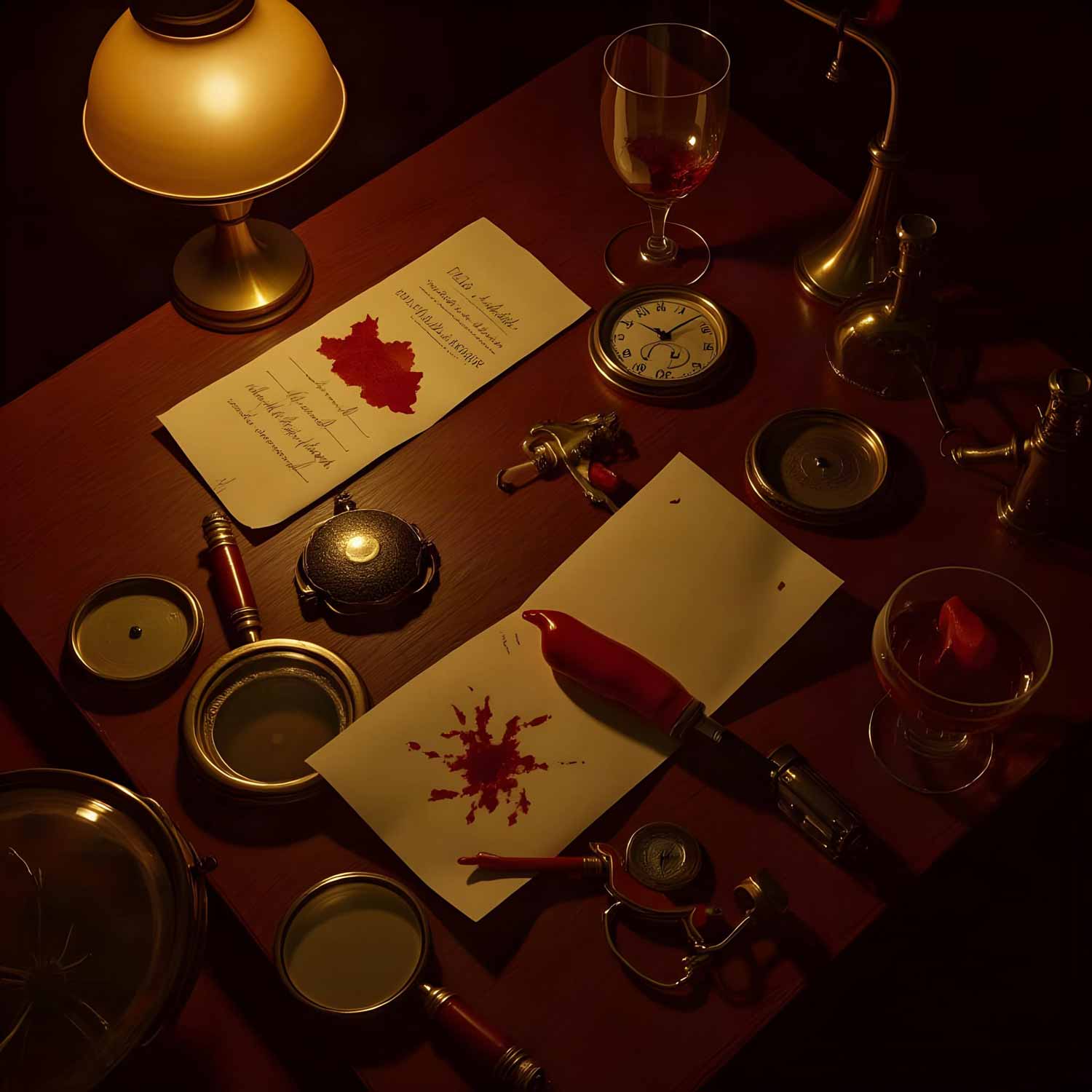
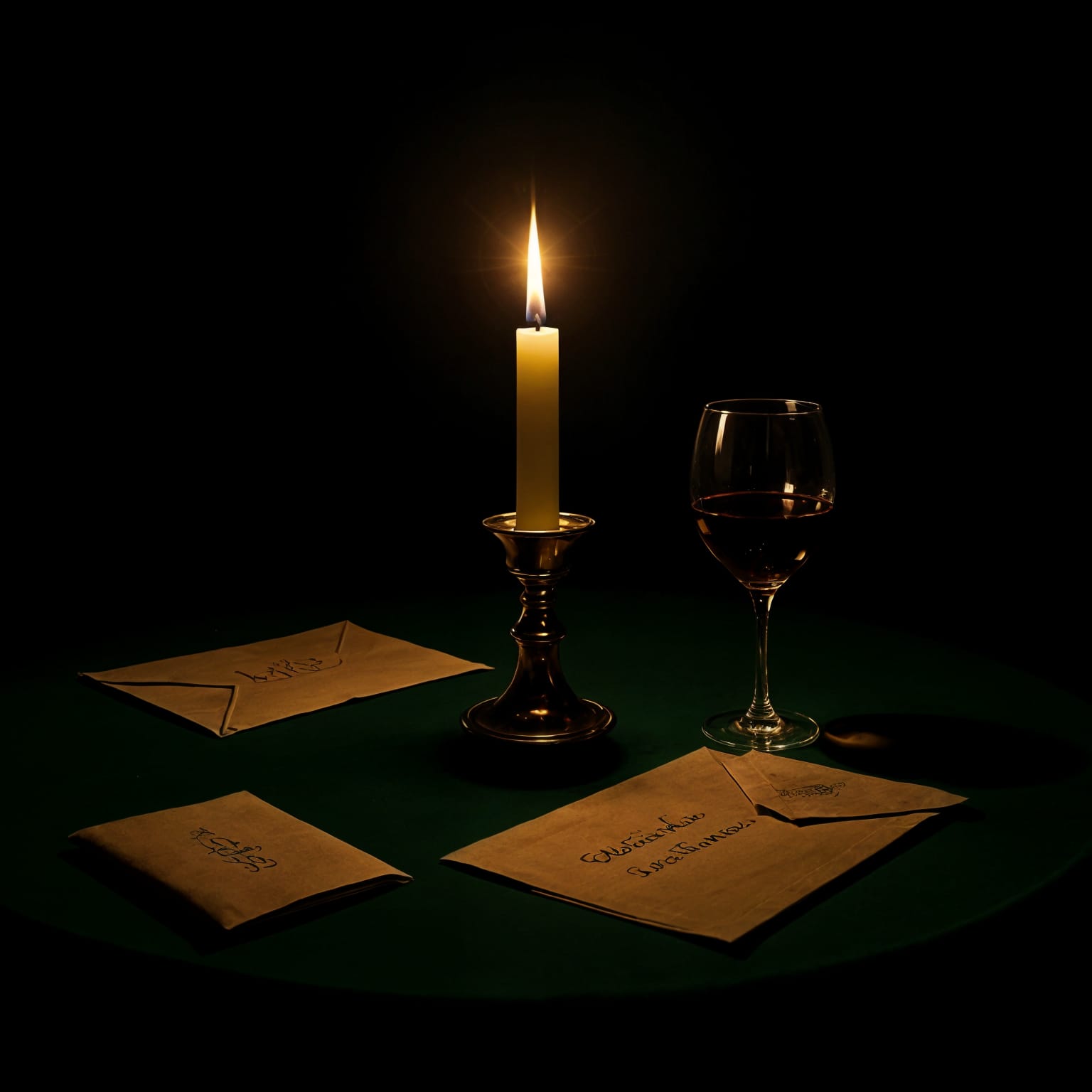
A framed photograph with someone conspicuously cut out of it. A half-written letter on the mantlepiece. A monogrammed handkerchief tucked under a cushion. A newspaper clipping pinned to the noticeboard that seems completely unrelated to the murder — until it isn't.
Your guests will mill around before the game starts. They'll pick things up, read them, put them down again. And all the while, their subconscious will be filing things away.
4. In Casual Conversation (The Host's Superpower)
This one's for the dinner party format specifically, where the host can circulate among guests and drop little conversational breadcrumbs like a very sinister trail of Hansel and Gretel.
"Did you notice Lord Ashworth keeps looking at the fireplace? I'm sure it means nothing."
"It's funny — the victim apparently changed her will just last week. Anyway, more wine?"
You're not revealing anything. You're just... suggesting directions. Planting little flags in the mental landscape. Being, in short, an excellent and slightly wicked host.
The Golden Rules of Mystery Party Foreshadowing
Here's where we get into the craft of it.
Rule 1: Foreshadowing must be deniable.
If a guest could reasonably say "oh, that's just a throwaway detail," you've done it right. If they immediately say "AH HA! The murder weapon!", you've gone too far. The whole point is that it shouldn't feel significant — until the reveal.
Rule 2: Don't foreshadow everything.
If every single detail turns out to be meaningful, your guests will either feel overwhelmed or cleverly exhausted. Some things should just be window dressing. Let the real clues hide among the fake ones. That's the game.
Rule 3: Vary the subtlety levels.
For a dinner party with mystery enthusiasts, you can make your foreshadowing extremely oblique. For a mix-and-mingle with people who've never played before, a slightly more legible clue will ensure everyone feels the joy of the "I knew it!" moment, not just the one Agatha Christie superfan in the corner.
Rule 4: Have at least one piece of foreshadowing that makes people groan.
In the best way. The detail so obvious in retrospect that it generates a collective "OH COME ON" from the room. This is not failure — this is the highest possible achievement in mystery hosting.
A Quick Foreshadowing Checklist for Your Next Party
Before your guests arrive, ask yourself:
- Have I planted at least one clue in the invitation?
- Does each suspect's character sheet contain one detail that will seem innocuous now but suspicious later?
- Is there something in the room that doesn't quite add up?
- Do I have two or three conversational breadcrumbs ready to drop during the evening?
- Is at least one of my foreshadowing moments genuinely, sneakily, magnificently groan-worthy?
If you can tick those boxes, you're not just hosting a murder mystery party.
You're crafting an experience.
The Payoff
Here's the thing about foreshadowing that makes it so worthwhile: it doesn't just make the reveal better. It makes the whole evening better.
When guests later realise that clues were embedded in the very invitation they held while getting ready, in the framed photo they glanced at over the canapés, in the offhand remark the host made about the victim's shoes — it reframes the entire evening as something deliberately, lovingly constructed.
It says: someone thought about this. Someone cared enough to plant these little treasures for us to find.
And that feeling — of being inside a story that was designed for you — is exactly what a great murder mystery party should give your guests.
That, and the satisfaction of being the one who figured it out first.
(Spoiler: there's always someone who claims they figured it out first.)
Ready to host a mystery where every detail counts? Browse our range of murder mystery dinner party and mix-and-mingle games at Murder In The House — all the plot twists, none of the actual crime scene.