Let’s get one thing straight right away: murder mystery parties are not theatre. Nobody is going to hand you a spotlight, a microphone, or a director who says “more angst in the second act, darling.”
What you’ve actually signed up for is something far more manageable — and honestly, far more fun. You’re going to eat some food, talk to your friends, and pretend, just for an evening, that you’re someone else. A gossipy heiress, perhaps. A shady antiques dealer. A butler with very questionable loyalties.
And yes, if the idea of “getting into character” makes you want to suddenly develop a mysterious prior engagement — we see you — this article is here to help. Because here’s the secret: you don’t need to be an actor to role-play well. You just need a few small tricks, a willingness to commit, and permission to be a little bit ridiculous.
Permission granted. Let’s go.
1. Start With One Detail, Not the Whole Character
The most common mistake nervous role-players make is trying to “become” their character all at once. They read their character sheet, panic slightly, and conclude that they must now speak in a different accent, change their entire personality, and somehow “make choices” the way their character would.
Relax. Start smaller.
Pick one detail from your character profile and lead with that. Maybe your character is famously vain — so you keep casually mentioning how fabulous you look. Maybe they’re deeply suspicious of everyone — so you narrow your eyes slightly every time someone tells you something. Maybe they’re secretly broke but pretending otherwise — so you order enthusiastically and then quietly avoid discussing the bill.
One trait, played consistently, is more believable and more enjoyable than a wildly overacted full performance. Think of it as seasoning, not a full costume change.
2. Use Your Character’s Secrets as a Conversation Starter
One of the best things about Murder In The House games is that every character comes loaded with secrets, motivations, and little pieces of backstory that nobody else knows (at least not yet). This is your gift.
Instead of waiting for someone to come and interrogate you, use your character’s knowledge to steer conversations. Drop a hint. Plant a seed. Say something just cryptic enough to make the person across from you raise an eyebrow.
“Oh, I’m sure Lord Ashworth had his reasons for being at the east wing that night. Not that I’d know anything about that, of course.”
See? You’re not performing. You’re just having a slightly suspicious conversation. That’s it. That’s role-playing.
3. Lean Into “I’m Not Sure My Character Would Say That”
Here’s a surprisingly effective trick: when you’re not sure what to say next, pause and ask yourself (quietly, internally — don’t narrate this out loud) “would my character agree with this, or push back?”
You’d be amazed how much mileage you get from mild, in-character disagreement. A character who’s proud doesn’t graciously accept blame. A character who’s greedy doesn’t volunteer information for free. A character who’s charming deflects difficult questions with a smile and a change of subject.
You’re not being difficult — you’re being interesting. There’s a difference.
4. Remember: Nobody’s Watching You. They’re Playing Too.
A lot of role-playing anxiety comes from feeling like you’re being judged — like your friends are all secretly sitting there with scorecards, marking you down for not doing a convincing enough 1920s socialite voice.
Here’s the reality: they’re busy worrying about exactly the same thing.
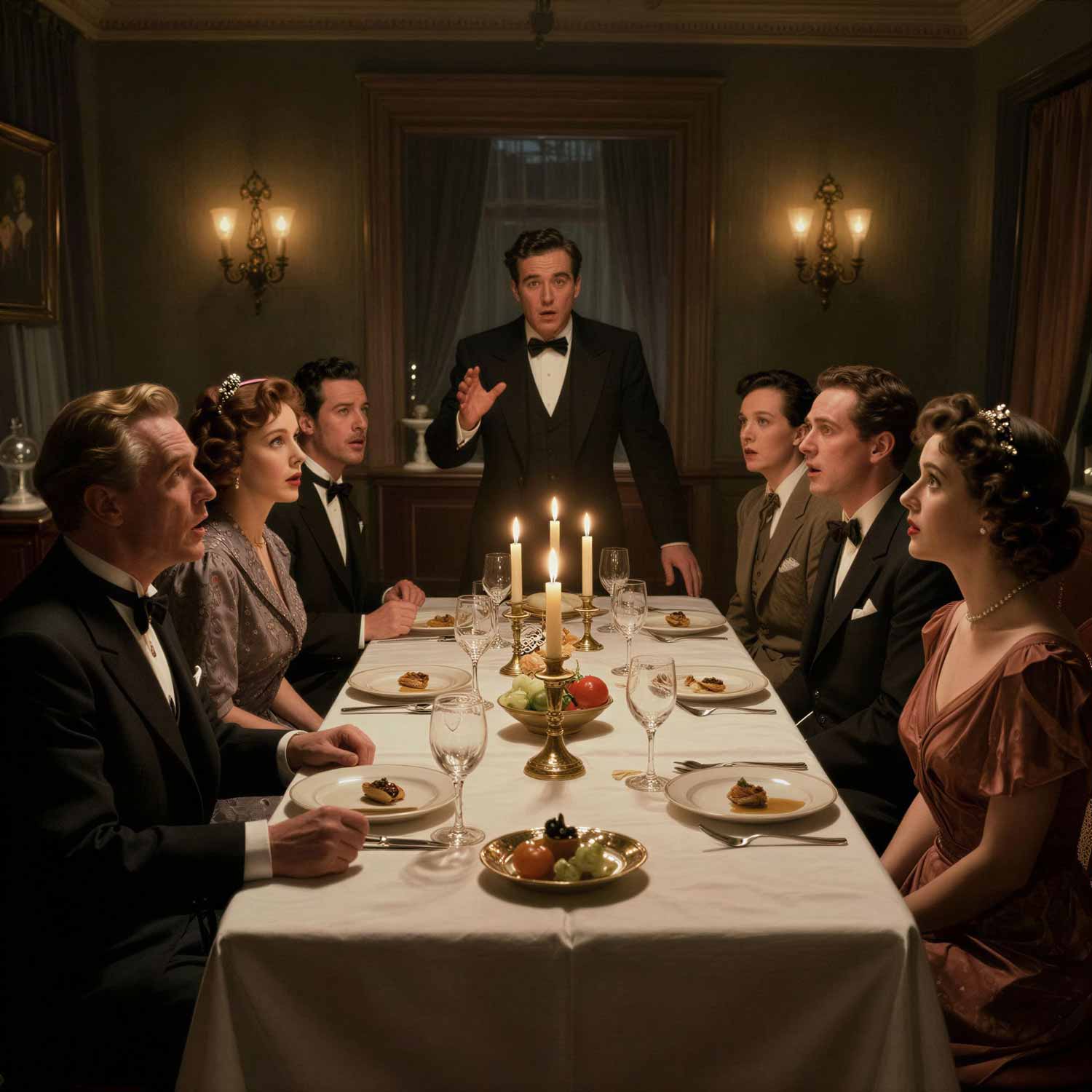
Everyone at a murder mystery party is half-focused on their own character, half-trying to figure out who did it, and somewhere in there also thinking about whether there’s more bread. Nobody has the mental bandwidth to critique your performance. They’re just happy you’re there and playing along.
The most “successful” role-players at these evenings are almost always just the ones who commit to having fun, not the ones who are technically brilliant. A cheerful amateur beats a reluctant perfectionist every single time.
5. Give Yourself an Entrance
This sounds theatrical, but hear us out: the first five minutes of any murder mystery are the hardest, because you’re stepping into character cold. The trick is to give yourself a small ritual that signals “I am now this person.”
It doesn’t need to be dramatic. It might be putting on a hat before you walk in. It might be deciding your character always holds their glass a certain way. It might be giving yourself a slightly different posture — more formal, more hunched, more airy and unbothered. Something physical, however minor, flips a switch in your brain.
You’re not pretending to be an actor. You’re just... arriving as someone slightly different. It works more reliably than you’d think.
6. It’s Okay to “Break” (Briefly)
Experienced murder mystery players know this, and new ones often find it reassuring: stepping out of character for a moment is completely fine.
If someone asks you a question your character genuinely can’t answer, or you can’t remember what your character’s alibi was, or you just spontaneously burst out laughing — that’s not failure. That’s a party.
A quick “okay, out of character for a sec—” is an entirely normal thing to say. The game doesn’t collapse. Everyone laughs, you sort it out, and you all slide back in. These evenings are meant to be joyful and a bit gloriously messy. Rigid isn’t the goal.
7. The Costume Does Half the Work For You
We’ve said it before and we’ll say it again: even the most basic costume element does something remarkable to your brain. A string of pearls. A flat cap. A pair of round glasses you’ve never worn before. Something that isn’t your usual Tuesday evening look.
When you look different, you feel different. And when you feel different, character choices come more naturally. You’re not just “Dave from accounting” anymore. You’re Colonel Hartley, and Colonel Hartley has opinions about what happened in the library.
Costume isn’t compulsory — but if you’re struggling to get into character, it is almost certainly the fastest shortcut available to you.
The Bottom Line
Role-playing at a murder mystery party isn’t about being a great actor. It’s about being a great guest. It’s about showing up, leaning into your character a little, asking the right suspicious questions, dropping the odd meaningful glance across the table, and generally making the evening more fun for everyone around you.
The bar is genuinely low. The reward is genuinely high. You don’t need training, talent, or a drama degree. You just need to commit — even slightly, even imperfectly — and the evening will take care of the rest.
Now go and be suspicious. You’re very good at it.