There’s something oddly irresistible about a good mystery.
Give someone a suspicious glance, a half-hidden clue, and the promise that everything will make sense eventually, and suddenly they’re hooked. They’re leaning forward, mentally connecting dots, convinced they’re this close to cracking it.
So why do we love solving mysteries so much — especially in games like murder mystery parties, where we willingly step into a web of secrets and lies?
As it turns out, our brains are very into this sort of thing.
Our Brains Hate Loose Ends
At the heart of every mystery is a question: What really happened?
Psychologists call this the need for cognitive closure. In simple terms, our brains don’t like unanswered questions. An unfinished story creates mental tension, and solving the puzzle releases it in a satisfying little rush of relief.
That’s why mysteries are so compelling:
- Every clue promises progress
- Every red herring dares you to look closer
- Every revelation feels like a reward
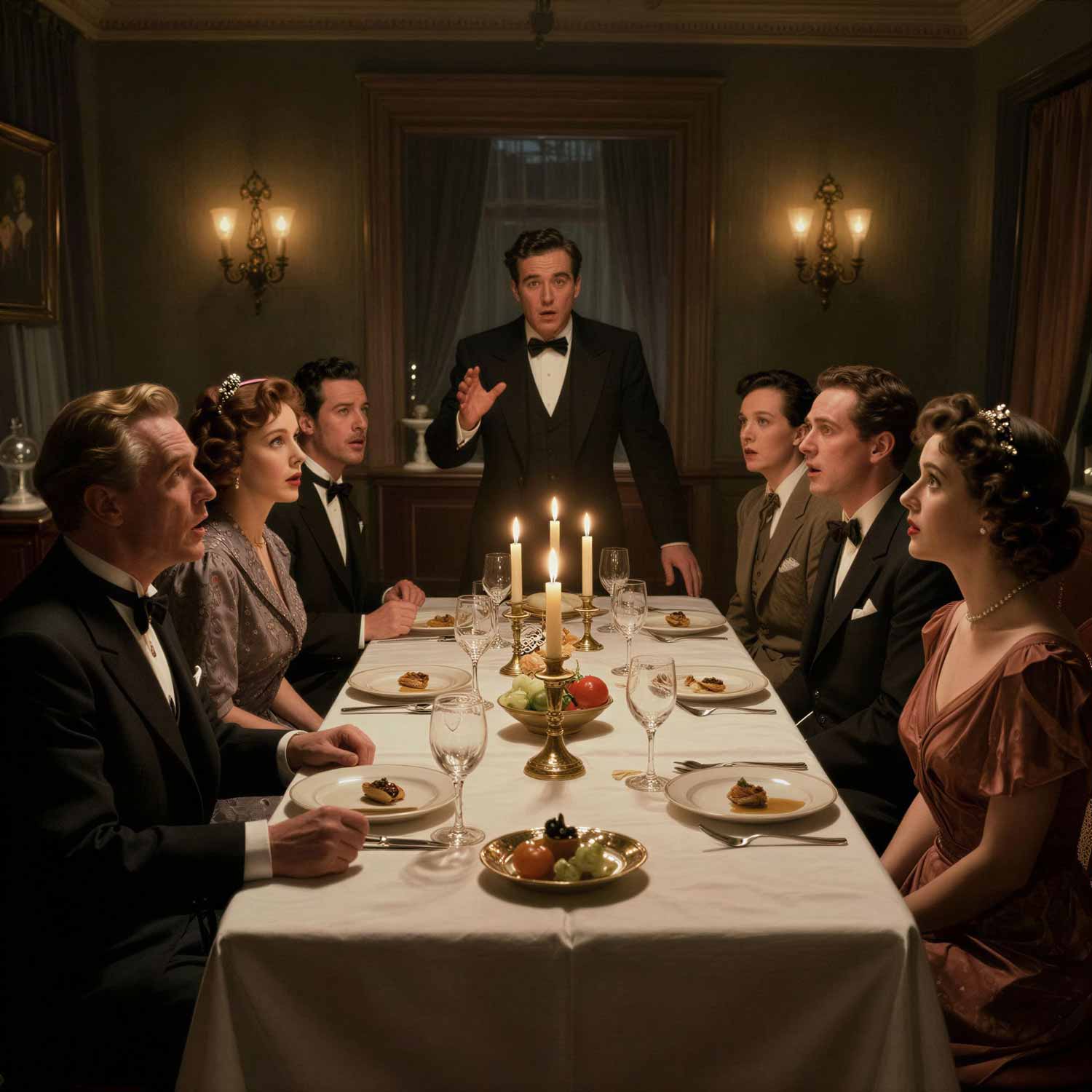
In a murder mystery game, this plays out beautifully. Each guest holds part of the truth, and no one has the full picture at the start. Your brain has to keep working — listening, questioning, theorising — because it knows there’s a solution waiting.
And it wants it.
We Love Feeling Clever (Even When We’re Wrong)
Let’s be honest: few things feel better than saying, “I knew it.”
Solving mysteries taps directly into our love of problem-solving and pattern recognition. Humans are natural detectives. We’re wired to look for connections, notice inconsistencies, and build explanations from fragments.
Murder mystery games make this especially enjoyable because:
- You don’t need specialist knowledge
- Everyone starts on roughly equal footing
- The clues are designed to be solvable, not obscure
Even when you’re confidently accusing the wrong person, your brain is still enjoying the process. Forming theories, defending them, and revising them is all part of the fun.
It’s mental exercise disguised as entertainment — the best kind.
Stories Make Us Care
A list of clues on its own isn’t that exciting. What makes mysteries powerful is story.
We don’t just want to know what happened — we want to know why. Who wanted revenge? Who was hiding something? Who had the most to lose?
Narrative psychology tells us that humans understand the world through stories. We remember information better when it’s wrapped in characters, motives, and emotional stakes.
That’s why murder mystery parties work so well:
- Every character has a backstory
- Every relationship adds tension
- Every revelation reshapes the narrative
You’re not just solving a puzzle. You’re participating in a living story, and your choices — who you trust, who you confront — shape how it unfolds.
Suspense Without Real Danger
One of the clever tricks mysteries pull is letting us experience risk and suspense in a safe environment.
There’s tension, intrigue, and the thrill of the unknown — but no real-world consequences. Your heart might race as the plot thickens, but you’re still sitting comfortably at a table with friends.
This balance is deeply appealing. It allows us to:
- Explore darker themes safely
- Feel suspense without fear
- Enjoy drama without stress
Murder mystery games hit this sweet spot perfectly. The stakes feel high within the story, but everyone knows it’s all part of the fun.
We Enjoy Playing a Role
Another reason mysteries are so popular? They give us permission to be someone else for a while.
At a murder mystery party, you’re not just yourself. You might be:
- A charming suspect with secrets
- A sharp-eyed investigator
- A seemingly innocent guest hiding a crucial clue
Psychologically, this kind of role-play is powerful. It encourages creativity, confidence, and social interaction — especially for people who might not normally jump into the spotlight.
And because everyone is “in character”, conversations flow more easily. Asking probing questions or making bold accusations feels natural when it’s part of the game.
The Social Joy of Solving Together
While some people love solving mysteries solo, there’s something extra satisfying about doing it as a group.
Sharing theories, debating suspects, and watching everyone slowly piece things together creates a sense of collective discovery. Even rival accusations add to the excitement.
Murder mystery games turn problem-solving into a shared experience:
- Quiet guests contribute through careful observation
- Outgoing guests drive discussions and drama
- Everyone plays a role in uncovering the truth
It’s collaboration, competition, and storytelling rolled into one.
Why Murder Mystery Games Keep Us Coming Back
When you combine all of this — curiosity, problem-solving, storytelling, suspense, role-play, and social connection — it’s no surprise that people keep coming back for more.
Every mystery offers:
- A fresh puzzle
- New characters to inhabit
- A different path to the truth
And even once the case is solved, the experience lingers. People remember the accusations they made, the clues they missed, and the moment everything finally clicked.
That’s the magic of a good mystery. It doesn’t just entertain — it engages.
Do you have a favourite moment where you suddenly realised who did it? Or a theory you were convinced was right (until it very much wasn’t)?
Mysteries are even better when they’re shared — and every great detective story starts with curiosity.