There comes a moment, usually in late spring, when the weather has been inexplicably pleasant for three days in a row, when a murder mystery host looks at their dining room and thinks: what if we did this outside?
It's a compelling thought. Open skies. Fresh air. The kind of atmospheric setting that no amount of dimmer switches and strategically placed candelabras can fully replicate indoors. Why solve a murder in a living room when you could solve it in a garden?
The answer, as with most things in event planning, is: it depends. Outdoor mystery parties can be genuinely wonderful. They can also, under the wrong circumstances, be an exercise in chaos management dressed up in period costume.
Here's an honest look at both sides.
The Pros
The atmosphere almost builds itself
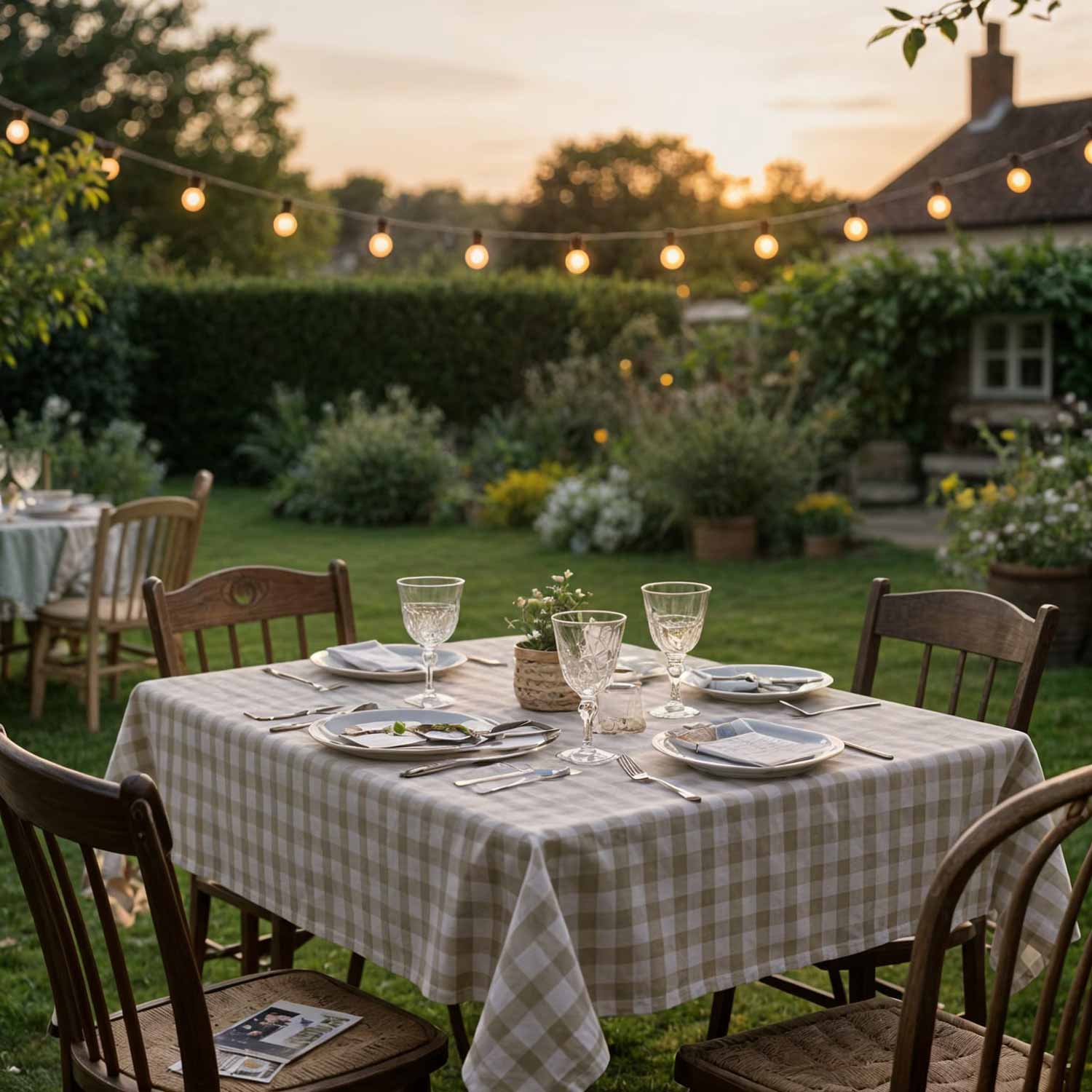
There is something undeniably cinematic about a mystery set outdoors. A warm evening, a garden strung with lights, guests drifting between tables clutching their character sheets, it feels like a scene from an Agatha Christie adaptation that someone inexplicably invited you to attend.
Indoors, you work hard to create an atmosphere. Outdoors, the atmosphere largely arrives on its own. The fading light does the job of a lighting designer. The sound of distant birdsong (or, if you're lucky, a gentle breeze through trees) does the job of a mood playlist. You spend less time fussing over ambience and more time actually hosting.
For period settings in particular, a country house garden party, a Victorian lawn gathering, a 1920s estate soirée, the outdoor environment lends an authenticity that's very difficult to fake inside.
More space means more movement
One of the best things about outdoor mystery parties is that guests can actually move around. Indoors, especially in smaller homes, suspects tend to cluster in the same spots, conversations get overheard, and the whole thing can start to feel a little cramped by round two.
Outside, people spread out naturally. Characters can pull each other aside for a quiet word without half the table listening in. Small groups can form and dissolve. The host can leave clues in different areas of the garden, a suspicious envelope by the rose bed, a cryptic note tucked under a garden ornament, and guests can physically move between locations to find them.
This adds a genuine layer of intrigue that's hard to achieve when everyone is seated around the same table.
It works beautifully for larger groups
Catering for twenty people indoors usually involves a certain amount of creative furniture arrangement and at least one guest perched on something they'd rather not be perched on.
Outdoors, space is rarely the limiting factor. Long trestle tables, scattered garden furniture, blankets on the grass, there are all sorts of ways to seat a larger group comfortably outside without the evening feeling like a logistics puzzle. If you're hosting a murder mystery for a significant gathering, a birthday, a family reunion, or a team event, the garden can accommodate in a way most indoor spaces simply can't.
The photos will be stunning
This is a slightly frivolous pro, but it's a real one. Outdoor mystery parties photograph beautifully. Guests in costume against a garden backdrop, golden-hour light, lights as evening sets in, the visual results are considerably more appealing than whatever your kitchen looks like when seventeen people are milling around it in Victorian mourning dress.
If your guests are likely to share photos, or if you'd simply like to remember the evening fondly, the outdoor setting gives you a significant head start.
The Cons
The weather will have opinions
This is, by some distance, the largest risk of outdoor hosting in most parts of the world. The weather is not a neutral party. It has not read the invitation. It does not care about your carefully constructed timeline or the elaborate decorations you spent the previous afternoon arranging.
Rain is the obvious concern, but it's not the only one. An unexpectedly cold evening can derail proceedings even without a drop of precipitation. Strong wind has a particular gift for scattering paper clues, lifting tablecloths, and blowing out candles at dramatically inconvenient moments. Unseasonable heat can make guests uncomfortable, especially those in heavier period costumes.
If you're hosting outdoors, you need a contingency plan. Not a vague intention to "bring things inside if needed” but an actual plan, with space pre-cleared indoors, that can be executed in under ten minutes if the sky turns.
Paper clues and outdoor conditions are natural enemies
Most murder mystery games rely heavily on printed materials, character sheets, clue cards, letters, documents, and envelopes. Paper, as a medium, was designed for indoor use.
A moderate breeze will send clue cards skittering across the garden. A sudden shower will render handwritten notes illegible. Condensation from drinks, damp grass, enthusiastic guests, and any number of things can damage or destroy materials that guests genuinely need to play the game.
Solutions exist: laminating key documents, using weighted holders, and keeping certain materials in envelopes until needed. But it requires additional preparation, and even with precautions, outdoor conditions will occasionally win.
Distractions multiply outside
Indoors, you have a degree of environmental control. Outdoors, you don't. Neighbours having a lively evening in the next garden, an unexpected delivery, a curious pet, the distant sounds of traffic or fireworks, the outside world has a habit of inserting itself into proceedings at exactly the wrong moment.
Guests who might stay focused at an indoor dining table can find their attention drifting when there are other things to look at. Children or animals who have been nominally excluded from the party have a much larger perimeter to breach. The general atmosphere of relaxed outdoor socialising, while lovely, can work against the focus that a mystery game sometimes requires.
Evening lighting needs more thought than you'd expect
The golden-hour photographs mentioned in the pros column come at a cost: once that light is gone, it's gone. Candles are atmospheric but genuinely not very bright. Garden lights are often more decorative than functional. String lights look wonderful and illuminate almost nothing.
If your game involves guests reading documents, comparing notes, or examining clues in any detail, they need adequate light to do so. This is more planning than it might initially seem. You'll want to think carefully about where your light sources are, how long they'll be sufficient, and what happens as the evening progresses.
A combination of task lighting (bright enough to actually read by) and atmospheric lighting (the candles and strings you actually want) works well, but it takes some deliberate arrangement.
Sound carries differently — and not always helpfully
One of the mechanics that makes murder mystery games work is the element of private information. Characters have secrets. Those secrets are meant to come out gradually, through conversation, over the course of the evening.
Outdoors, voices carry. A guest whispering their character's alibi to a confidant might be audible to the next table. Background noise from the wider environment might mean guests have to speak more loudly to be heard, which rather undermines the careful cultivation of secrets. The host giving instructions or setting up reveals can find themselves competing with the ambient sound of an outdoor summer evening.
None of this is insurmountable, but it's worth thinking through before the evening begins.
The Verdict
Outdoor murder mystery parties, done well, can be genuinely spectacular, more spacious, more atmospheric, and more visually memorable than almost anything you can achieve indoors. The keyword is done well, which in this context means taking the additional planning requirements seriously rather than treating the move outside as a simple substitution.
Have a weather backup. Protect your materials. Plan your lighting. Think about sound. And choose an evening, if you can, where the forecast is on your side.
If those boxes are ticked, there is every reason to take the mystery outside. The setting will do half the work for you, and the other half, as always, will be handled by the suspects.