Summer is the season of long evenings, garden furniture dragged optimistically onto patios, and the quiet national sport of staring at a weather forecast and trying to decide whether it counts as "dry enough."
It's also, as it turns out, one of the best times of year to host a murder mystery party. The light is good. The mood is festive. Guests are predisposed to socialising, to wearing things they wouldn't normally wear, and to committing to a bit of silliness in a way that December, with its competing diary entries, rarely quite allows.
The only question is: what kind of murder mystery best suits the season?
Theme matters more than people tend to think. A well-matched theme does a significant amount of work before the evening even begins. It shapes the invitations, the decorations, the food, and the costumes. It gives guests something to lean into from the moment they accept. The right theme doesn't just fit the story; it fits the occasion.
So here, without further preamble, are the themes that tend to work best for a summer murder mystery, and why.
1. Hollywood and Showbiz
There is something about summer that has always lent itself to glamour. It's the season of premieres and parties, of oversized sunglasses and the kind of confident outfits that require a certain amount of warmth to pull off convincingly.
A Hollywood-set murder mystery is tailor-made for this energy. Guests arrive as directors, starlets, struggling actors, and scandal-laden producers. The costumes are spectacular, the characters are deliciously theatrical, and the lies (as they always are in showbiz) are perfectly rehearsed.
The setting doesn't need to be a film studio. A garden becomes a studio lot. A patio becomes an award ceremony. The drama is built in, because it turns out that when everyone is playing someone who makes their living being dramatic, the evening has a tendency to run itself.
Lights, Camera, Murder, set among the cast and crew of a Hollywood production with a very inconvenient body count, is one of our games that plays particularly well in summer, not least because the characters are vivid enough that guests immediately know what kind of person they're playing.
2. Country House and Estate
The classic of the genre. There's a reason that Agatha Christie set so many of her stories in grand country houses, and it's not purely because she happened to know a lot of aristocrats. The country house mystery has an architecture that works: a finite space, a finite number of suspects, and a social hierarchy that gives everyone both a reason to lie and a reason to be believed.
In summer, this theme gains an extra dimension. The garden becomes an extension of the space. Guests can drift between the terrace and the drawing room. The mystery can literally sprawl: a note found by the rose bed, a conversation overheard near the kitchen garden, a suspicious figure spotted from the upstairs window.
The country house setting also supports a variety of costumes with unusual grace. Guests can arrive as landed gentry, house staff, visiting relatives, and inconvenient houseguests without any of it feeling incongruous. Everyone fits, which means everyone can commit.
3. Hotel and Resort
Summer and hotels have a long and pleasurable association. The grand hotel, with its gleaming lobby, uniformed staff, and guests with expensive luggage and complicated pasts, is one of the great settings for a murder mystery, and in summer it resonates in a way that January simply can't match.
There's an inherent theatricality to hotel settings that makes them ideal for mystery parties. The characters are plausible strangers who have been thrown together. Nobody has to explain why they know each other, because hotel guests often don't. Not entirely. Secrets travel in suitcases. Motives arrive at check-in.
Both Checked Out at the Imperial (our dinner party version) and Hotel Homicide (the mix-and-mingle format for larger groups) sit squarely in this world. A headline singer electrocuted in her bathtub, a cast of hotel staff, and a great many things that don't quite add up. Throw in some summer-appropriate decoration (a bar cart, some potted palms, a handwritten room service menu) and the setting does considerable heavy lifting.
4. Political Intrigue and Conspiracy
This one is perhaps less obvious, but worth considering. Political thrillers have a particular appeal in summer, possibly because there is something about the combination of warm evenings and cold-blooded scheming that works rather well. Or possibly just because people who know each other well sometimes enjoy being temporarily allowed to treat each other with lavish suspicion.
A Washington DC or governmental setting brings its own specific flavour: characters with immaculate public faces and deeply complicated private lives, secrets that have implications beyond the personal, and a murderer who is almost certainly trying to protect something much larger than themselves.
Capital Punishment is built precisely around this dynamic. Six people in Washington, sharing a secret that could destroy them all, and a murder that may or may not be designed to keep that secret buried.
The theme lends itself to formal dress codes, which summer evenings handle well. Guests arrive looking slightly too polished. Everybody suspects everybody. The evening has an undercurrent of delicious tension before the first clue is even distributed.
5. Amateur Dramatics and Village Life
If the previous themes are about glamour, this one is about something arguably more entertaining: the wonderful specificity of small-scale human conflict. Village life, with its politics of the local committee, the quiet feuds over planning applications, and the amateur dramatic society with its elaborate interpersonal dynamics, offers a comic register that summer parties particularly enjoy.
There is something irreplaceable about a setting where everyone knows everyone, and where that familiarity has had just enough time to curdle into something slightly competitive. The stakes are local. The grudges are long-held. The costumes are wonderfully unheroic.
A Shocking Review drops guests into exactly this world: the Amateur Dramatic Society, a body in the Village Hall, and a cast of characters who each had quite enough reason to be thoroughly fed up with the deceased. It plays with brilliant warmth and surprising unpredictability, and it tends to appeal to groups who aren't entirely sure they want to commit to a full period costume but still want proper characters to inhabit.
6. Medieval and Historical
This one comes with a caveat: it's a big commitment. Guests in full medieval costume, a banquet-style setting, a dramatic death in a royal tower: it's spectacular when it works, and it absolutely requires guests who are willing to lean in.
In summer, that commitment becomes more achievable. The light is right for outdoor settings. Guests who might baulk at heavy wool in November will find a floaty medieval costume considerably more manageable on a warm June evening. The sense of occasion is heightened. Everybody arrives feeling like they've slightly transported themselves somewhere else, which is, when it works, the best feeling a mystery party can produce.
A Medieval Murder, in which the King has fallen from a very suspicious window, and six people cannot adequately explain themselves, runs to 9 players and rewards groups who enjoy their mystery with a side of genuine historical flavour.
A Note on Theme and Format
It's worth remembering that theme and format are separate decisions. The right theme depends on the mood you're after and the guests you're hosting. The right format, whether dinner party or mix-and-mingle, depends on how many people you're inviting and how structured you want the evening to be.
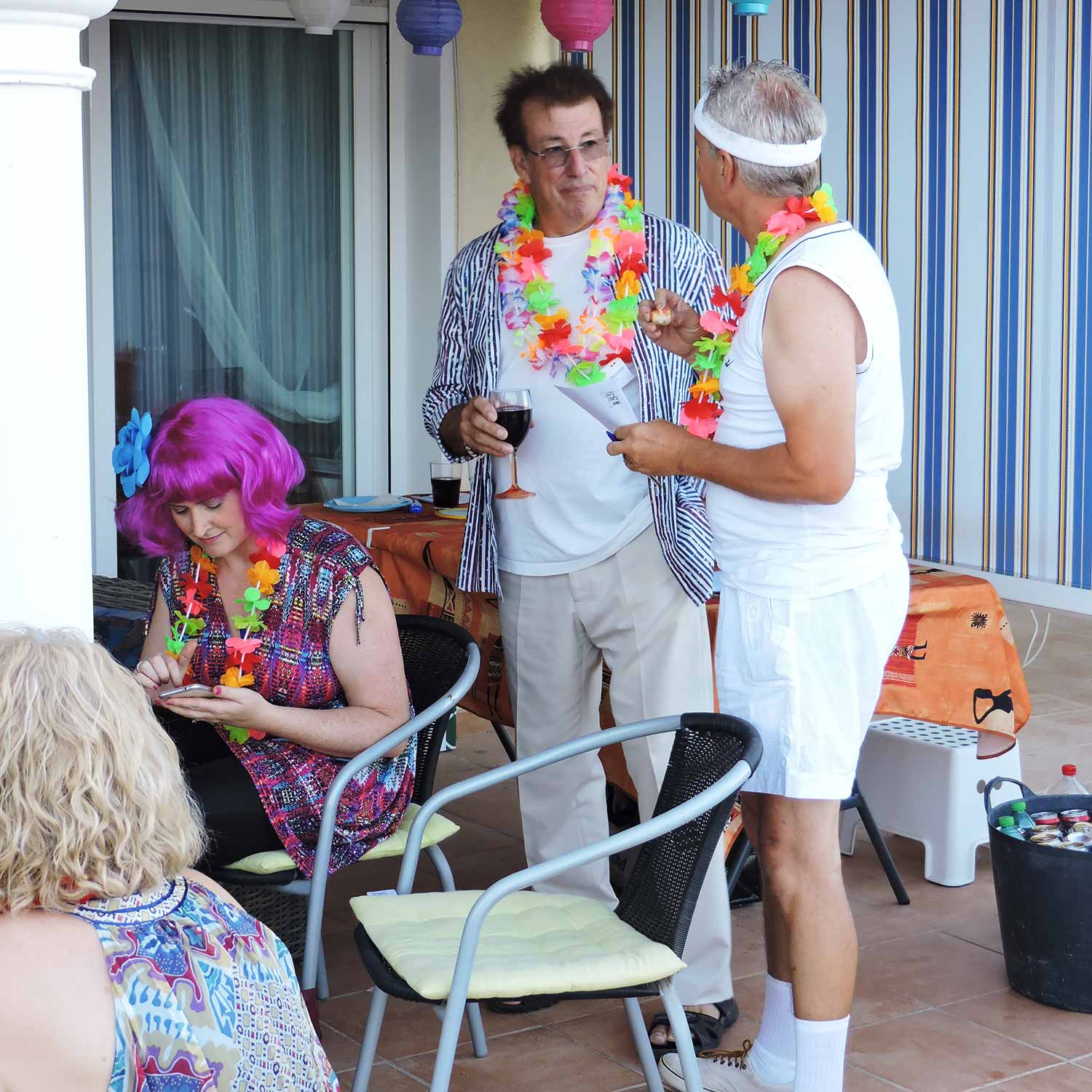
Summer, with its tendency toward larger gatherings and more fluid social movement, often suits the mix-and-mingle format particularly well. Guests circulate. Conversations happen in corners. Accusations are made with a glass of something cold in hand. Hotel Homicide, mentioned above, was built for exactly this kind of evening.
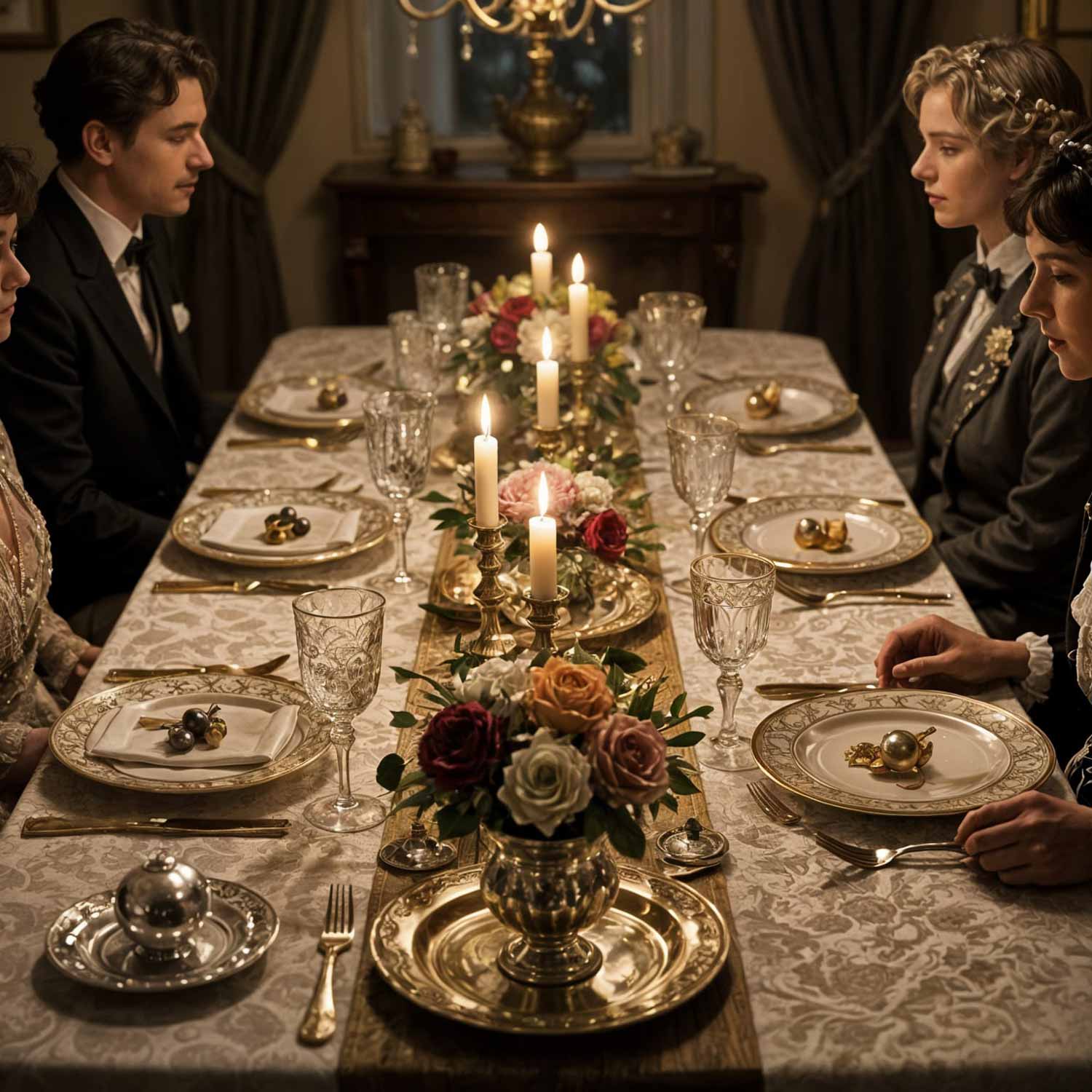
But a well-run dinner party mystery in the right summer setting, long table, good food, golden light through the garden window, is its own kind of perfect. The format serves the theme, and the theme serves the occasion.
The Honest Truth About Themes
The best theme is the one your guests will find most irresistible.
If your group has a shared love of old Hollywood, that trumps any abstract argument for medieval authenticity. If they're the kind of people who would happily spend the evening in black tie, a political thriller will reward them handsomely. If they're the kind of people who find small-scale social comedy more genuinely funny than grand dramatic settings, point them toward a village hall and a suspicious amateur dramatic society.
The theme is the first invitation. Before the actual invitation. Before the character sheets. Before the evening has taken shape. It's the thing that makes people say yes with a certain specific kind of enthusiasm, the kind that means they'll actually arrive in costume.
That enthusiasm, as any mystery host will tell you, is most of the work done.