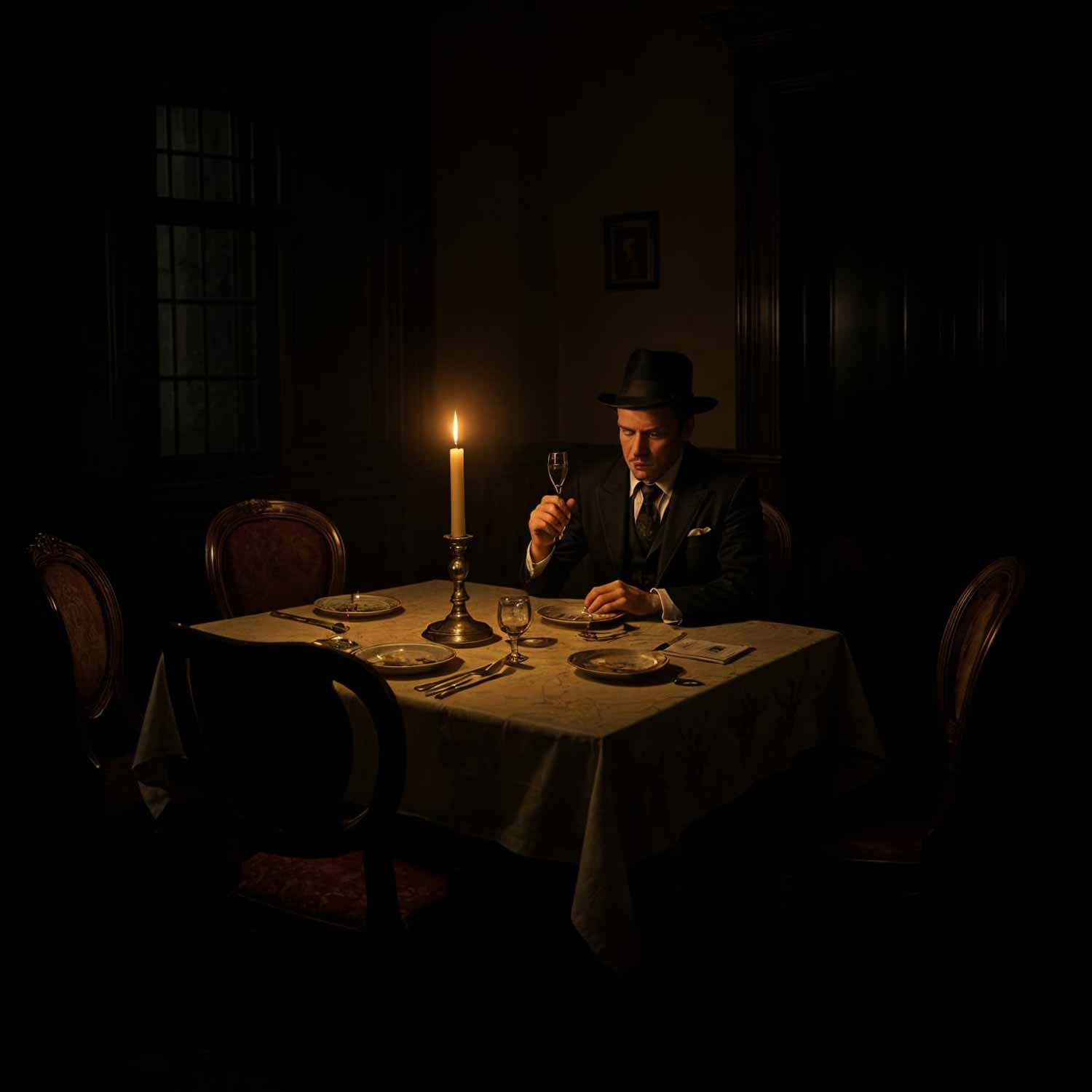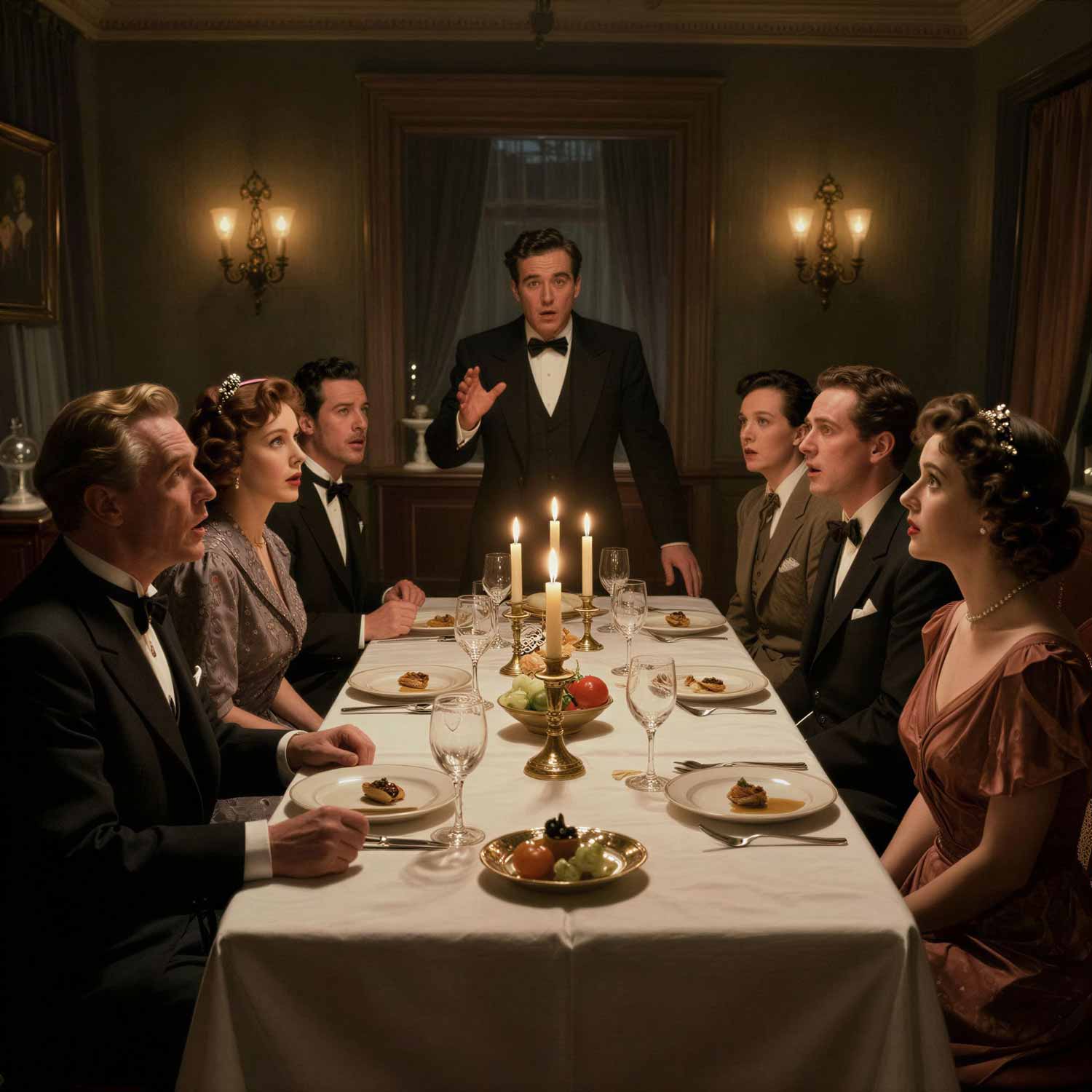
There's always one. You've sent the invitations, sorted the characters, decanted something into a decanter for effect, and somewhere between the starter and the first round of clues, you notice that one of your guests has found the single quietest corner of the room and is doing an excellent impression of the furniture.
This isn't a crisis. It isn't even, in the grand scheme of party mishaps, particularly unusual. Shy guests turn up at murder mystery parties for the same reason they turn up everywhere else. Rooms full of people they may or may not know well, asking them to perform, can be quietly terrifying for a perfectly normal number of perfectly lovely people. The difference is that a murder mystery party hands you, the host, an unusually good set of tools for dealing with it. You just have to know which ones to reach for.
First, Work Out What Kind of Shy You're Dealing With
Not all shyness is the same shyness, and treating it as a single problem with a single fix is how well-meaning hosts accidentally make things worse.
Some guests are shy because they're new to the group, a partner's plus-one, a friend-of-a-friend who knows nobody else at the table. Their hesitation isn't about the game at all. It's about being the unfamiliar face in a room full of established jokes and shared history.
Some guests are shy because they're worried about performing. They've read the brief, they understand the plot, but the idea of standing up and accusing someone in character, in front of an audience, with everyone watching, makes their stomach drop. This is stage fright wearing a deerstalker.
And some guests are simply quiet by nature, in every room, at every party, and would like to enjoy the evening at a slightly lower volume than everyone else, thank you very much. This isn't a problem to be solved. It's a personality to be accommodated.
The fix is different for each. A bit of quiet observation in the first ten minutes, who's hovering, who's talking to whom, who's gripping their character sheet like it might escape, will tell you which kind of shy you're working with, and that tells you what to do next.
Don't Put Them on the Spot. Ever. Not Even Kindly.
It's a deeply human instinct, when you notice someone going quiet, to try and pull them into the conversation. “Come on, Sarah, tell everyone what your character's been up to!” said warmly, with good intentions, in front of the whole table, is one of the kindest-sounding sentences that can still make a shy guest want to disappear through the floorboards.
Public invitations to participate, however well meant, put the shy guest in exactly the spotlight they were avoiding in the first place, except now there's an audience watching them hesitate, which is worse than the original silence. The better instinct is to go quieter, not louder. Lean over between courses and ask, just to them, “How are you getting on with your character? Anyone giving you trouble yet?” That's an invitation, not a summons. It can be accepted, deflected, or built on, entirely on their terms.
Hand Them Something to Hold
A nervous guest with nothing to do will spend the evening watching everyone else have a good time from a safe distance. A nervous guest with a specific, concrete thing to do will usually be too busy doing it to notice they were nervous in the first place.
This is one of the genuine advantages of the murder mystery format, and it's worth using deliberately. Characters who are shy by design, the timid assistant, the guest who's clearly hiding something but isn't built for confrontation, are a gift if you can match them to a shy player. The role does the early work for them, because being quietly evasive is, conveniently, the brief. The trick works the other way too. A quieter player handed a character with one juicy, specific secret has a single, manageable job: guard that secret, or let it slip at exactly the right moment, rather than the diffuse, frightening task of “be entertaining.”
If you're casting before the day (we've written a whole piece on getting that right), this is the moment to think about who's likely to need the gentler entry point, and cast accordingly.
Pair Them With Someone Who Talks Easily
Murder mystery games are full of built-in excuses to talk to specific people: rivalries, alibis, shared secrets, old grudges. Use this. If you know a guest is nervous, look at the character connections and quietly nudge them toward pairing with whoever in the room is naturally the warmest, chattiest, most likely to do the conversational heavy lifting.
“You and Daniel have history, go and ask him about the incident at the lodge” is a far gentler opening than expecting a shy guest to invent small talk from nothing. The character relationship hands them the line. All they have to do is deliver it, and a generous scene partner will do the rest.
Let Them Ease In Through the Side Door
Not every contribution has to be a speech. Some of the most useful, most game-advancing moments come from a quiet observation made at exactly the right time, “didn't you say you were in the conservatory at nine?”, rather than a grand theatrical accusation in front of the whole table.
As host, you can create openings for this without making it obvious that's what you're doing. Ask the table a general question, “does anyone remember who was where during the second course?”, rather than singling someone out. It gives the quieter guests a chance to volunteer a detail when they're ready, rather than being asked to perform on command. Some of them will. Many of them, once the ice has properly thawed, surprise themselves.
Resist the Urge to Narrate Their Shyness
A particular trap worth naming: don't comment on it. Not “you're very quiet tonight,” not “come on, don't be shy,” not even the well-meaning “you're doing great, just relax.” All of these, however kindly intended, draw attention to the exact thing the guest is trying not to have attention drawn to, and confirm that everyone has noticed.
The better approach is to act as though everything is completely normal, because for that guest, it probably is. Quiet is not a malfunction. Treat it as simply one of the many ways a person can be enjoying themselves at a party, and you'll find it usually relaxes into something easier as the evening goes on.
Remember: The Host Doesn't Know Either
There's a structural kindness built into the Murder In The House format that's worth pointing out, because it does more work here than people realise. The host plays a character too, and genuinely doesn't know who the murderer is. Nobody at the table, including you, is performing confidence about a solution they secretly already know. Everyone is finding their way through the same fog together.
This matters for shy guests more than almost anyone else at the table. There's no right way to play the round, no insider knowledge to be embarrassed about lacking, no host quietly waiting for someone to catch up. Everyone is guessing. Everyone is occasionally wrong. A shy guest who might otherwise worry about getting it wrong in front of people who know better can relax into the fact that, this particular evening, nobody knows better. That's not a small thing. It's one of the kindest mechanics in the whole format, and it's worth saying out loud to a nervous guest if you sense they need to hear it.
The Goal Isn't to Fix Them. It's to Let Them Enjoy It Their Way.
It's worth saying plainly: a shy guest who spends the evening quietly listening, picking up on small details, and chiming in twice with exactly the right observation hasn't had a worse evening than the guest who spent two hours accusing everyone in an elaborate French accent. They've just had a different one.
The job of a good host isn't to engineer everyone into the same kind of fun. It's to notice what kind of evening each guest needs, and to quietly clear a path toward it. Do that well, and more often than not, the guest who arrived hovering near the snacks is, by dessert, leaning across the table demanding to know where the gardener really was at half past eight.
Looking for games with strong character writing that gives every guest, shy or otherwise, somewhere to stand? Browse our Dinner Party Games and Mix & Mingle Mysteries at Murder In The House, all downloadable, printable, and ready to play.